
Your body is like an amazing machine made up of... Mostra di più
 Science13 visualizzazioni·Aggiornato May 27, 2026·8 pagine
Overview of the Major Human Body Systems
1 / 8
1
of 8
Introduction to Body Systems
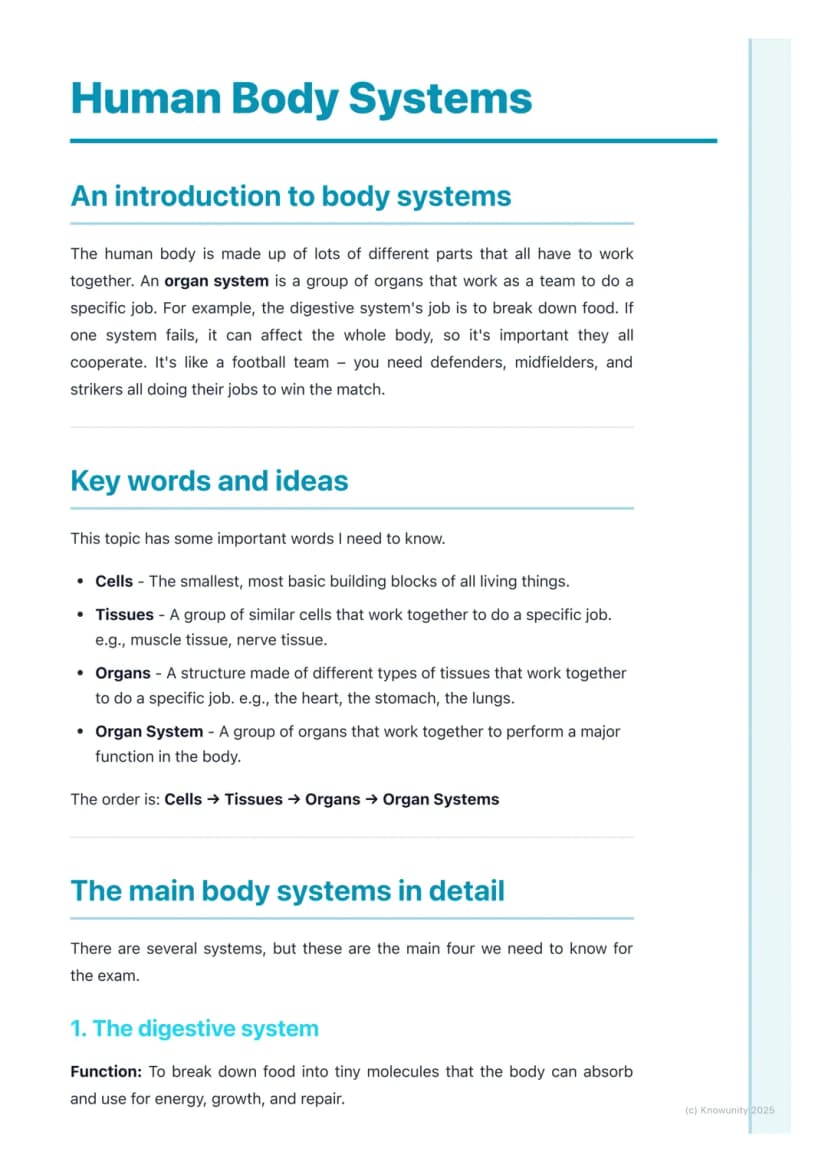
Think of your body like a Premier League football club - you need different players in different positions all working as one team to win. Organ systems are groups of organs that team up to do specific jobs, like breaking down your dinner or getting oxygen to your muscles.
If one system fails, it affects the whole body, just like how losing your goalkeeper would mess up the entire match. The building blocks work in a simple order: cells (the tiniest parts) group together to make tissues, tissues combine to form organs, and organs work together as organ systems.
Remember: Cells → Tissues → Organs → Organ Systems - this order comes up in exams!
You'll need to know four main systems for your exams, and once you understand how they work together, biology becomes much easier to grasp.
2
of 8
The Digestive System
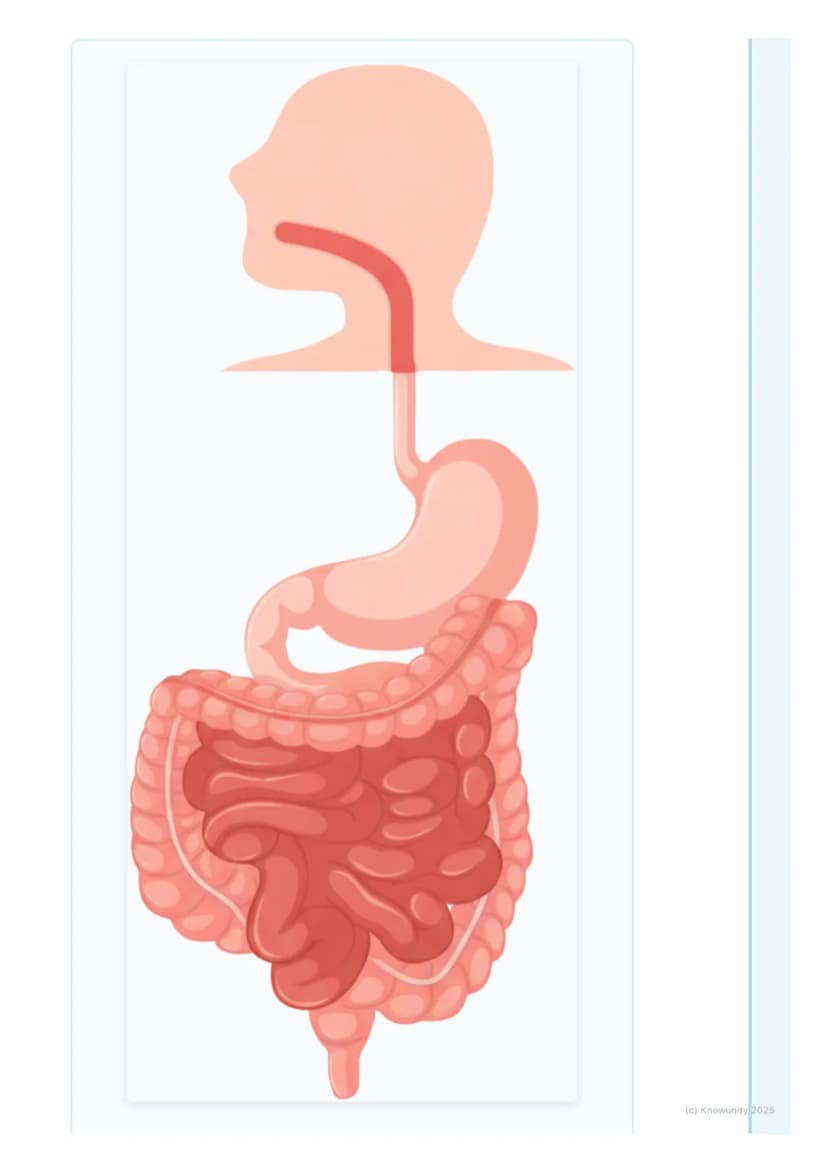
Ever wonder what happens to that packet of crisps after you swallow it? The digestive system breaks down your food into tiny molecules your body can actually use for energy and growth.
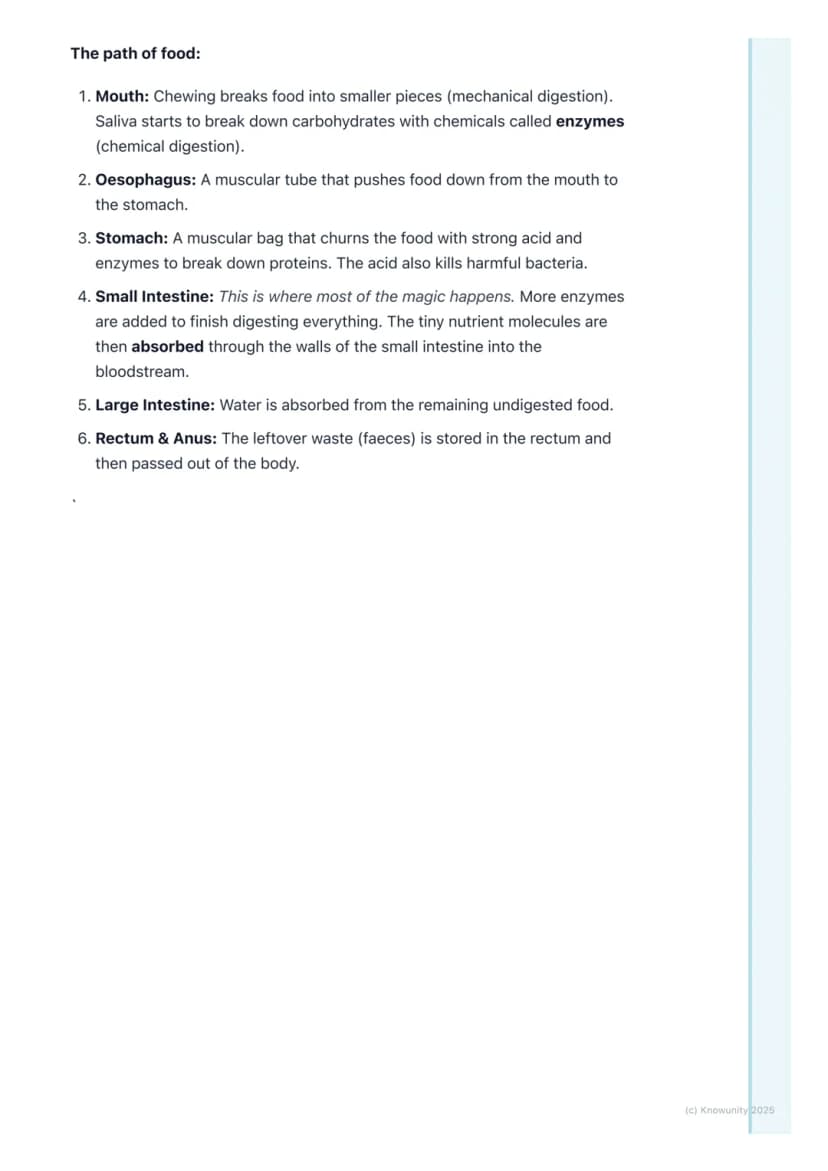
Your food takes quite a journey! It starts in your mouth where chewing breaks it up (mechanical digestion) and saliva begins dissolving carbohydrates with special chemicals called enzymes. Next, the oesophagus pushes everything down to your stomach, which churns the food with strong acid and enzymes whilst killing harmful bacteria.
The real magic happens in the small intestine, where more enzymes finish breaking down everything and nutrients get absorbed into your bloodstream. Finally, the large intestine absorbs water from leftovers before waste exits through the rectum and anus.
Key Point: Digestion uses both mechanical force (chewing, churning) and chemical reactions (enzymes, acid) to break down food.
3
of 8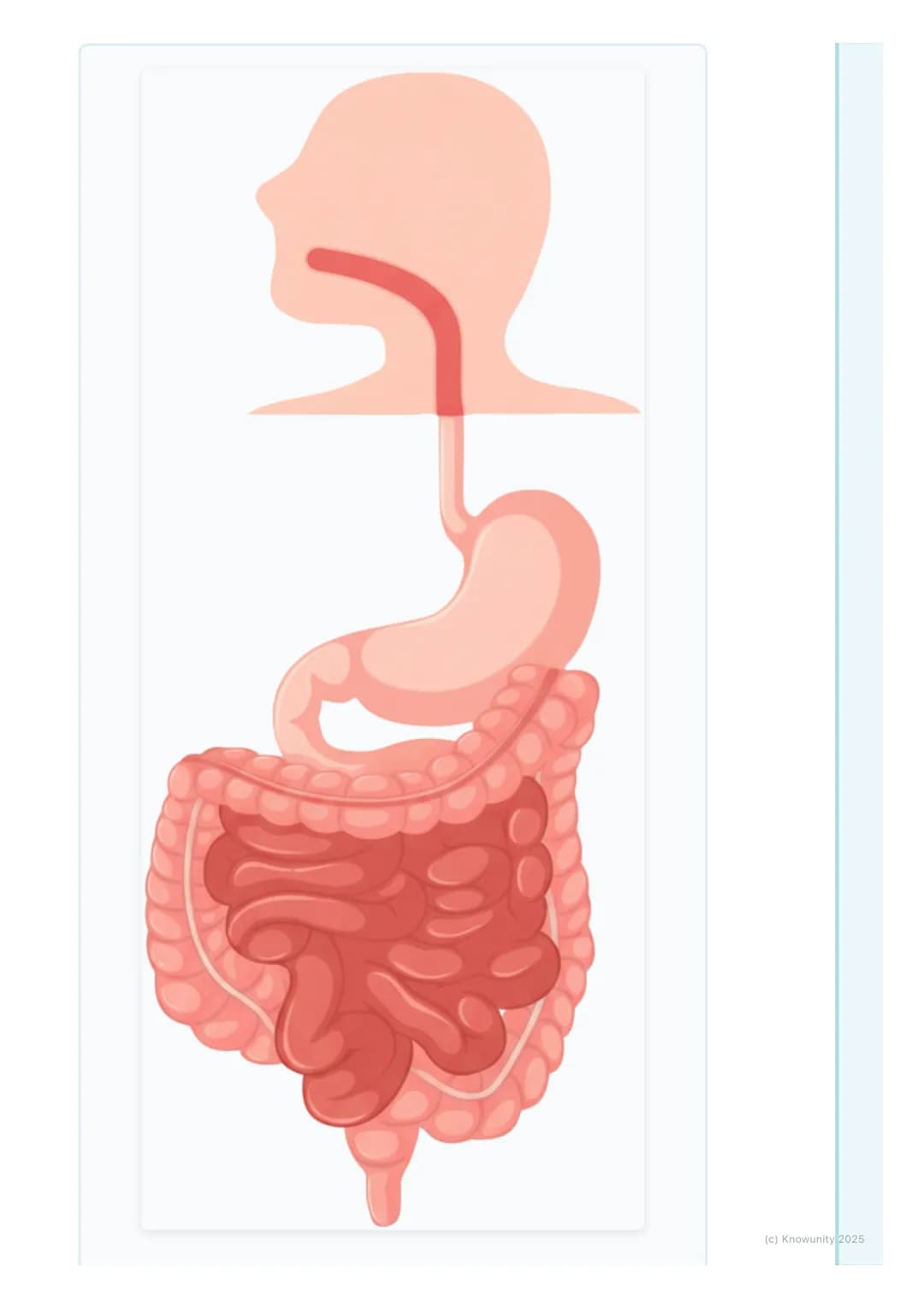
The Circulatory System
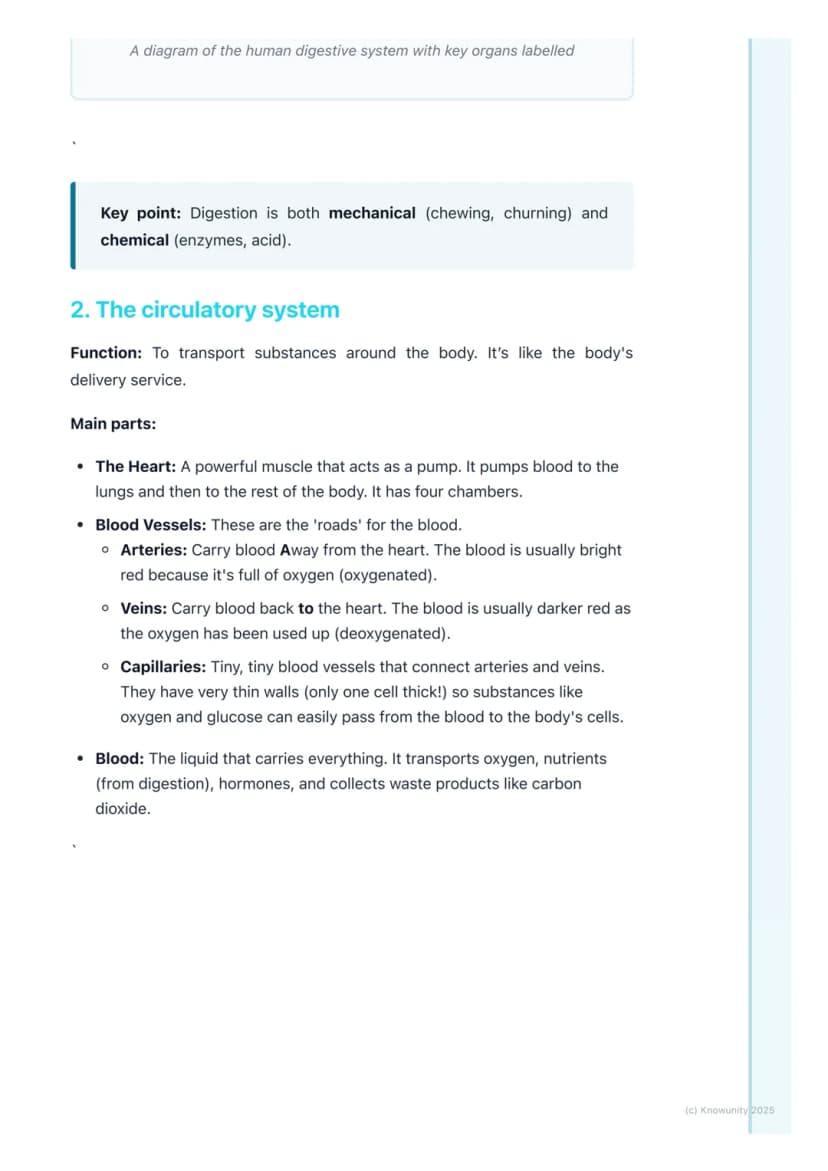
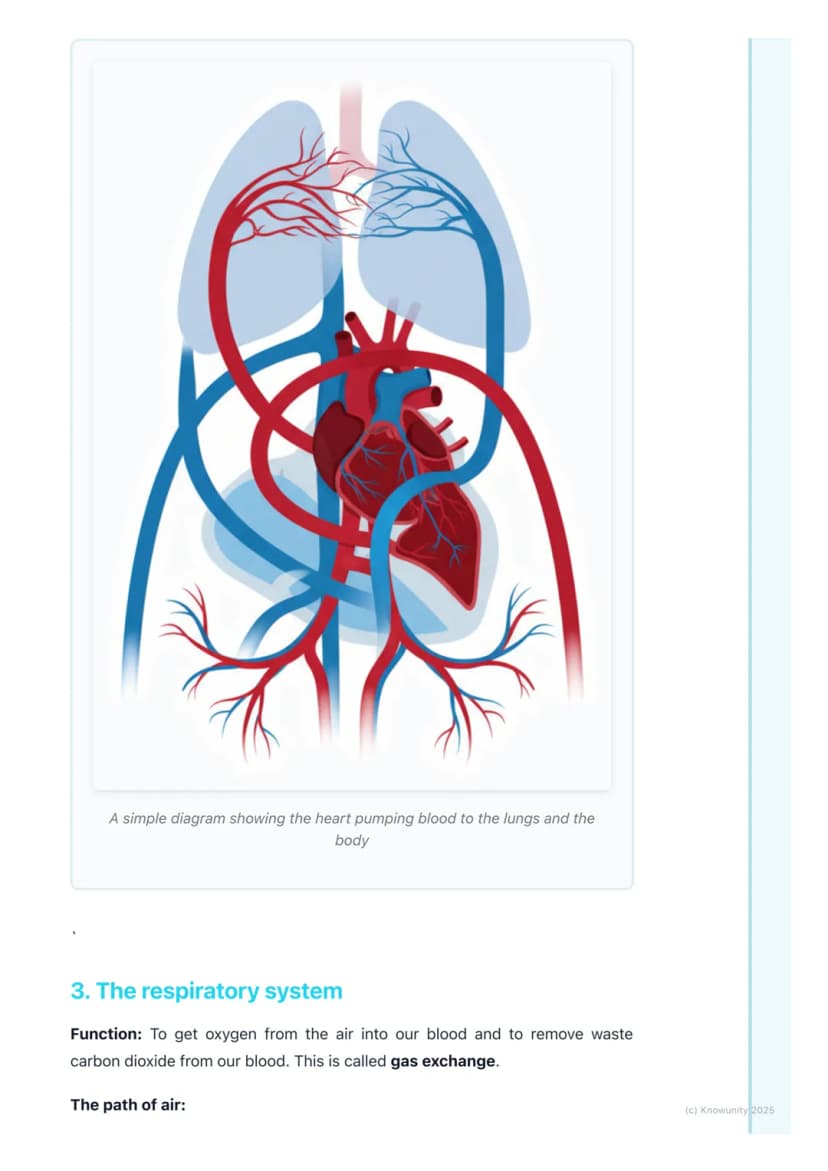
Your circulatory system is basically the body's Amazon delivery service, transporting everything your cells need around your body 24/7. The heart acts as a powerful pump with four chambers, pushing blood to your lungs and then to every part of your body.
Think of blood vessels as the road network for this delivery system. Arteries carry bright red, oxygen-rich blood away from the heart . Veins bring darker, oxygen-poor blood back to the heart for a refill.
The smallest vessels, called capillaries, are only one cell thick so oxygen and nutrients can easily slip from your blood into your body's cells. Blood itself carries oxygen, nutrients from digestion, hormones, and collects waste like carbon dioxide.
Exam Tip: Remember "Arteries Away" - arteries carry blood away from the heart. This simple trick will save you marks!
4
of 8
The Respiratory System
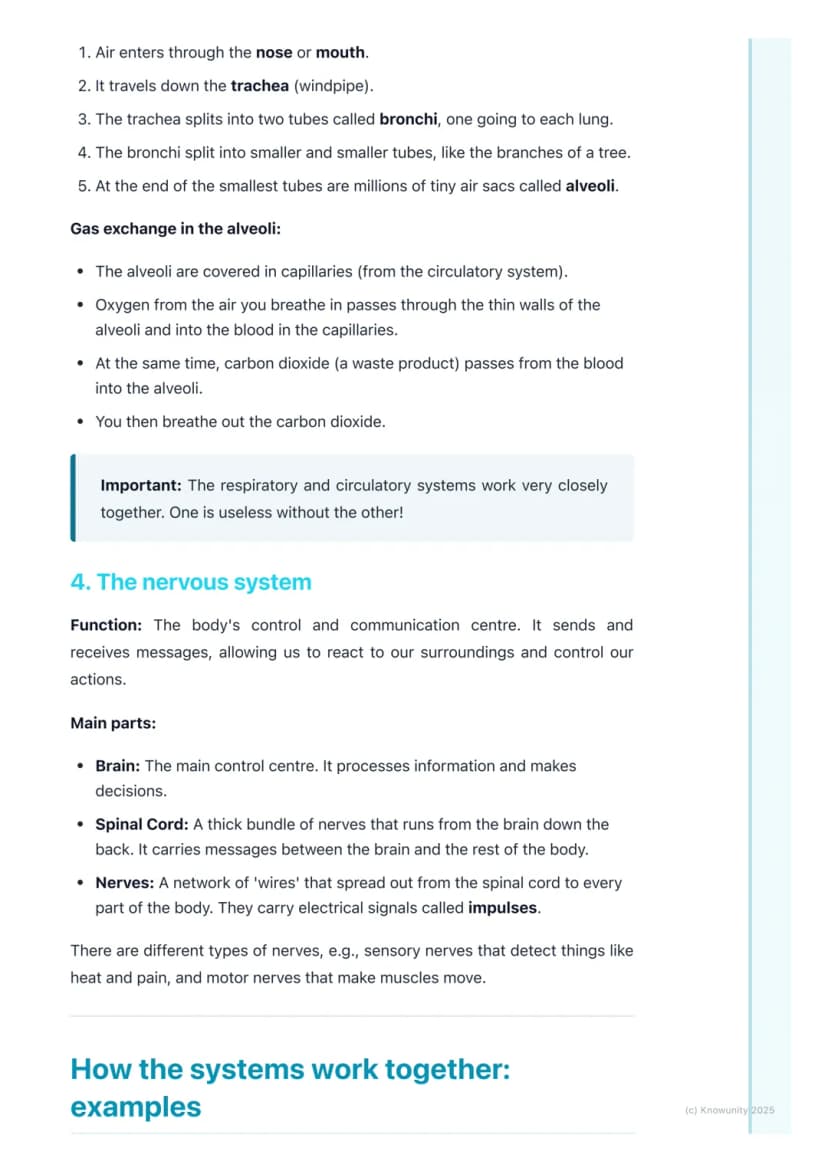
Every breath you take is your respiratory system doing two crucial jobs: getting oxygen into your blood and removing waste carbon dioxide. This swap is called gas exchange, and it happens millions of times in tiny air sacs.
Air travels down an impressive route: through your nose or mouth, down the trachea (windpipe), splitting into two bronchi (one for each lung), then branching into smaller and smaller tubes like a tree. At the end are millions of microscopic air sacs called alveoli.
The alveoli are where the magic happens - they're covered in capillaries from your circulatory system. Oxygen passes through the thin walls into your blood whilst carbon dioxide waste passes out to be breathed away.
Connection Alert: The respiratory and circulatory systems are best mates - one is completely useless without the other!
5
of 8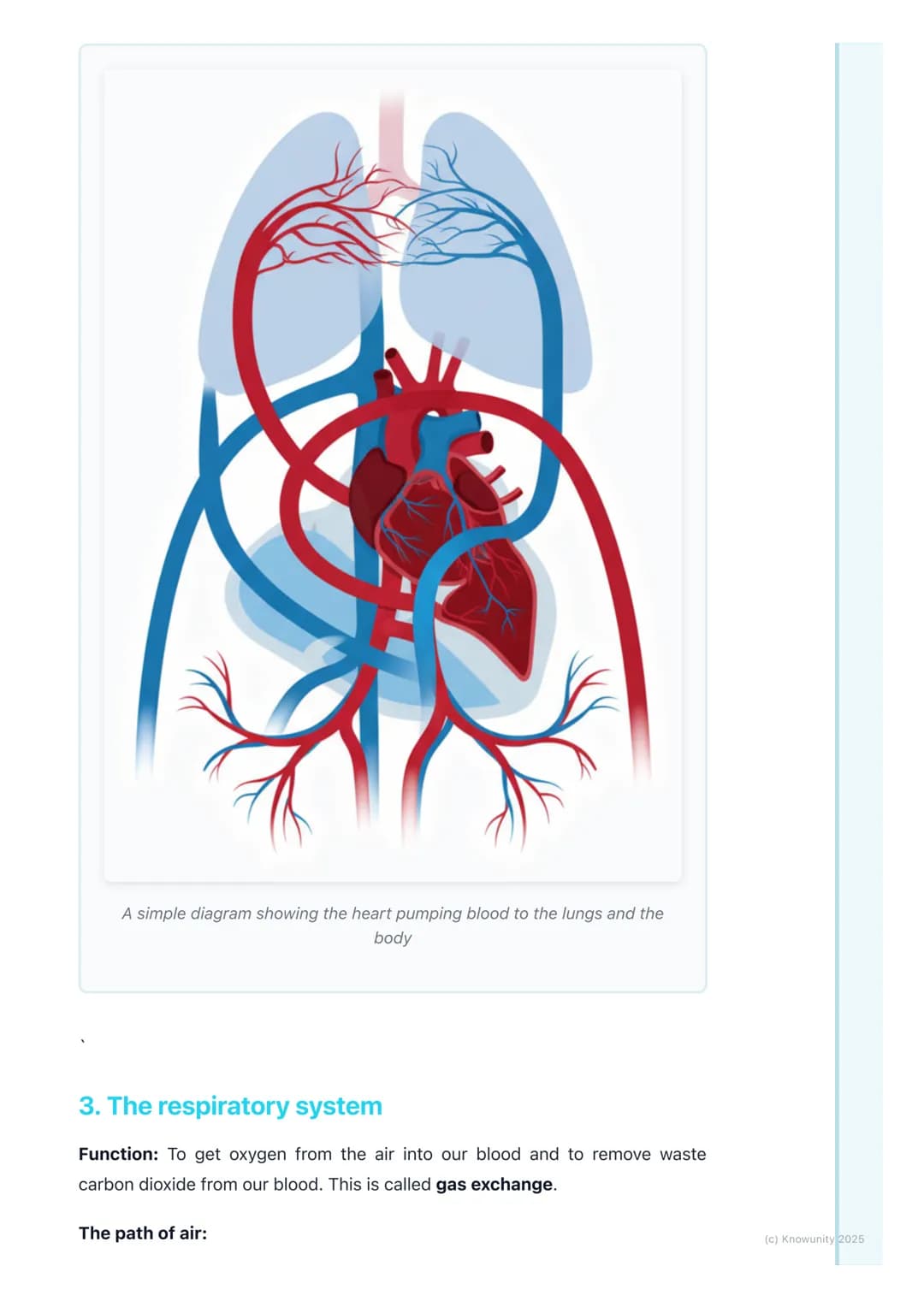
The Nervous System
Your nervous system is like the body's internet and control centre rolled into one, sending messages at lightning speed to help you react and control your actions. It's what lets you pull your hand away from something hot before you even think about it!
The brain is the main boss, processing information and making decisions about everything from breathing to solving maths problems. The spinal cord acts like a superhighway of nerves running down your back, carrying messages between your brain and body.
Nerves spread out like electrical wires to every part of your body, carrying signals called impulses. Sensory nerves detect things like heat and pain, whilst motor nerves tell your muscles when and how to move.
Quick Fact: Your nervous system sends messages faster than the speed limit on most roads - up to 120 metres per second!
6
of 8
How Systems Work Together
Here's where it gets really cool - these systems never work alone! They're constantly chatting and helping each other out, like the ultimate group project that actually works perfectly.
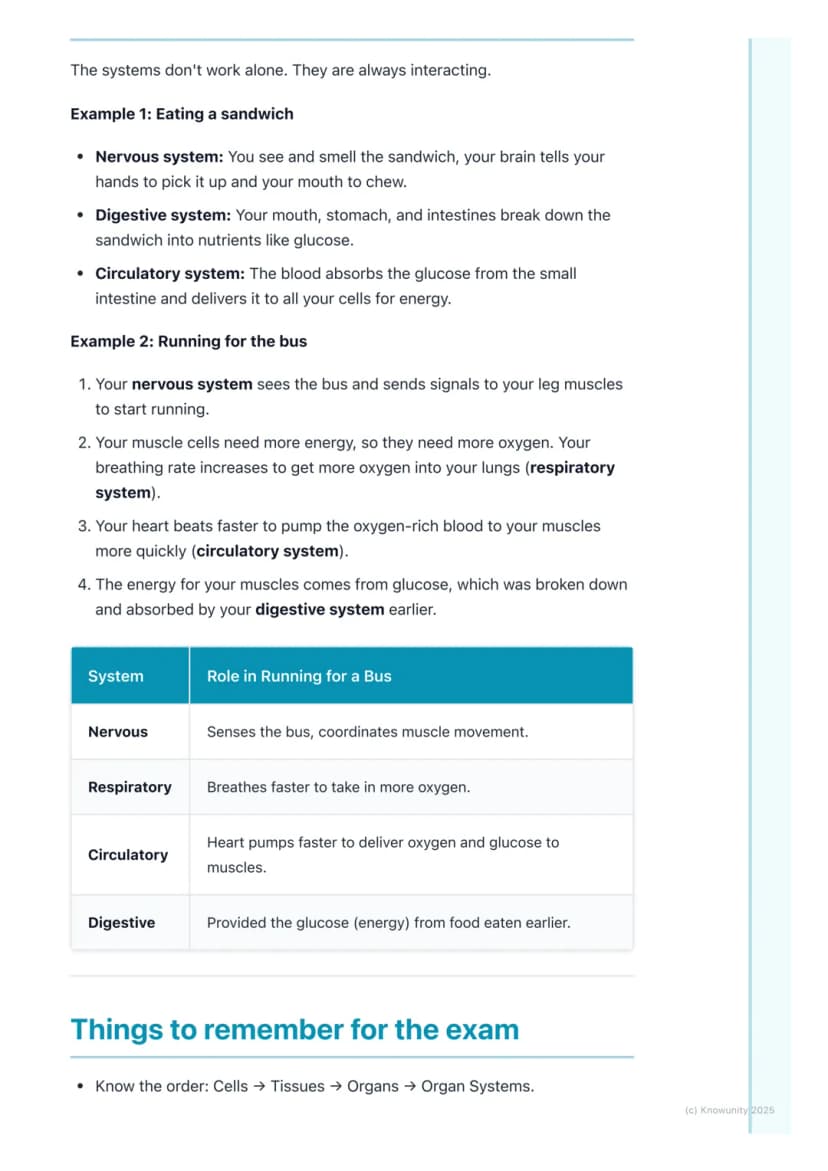
When you're running for the bus, it's like watching a perfectly choreographed dance. Your nervous system spots the bus and coordinates your leg muscles. Your respiratory system cranks up breathing to get more oxygen. Your circulatory system pumps faster to deliver that oxygen and glucose to your muscles.
Meanwhile, your digestive system provided the glucose energy from food you ate earlier. It's teamwork at its finest - four different systems working together just so you don't miss your ride home!
Exam Gold: The "running for the bus" example shows all four systems working together - learn this and you'll ace any question about system cooperation!
7
of 8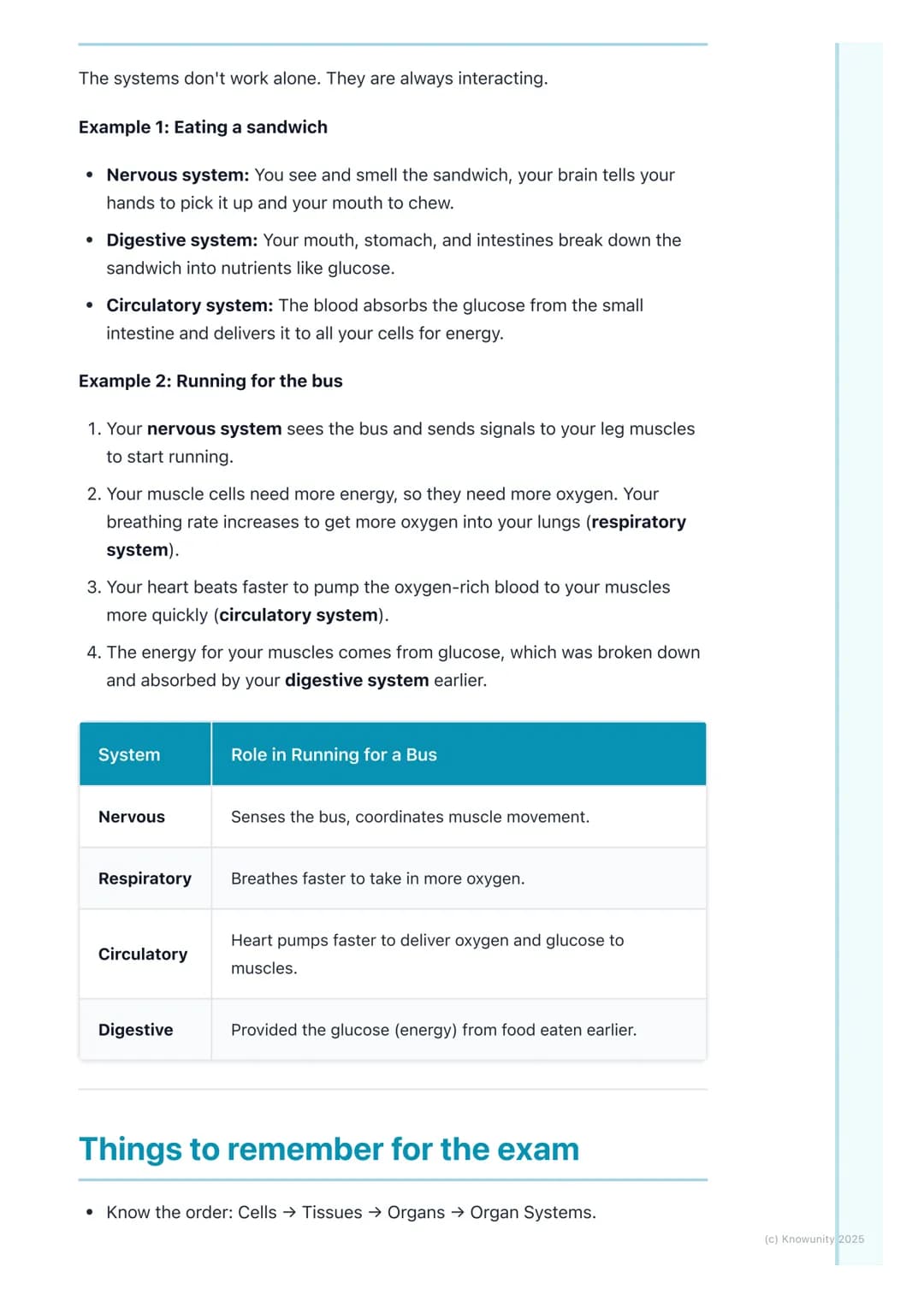
Quick Exam Reminders
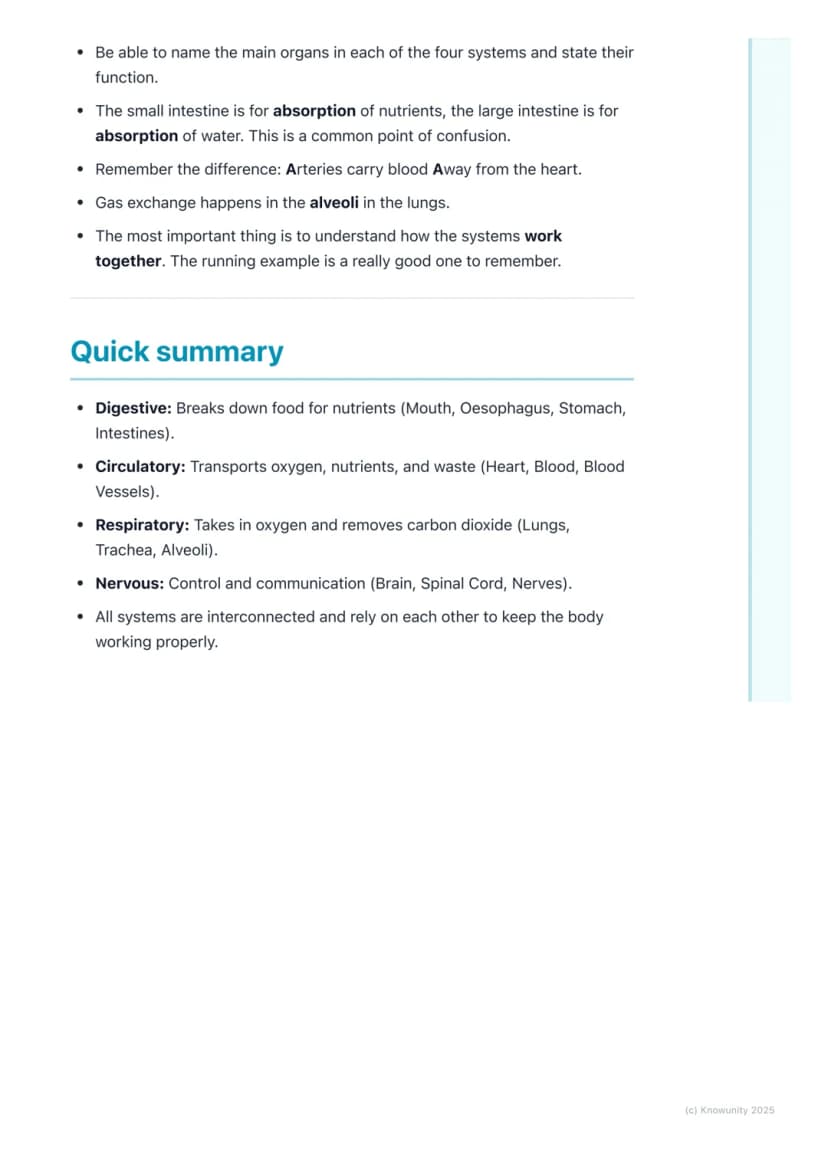
Here are the key points that pop up in exams again and again. The small intestine absorbs nutrients whilst the large intestine absorbs water - mixing these up is a common mistake that costs easy marks.
Remember your building blocks order: cells → tissues → organs → organ systems. Know the main organs in each system and what they do - your heart pumps, your stomach churns, your alveoli exchange gases.
Gas exchange happens specifically in the alveoli, not just "in the lungs". Be precise with your answers because examiners love detail.
Success Tip: Focus on understanding how systems work together rather than memorising isolated facts - this approach will help you tackle any curveball questions!
The most important thing to remember is that everything connects. Your body is an incredible machine where every part depends on every other part working properly.
8
of 8
Pensavamo che non l'avreste mai chiesto....
Che cos'è l'assistente AI di Knowunity?
Il nostro assistente AI è costruito specificamente per le esigenze degli studenti. Sulla base dei milioni di contenuti presenti sulla piattaforma, possiamo fornire agli studenti risposte davvero significative e pertinenti. Ma non si tratta solo di risposte, l'assistente è in grado di guidare gli studenti attraverso le loro sfide quotidiane di studio, con piani di studio personalizzati, quiz o contenuti nella chat e una personalizzazione al 100% basata sulle competenze e sugli sviluppi degli studenti.
Dove posso scaricare l'applicazione Knowunity?
È possibile scaricare l'applicazione dal Google Play Store e dall'Apple App Store.
Knowunity è davvero gratuita?
Sì, hai accesso completamente gratuito a tutti i contenuti nell'app e puoi chattare o seguire i Creatori in qualsiasi momento. Sbloccherai nuove funzioni crescendo il tuo numero di follower. Inoltre, offriamo Knowunity Premium, che consente di studiare senza alcun limite!!
Contenuti più popolari di Science
6Contenuti più popolari
9Non c'è niente di adatto? Esplorare altre aree tematiche.
Recensioni dei nostri utenti. Ci adorano - e anche tu, vedrai .
4.6/5App Store
4.7/5Google Play
L'applicazione è molto facile da usare e ben progettata. Finora ho trovato tutto quello che cercavo e ho potuto imparare molto dalle presentazioni! Utilizzerò sicuramente l'app per i compiti in classe! È molto utile anche come fonte di ispirazione.
Stefano Sutente iOS
Questa applicazione è davvero grande! Ci sono tantissimi appunti e aiuti con lo studio [...]. La mia materia problematica, per esempio, è il francese e l'app ha così tante opzioni per aiutarmi. Grazie a questa app ho migliorato il mio francese. La consiglio a tutti.
Samantha Klichutente Android
Wow, sono davvero stupita. Ho appena provato l'app perché l'ho vista pubblicizzata molte volte e sono rimasta assolutamente sbalordita. Questa app è L'AIUTO che cercate per la scuola e soprattutto offre tantissime cose, come allenamenti e schede, che a me personalmente sono state MOLTO utili.
Annautente iOS
Science13 visualizzazioni·Aggiornato May 27, 2026·8 pagineOverview of the Major Human Body Systems
Your body is like an amazing machine made up of different teams working together non-stop. These teams are called organ systems, and each one has a special job to keep you alive and healthy.
1
of 8Iscriviti per mostrare il contenuto. È gratis!
- Accesso a tutti i documenti
- Migliora i tuoi voti
- Unisciti a milioni di studenti
Introduction to Body Systems
Think of your body like a Premier League football club - you need different players in different positions all working as one team to win. Organ systems are groups of organs that team up to do specific jobs, like breaking down your dinner or getting oxygen to your muscles.
If one system fails, it affects the whole body, just like how losing your goalkeeper would mess up the entire match. The building blocks work in a simple order: cells (the tiniest parts) group together to make tissues, tissues combine to form organs, and organs work together as organ systems.
Remember: Cells → Tissues → Organs → Organ Systems - this order comes up in exams!
You'll need to know four main systems for your exams, and once you understand how they work together, biology becomes much easier to grasp.
2
of 8Iscriviti per mostrare il contenuto. È gratis!
- Accesso a tutti i documenti
- Migliora i tuoi voti
- Unisciti a milioni di studenti
The Digestive System
Ever wonder what happens to that packet of crisps after you swallow it? The digestive system breaks down your food into tiny molecules your body can actually use for energy and growth.
Your food takes quite a journey! It starts in your mouth where chewing breaks it up (mechanical digestion) and saliva begins dissolving carbohydrates with special chemicals called enzymes. Next, the oesophagus pushes everything down to your stomach, which churns the food with strong acid and enzymes whilst killing harmful bacteria.
The real magic happens in the small intestine, where more enzymes finish breaking down everything and nutrients get absorbed into your bloodstream. Finally, the large intestine absorbs water from leftovers before waste exits through the rectum and anus.
Key Point: Digestion uses both mechanical force (chewing, churning) and chemical reactions (enzymes, acid) to break down food.
3
of 8Iscriviti per mostrare il contenuto. È gratis!
- Accesso a tutti i documenti
- Migliora i tuoi voti
- Unisciti a milioni di studenti
The Circulatory System
Your circulatory system is basically the body's Amazon delivery service, transporting everything your cells need around your body 24/7. The heart acts as a powerful pump with four chambers, pushing blood to your lungs and then to every part of your body.
Think of blood vessels as the road network for this delivery system. Arteries carry bright red, oxygen-rich blood away from the heart . Veins bring darker, oxygen-poor blood back to the heart for a refill.
The smallest vessels, called capillaries, are only one cell thick so oxygen and nutrients can easily slip from your blood into your body's cells. Blood itself carries oxygen, nutrients from digestion, hormones, and collects waste like carbon dioxide.
Exam Tip: Remember "Arteries Away" - arteries carry blood away from the heart. This simple trick will save you marks!
4
of 8Iscriviti per mostrare il contenuto. È gratis!
- Accesso a tutti i documenti
- Migliora i tuoi voti
- Unisciti a milioni di studenti
The Respiratory System
Every breath you take is your respiratory system doing two crucial jobs: getting oxygen into your blood and removing waste carbon dioxide. This swap is called gas exchange, and it happens millions of times in tiny air sacs.
Air travels down an impressive route: through your nose or mouth, down the trachea (windpipe), splitting into two bronchi (one for each lung), then branching into smaller and smaller tubes like a tree. At the end are millions of microscopic air sacs called alveoli.
The alveoli are where the magic happens - they're covered in capillaries from your circulatory system. Oxygen passes through the thin walls into your blood whilst carbon dioxide waste passes out to be breathed away.
Connection Alert: The respiratory and circulatory systems are best mates - one is completely useless without the other!
5
of 8Iscriviti per mostrare il contenuto. È gratis!
- Accesso a tutti i documenti
- Migliora i tuoi voti
- Unisciti a milioni di studenti
The Nervous System
Your nervous system is like the body's internet and control centre rolled into one, sending messages at lightning speed to help you react and control your actions. It's what lets you pull your hand away from something hot before you even think about it!
The brain is the main boss, processing information and making decisions about everything from breathing to solving maths problems. The spinal cord acts like a superhighway of nerves running down your back, carrying messages between your brain and body.
Nerves spread out like electrical wires to every part of your body, carrying signals called impulses. Sensory nerves detect things like heat and pain, whilst motor nerves tell your muscles when and how to move.
Quick Fact: Your nervous system sends messages faster than the speed limit on most roads - up to 120 metres per second!
6
of 8Iscriviti per mostrare il contenuto. È gratis!
- Accesso a tutti i documenti
- Migliora i tuoi voti
- Unisciti a milioni di studenti
How Systems Work Together
Here's where it gets really cool - these systems never work alone! They're constantly chatting and helping each other out, like the ultimate group project that actually works perfectly.
When you're running for the bus, it's like watching a perfectly choreographed dance. Your nervous system spots the bus and coordinates your leg muscles. Your respiratory system cranks up breathing to get more oxygen. Your circulatory system pumps faster to deliver that oxygen and glucose to your muscles.
Meanwhile, your digestive system provided the glucose energy from food you ate earlier. It's teamwork at its finest - four different systems working together just so you don't miss your ride home!
Exam Gold: The "running for the bus" example shows all four systems working together - learn this and you'll ace any question about system cooperation!
7
of 8Iscriviti per mostrare il contenuto. È gratis!
- Accesso a tutti i documenti
- Migliora i tuoi voti
- Unisciti a milioni di studenti
Quick Exam Reminders
Here are the key points that pop up in exams again and again. The small intestine absorbs nutrients whilst the large intestine absorbs water - mixing these up is a common mistake that costs easy marks.
Remember your building blocks order: cells → tissues → organs → organ systems. Know the main organs in each system and what they do - your heart pumps, your stomach churns, your alveoli exchange gases.
Gas exchange happens specifically in the alveoli, not just "in the lungs". Be precise with your answers because examiners love detail.
Success Tip: Focus on understanding how systems work together rather than memorising isolated facts - this approach will help you tackle any curveball questions!
The most important thing to remember is that everything connects. Your body is an incredible machine where every part depends on every other part working properly.
8
of 8Iscriviti per mostrare il contenuto. È gratis!
- Accesso a tutti i documenti
- Migliora i tuoi voti
- Unisciti a milioni di studenti
Pensavamo che non l'avreste mai chiesto....
Che cos'è l'assistente AI di Knowunity?
Il nostro assistente AI è costruito specificamente per le esigenze degli studenti. Sulla base dei milioni di contenuti presenti sulla piattaforma, possiamo fornire agli studenti risposte davvero significative e pertinenti. Ma non si tratta solo di risposte, l'assistente è in grado di guidare gli studenti attraverso le loro sfide quotidiane di studio, con piani di studio personalizzati, quiz o contenuti nella chat e una personalizzazione al 100% basata sulle competenze e sugli sviluppi degli studenti.
Dove posso scaricare l'applicazione Knowunity?
È possibile scaricare l'applicazione dal Google Play Store e dall'Apple App Store.
Knowunity è davvero gratuita?
Sì, hai accesso completamente gratuito a tutti i contenuti nell'app e puoi chattare o seguire i Creatori in qualsiasi momento. Sbloccherai nuove funzioni crescendo il tuo numero di follower. Inoltre, offriamo Knowunity Premium, che consente di studiare senza alcun limite!!
Contenuti più popolari di Science
6Contenuti più popolari
9Non c'è niente di adatto? Esplorare altre aree tematiche.
Recensioni dei nostri utenti. Ci adorano - e anche tu, vedrai .
4.6/5App Store
4.7/5Google Play
L'applicazione è molto facile da usare e ben progettata. Finora ho trovato tutto quello che cercavo e ho potuto imparare molto dalle presentazioni! Utilizzerò sicuramente l'app per i compiti in classe! È molto utile anche come fonte di ispirazione.
Stefano Sutente iOS
Questa applicazione è davvero grande! Ci sono tantissimi appunti e aiuti con lo studio [...]. La mia materia problematica, per esempio, è il francese e l'app ha così tante opzioni per aiutarmi. Grazie a questa app ho migliorato il mio francese. La consiglio a tutti.
Samantha Klichutente Android
Wow, sono davvero stupita. Ho appena provato l'app perché l'ho vista pubblicizzata molte volte e sono rimasta assolutamente sbalordita. Questa app è L'AIUTO che cercate per la scuola e soprattutto offre tantissime cose, come allenamenti e schede, che a me personalmente sono state MOLTO utili.
Annautente iOS