
Leadership and coaching are game-changers in sport and physical activity....
 LCPE3 visualizzazioni·Aggiornato Jun 17, 2026·7 pagine
Mastering Leadership and Coaching in Physical Activity
1 / 7
1
of 7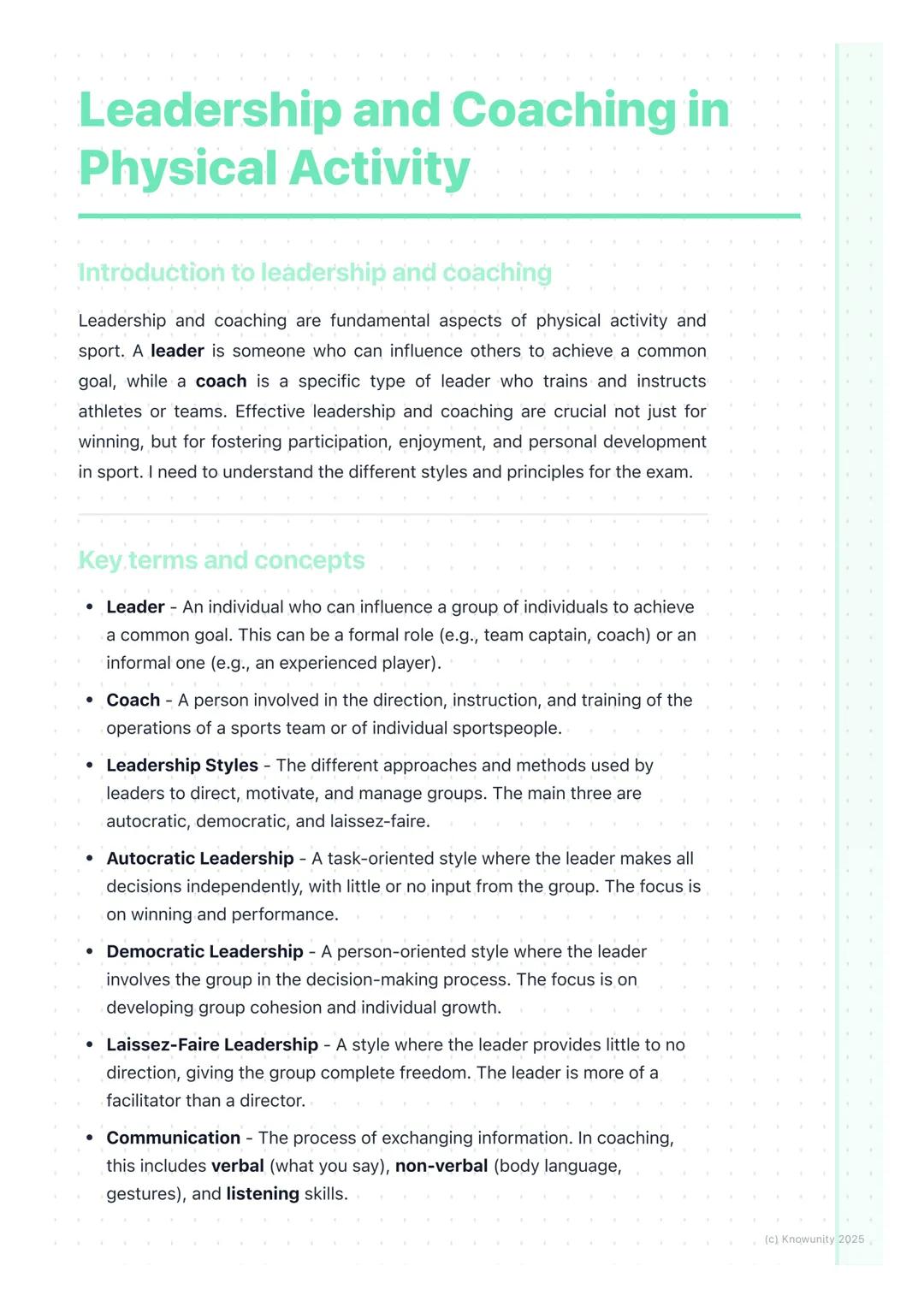
Introduction to Leadership and Coaching
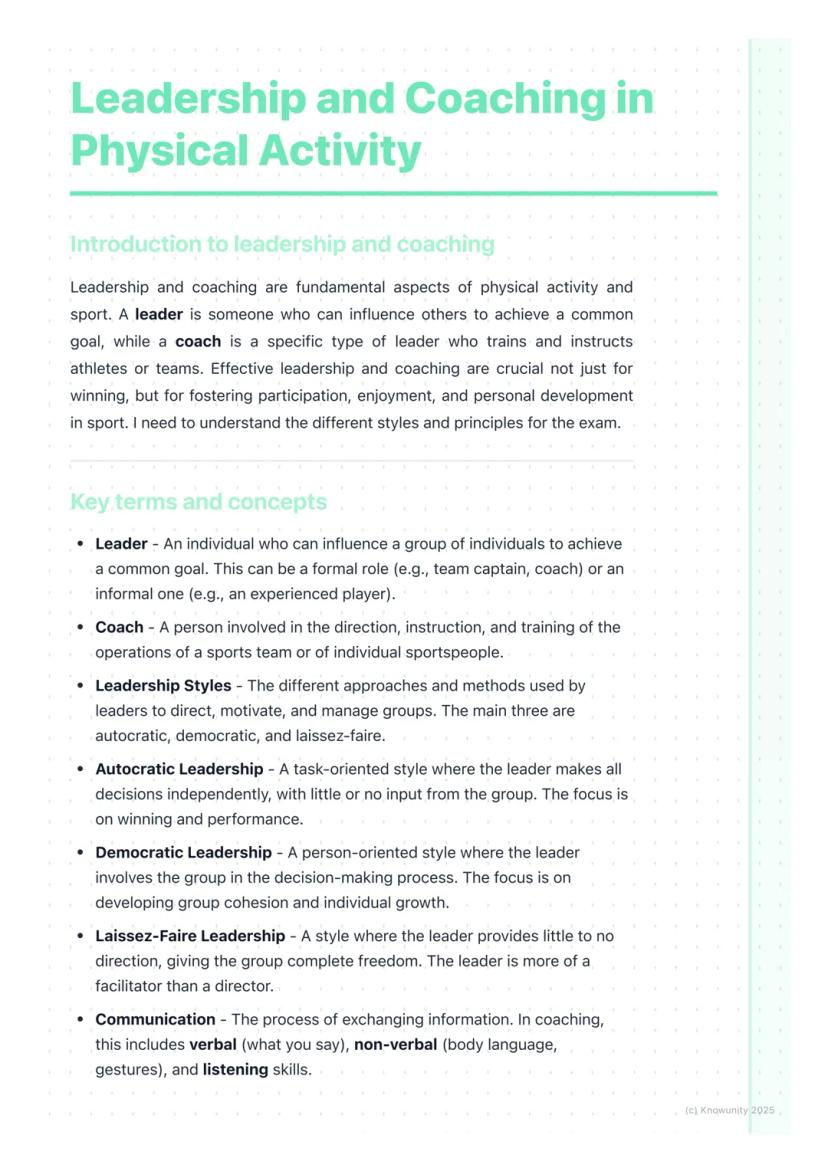
Think about the best coach or team leader you've ever had - what made them so effective? Leadership is all about influencing others to achieve common goals, whilst coaching is a specific type of leadership focused on training and developing athletes.
These skills aren't just about winning matches. Great leaders and coaches create environments where everyone feels valued, develops their abilities, and actually enjoys what they're doing. That's what builds lifelong participation in sport.
The key is understanding that there's no one-size-fits-all approach. Different situations call for different leadership styles, and the best leaders know how to adapt their approach based on who they're working with and what they're trying to achieve.
Remember: A leader can be formal (like a captain) or informal (like an experienced player who naturally guides others).
2
of 7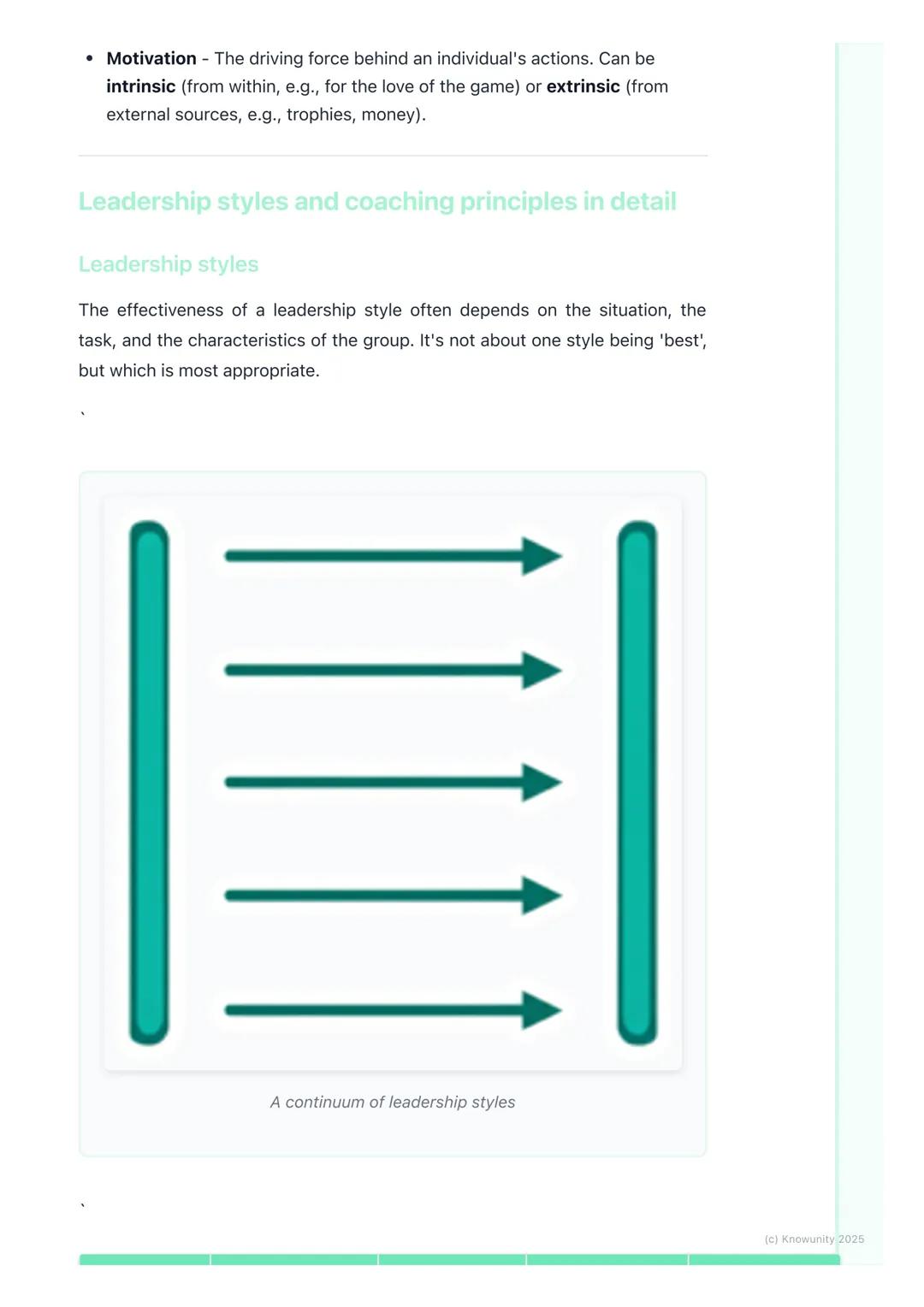
Understanding Leadership Styles
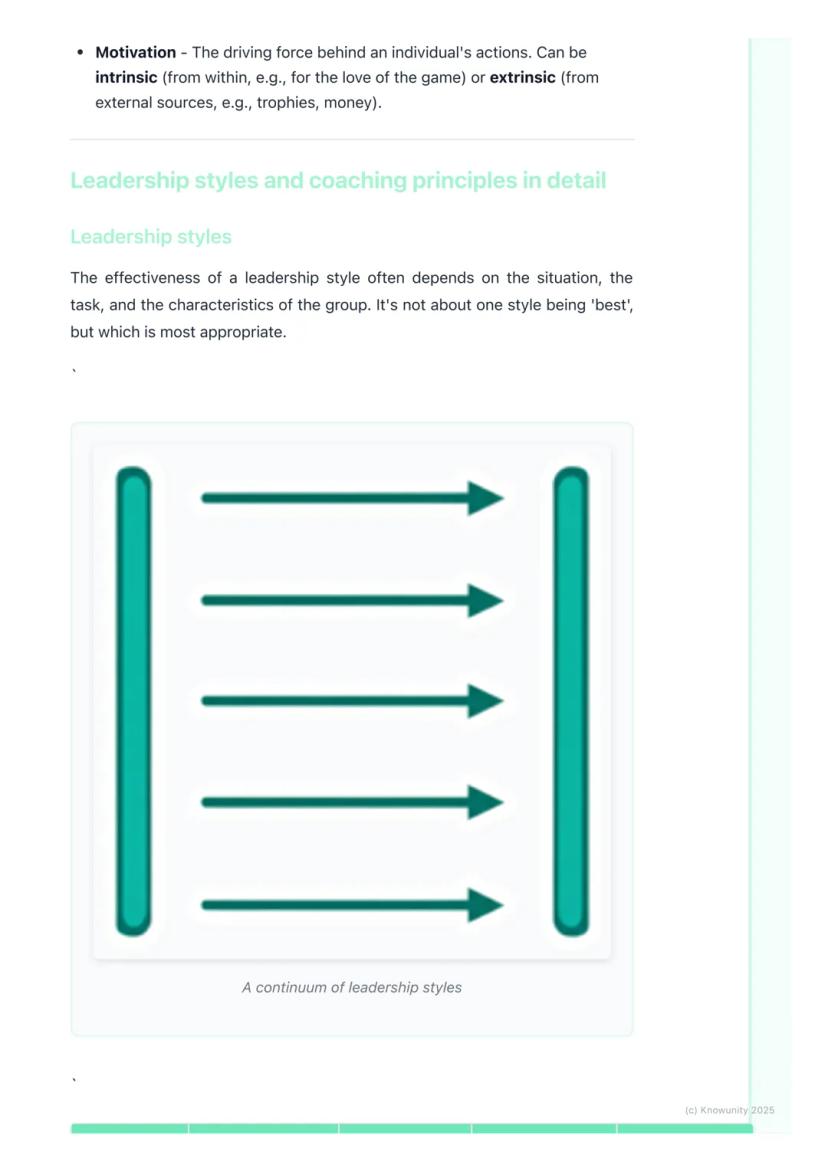
There are three main leadership styles you need to know, and each has its place depending on the situation. Autocratic leadership is task-oriented - the leader makes all decisions with little input from the group. It's brilliant for quick decisions and maintaining control.
Democratic leadership is person-oriented and involves the group in decision-making. This builds stronger relationships and keeps everyone engaged, though it can slow things down when quick decisions are needed.
Laissez-faire leadership gives the group almost complete freedom, with the leader acting more as a facilitator. This works brilliantly with highly skilled, self-motivated athletes but can lead to chaos with less experienced groups.
The secret is knowing when to use each style. You might be autocratic during safety briefings but democratic when planning team tactics.
Key Point: Effective leaders switch between styles based on the situation, not personal preference.
3
of 7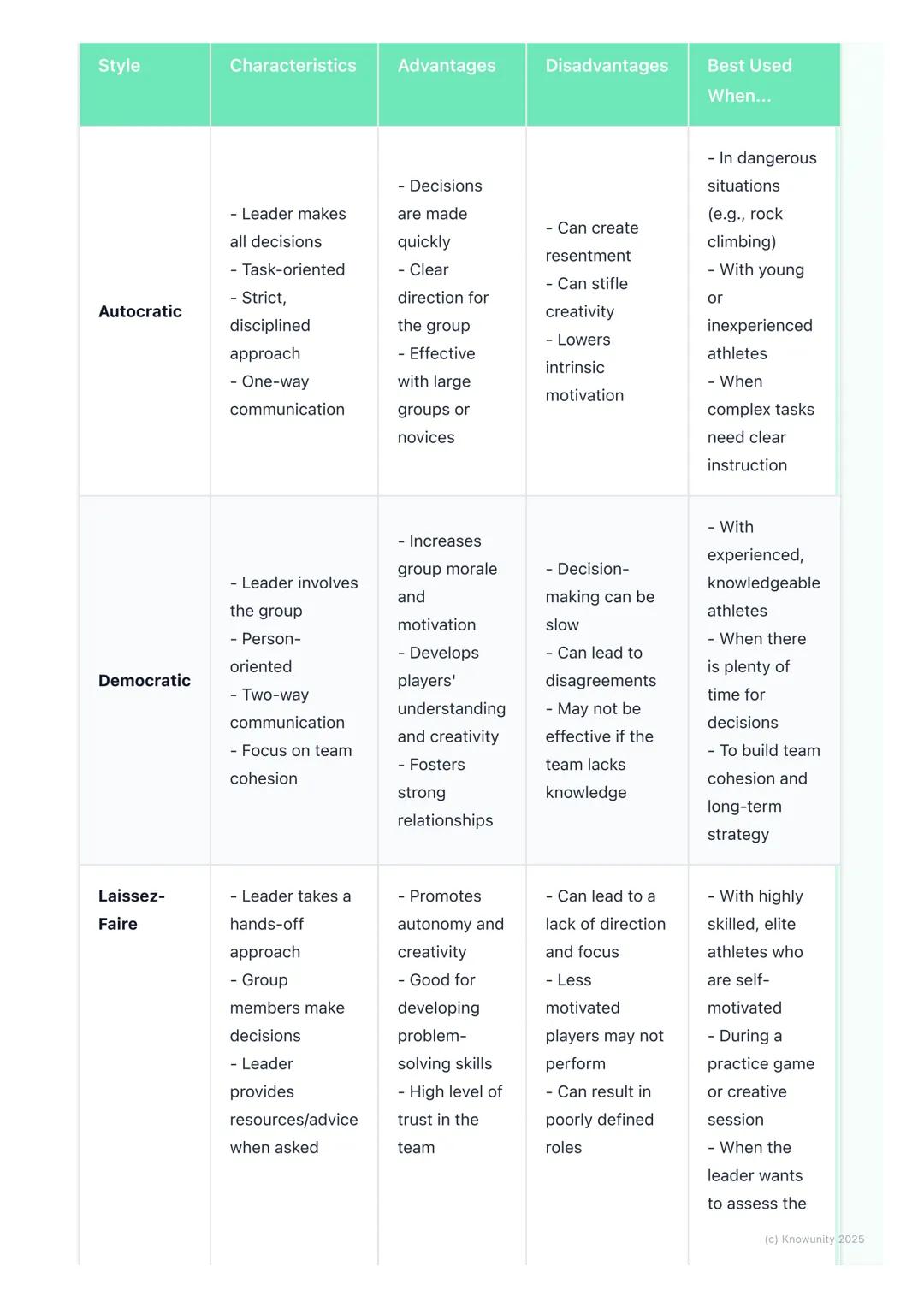
When to Use Each Leadership Style
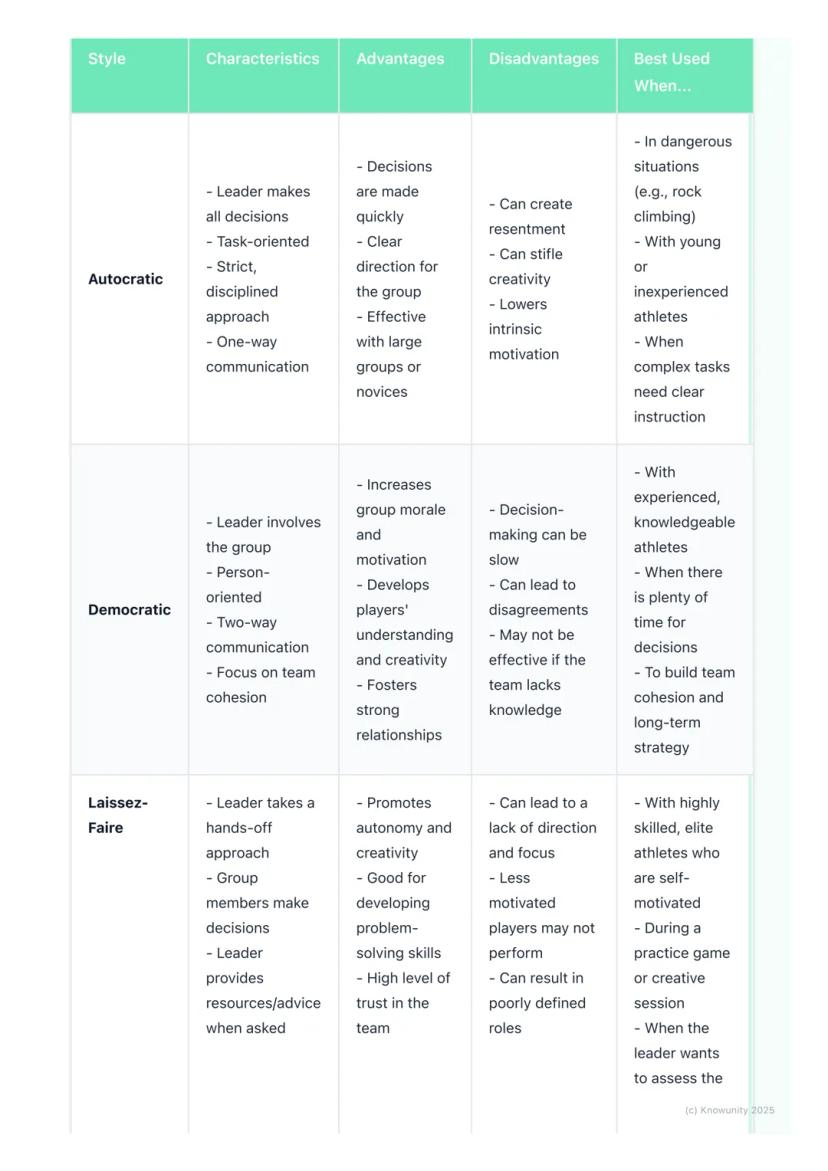
Autocratic leadership shines in dangerous situations (think rock climbing), with young or inexperienced athletes, or when complex tasks need crystal-clear instruction. Decisions happen quickly and everyone knows exactly what's expected, though it can sometimes stifle creativity.
Democratic leadership works best with experienced, knowledgeable athletes who can contribute meaningfully to decisions. It's perfect when you have time to discuss options and want to build team cohesion for the long term.
Laissez-faire leadership suits elite, highly skilled athletes who are self-motivated and know what they're doing. It promotes creativity and problem-solving skills but can leave less motivated players feeling lost without direction.
The trick is reading your group and the situation. A successful coach might use autocratic instruction for safety, democratic discussion for tactics, and laissez-faire observation during practice games.
Smart Tip: In your exams, always justify why you'd choose a particular style - link it to the athletes' skill level, the situation, and the desired outcome.
4
of 7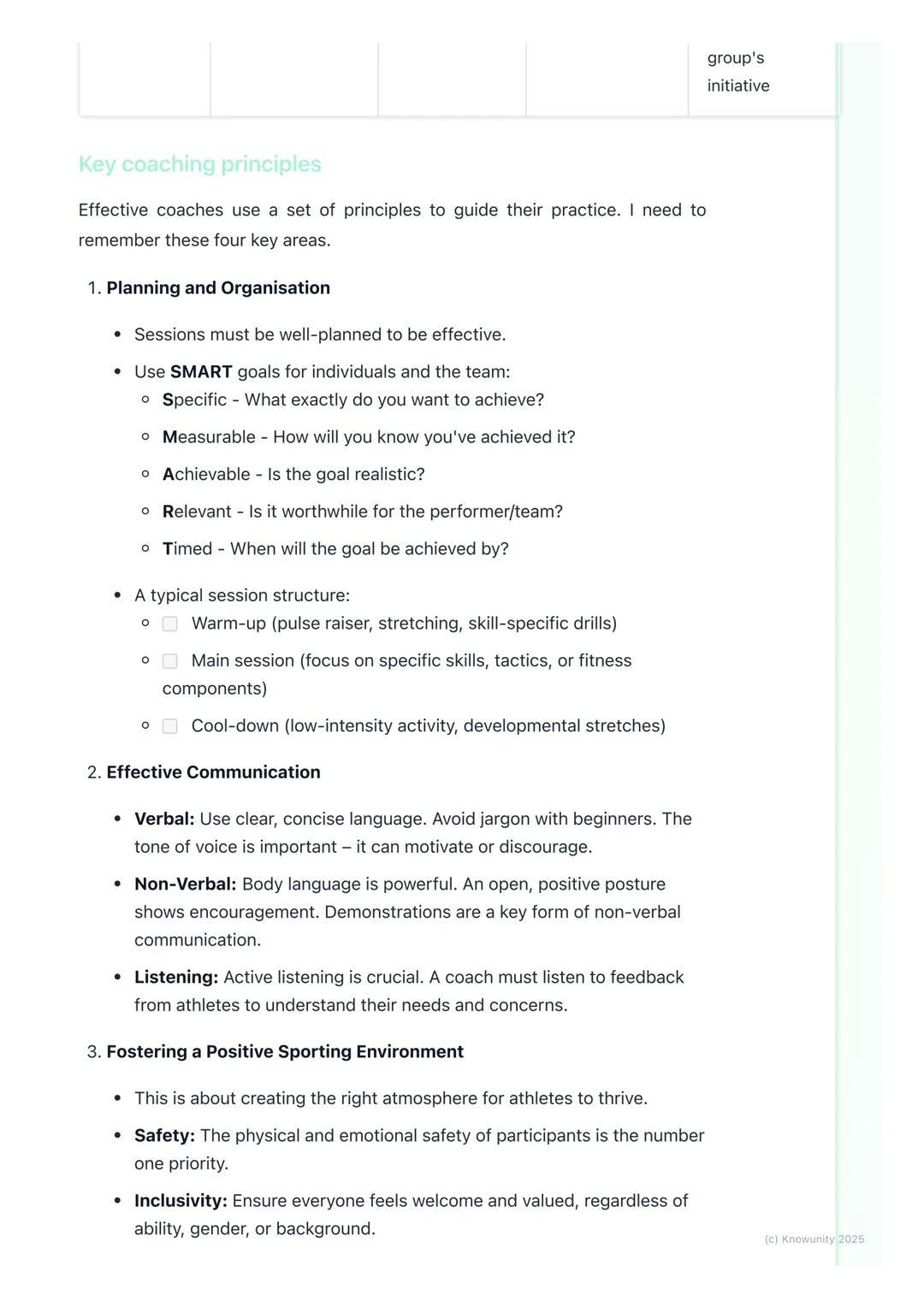
Key Coaching Principles: Planning and Communication
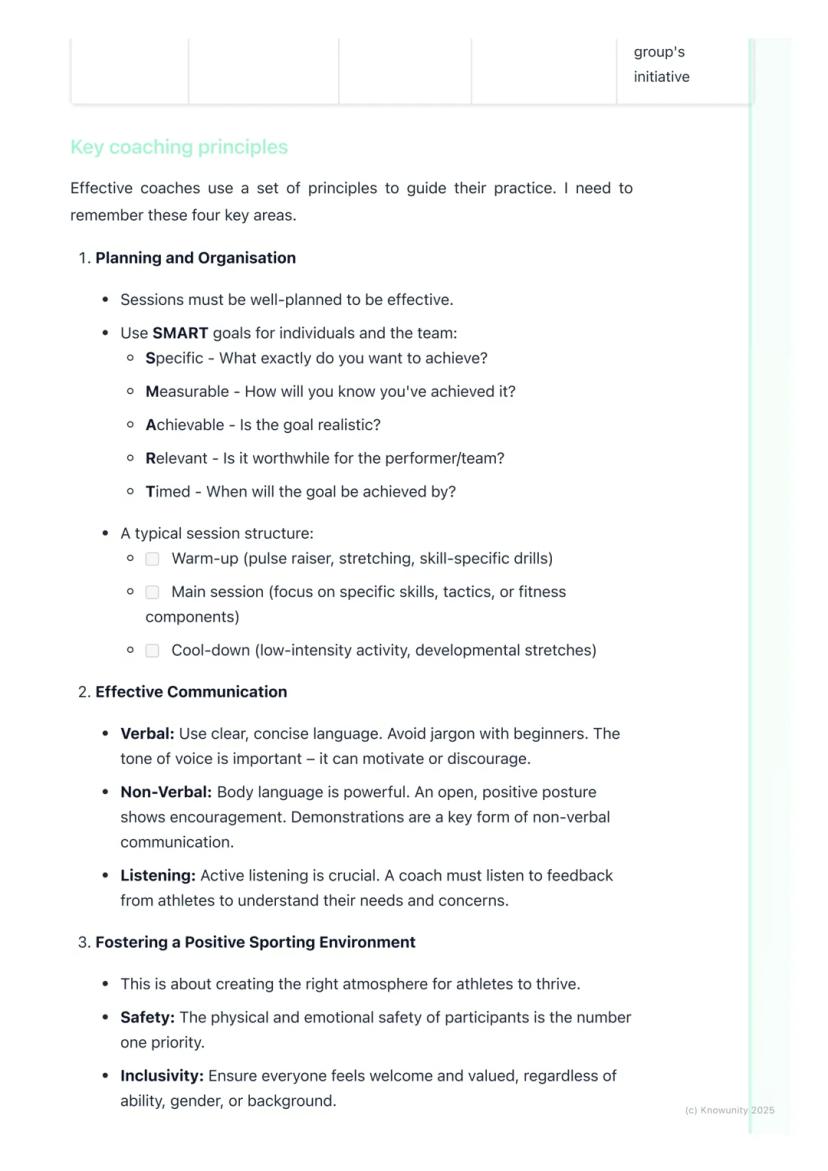
Brilliant coaching starts with smart planning and organisation. Every session needs structure: a proper warm-up, focused main activity, and cool-down. SMART goals are your best friend here - Specific, Measurable, Achievable, Relevant, and Timed objectives that give everyone clear targets.
Effective communication involves much more than just talking. Your verbal communication needs to be clear and appropriate for your audience - avoid jargon with beginners but you can use more technical language with experienced players.
Non-verbal communication is equally powerful. Your body language, facial expressions, and demonstrations often say more than words. An encouraging smile or open posture can boost confidence, whilst crossed arms might make athletes feel defensive.
Don't forget active listening - truly hearing what your athletes are telling you about their needs, concerns, and feedback. This builds trust and helps you adapt your approach to get the best from everyone.
Communication Hack: Match your communication style to your audience - what works for county-level players might overwhelm complete beginners.
5
of 7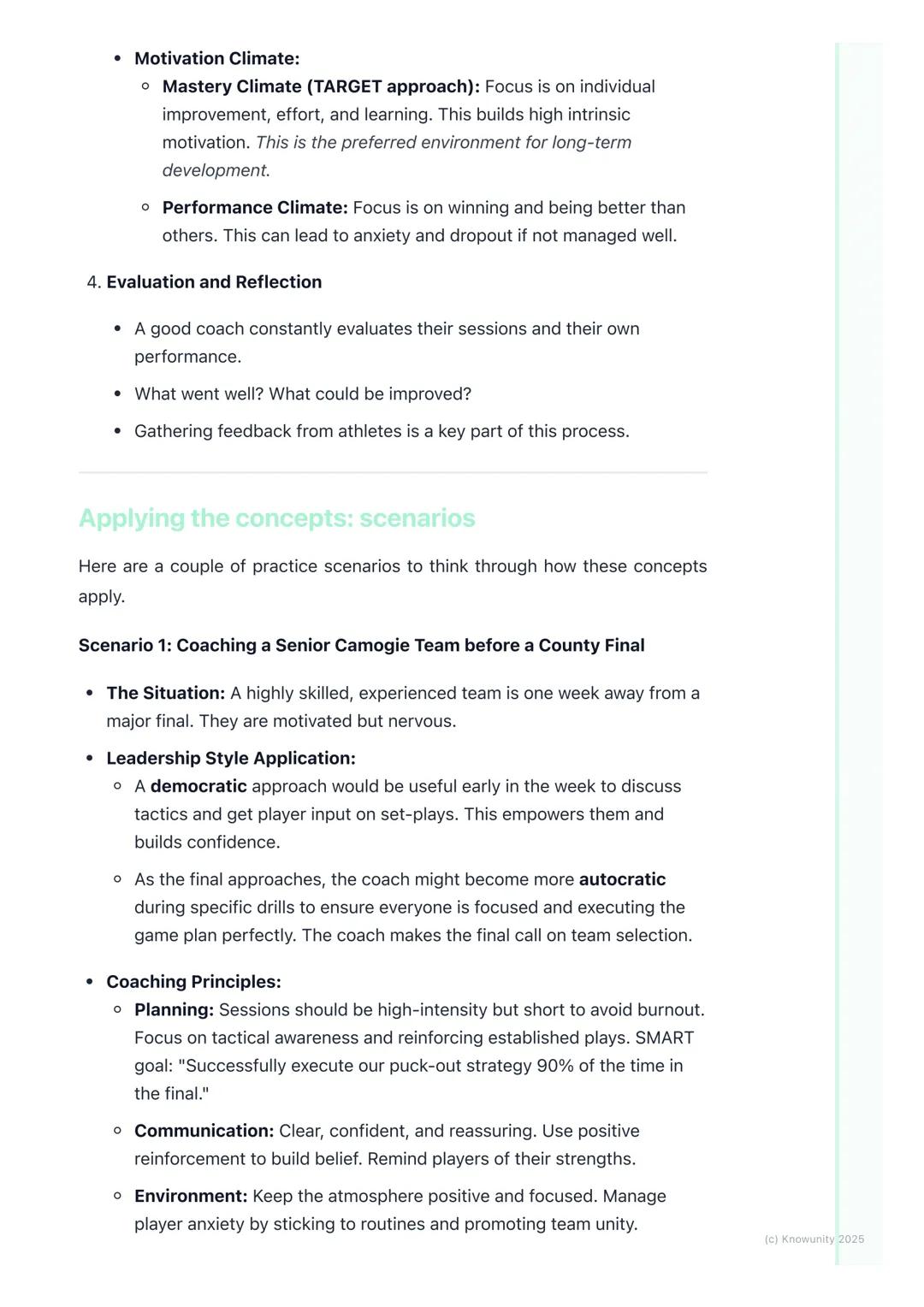
Creating Positive Environments and Evaluation
Creating a positive sporting environment is absolutely crucial for long-term success. Safety comes first - both physical and emotional. Everyone needs to feel welcome regardless of their ability level, background, or experience.
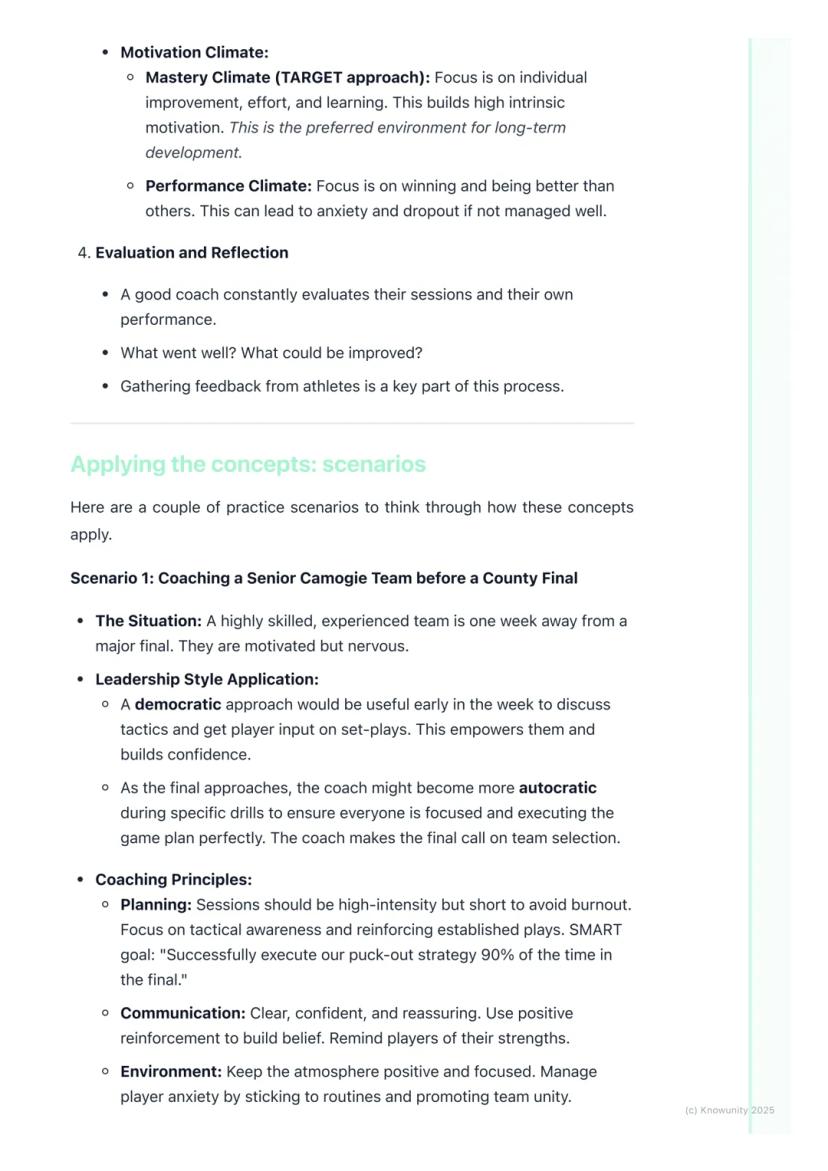
The motivational climate you create makes a huge difference. A mastery climate focuses on individual improvement, effort, and learning - this builds intrinsic motivation that lasts. A performance climate emphasises winning and comparison with others, which can create anxiety and lead to dropout.
Evaluation and reflection separate good coaches from great ones. Constantly ask yourself: what went well, what could improve, and how did the athletes respond? Getting feedback from your athletes is essential - they'll tell you what's working and what isn't.
Think about practical scenarios: coaching a senior team before a county final requires different approaches than leading a 'come and try' day for 10-year-olds. The principles stay the same, but how you apply them changes completely.
Golden Rule: Always create a mastery-focused environment where effort and improvement are celebrated more than just results.
6
of 7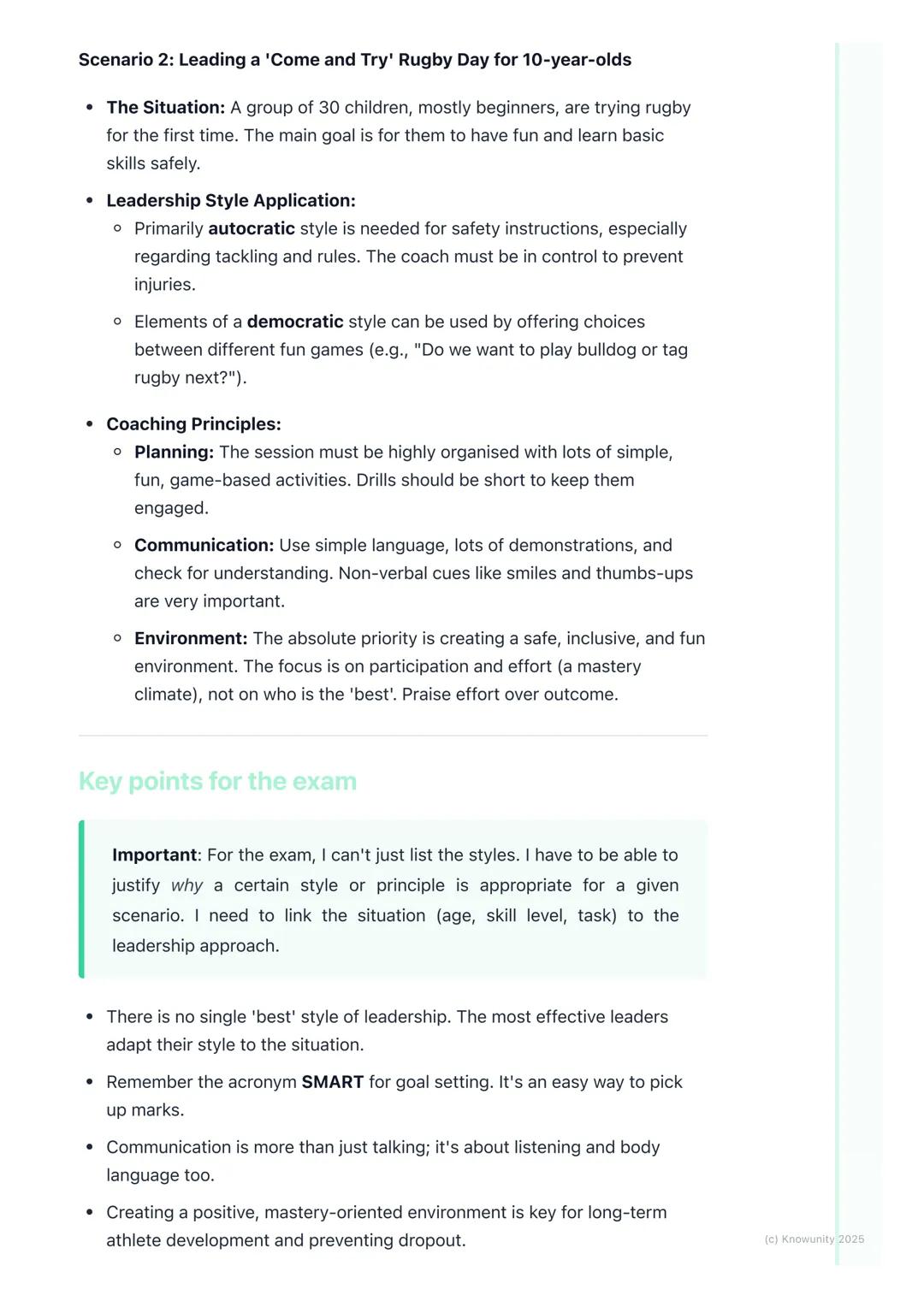
Applying Leadership in Real Scenarios
Let's put this into practice with real examples. Coaching a senior camogie team before a county final means working with skilled, motivated but nervous players. You'd use democratic leadership early in the week for tactical discussions, then become more autocratic closer to the final for focused execution of game plans.
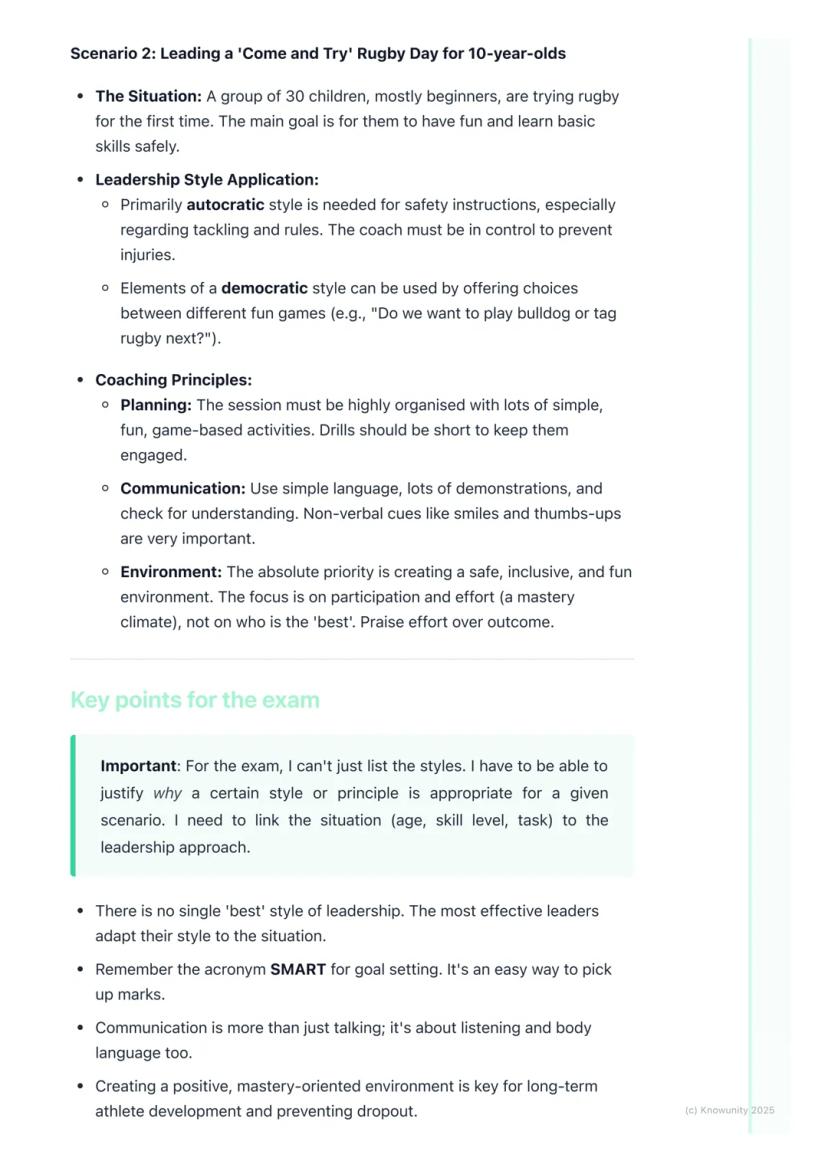
Leading a 'come and try' rugby day for beginners requires a completely different approach. Safety instructions need autocratic leadership, but you can offer democratic choices between fun activities. The focus shifts entirely to creating a safe, inclusive, fun environment where participation matters more than performance.
Your communication style changes dramatically too. Senior players can handle technical feedback and tactical complexity, whilst beginners need simple language, lots of demonstrations, and constant encouragement through smiles and positive body language.
The key skill for exam success is justification - don't just state which style you'd use, explain why it's appropriate for that specific situation, age group, and skill level.
Exam Strategy: Always link your leadership choices back to their impact on the performers - explain how your approach will improve safety, motivation, or skill development.
7
of 7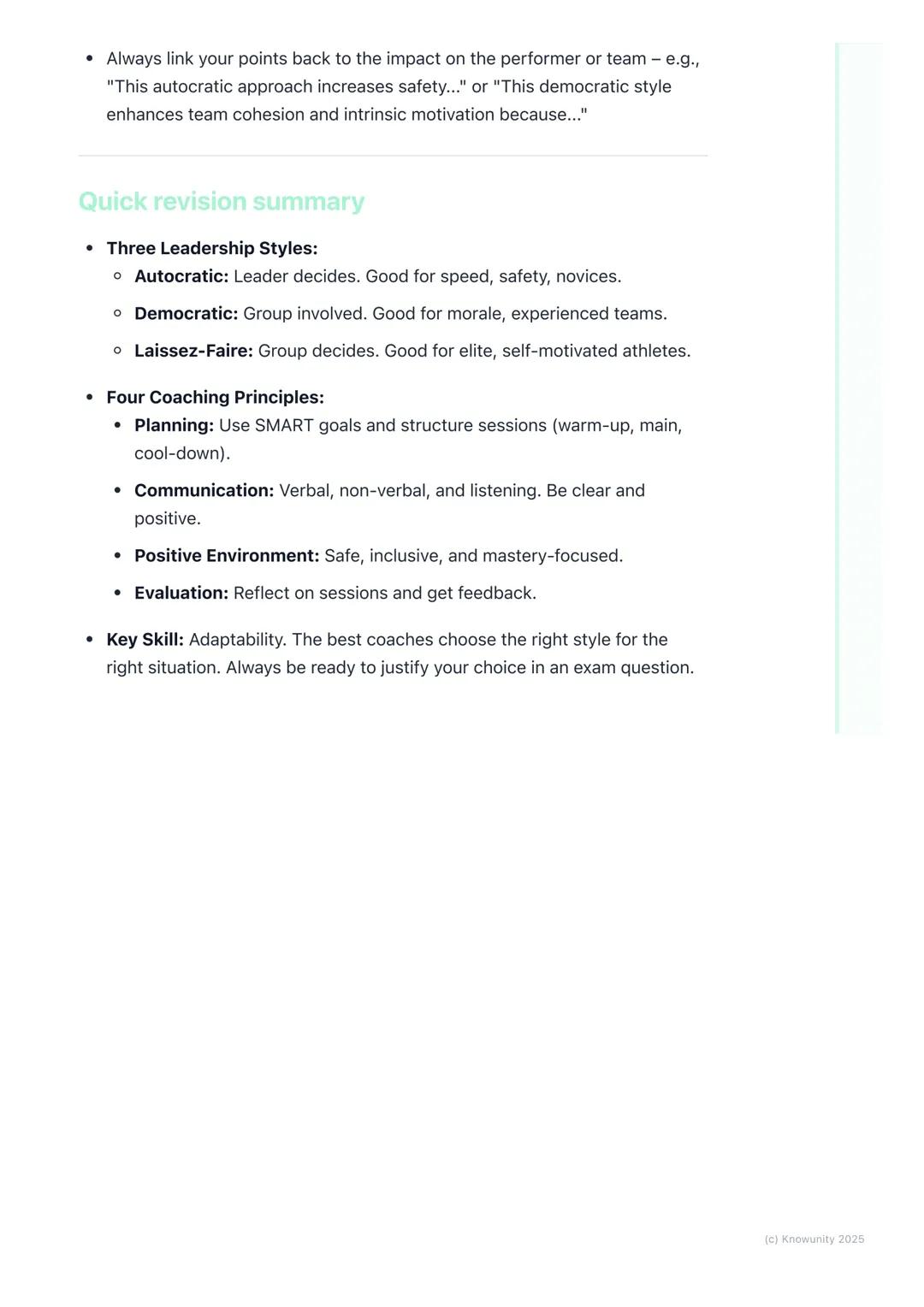
Quick Revision Summary
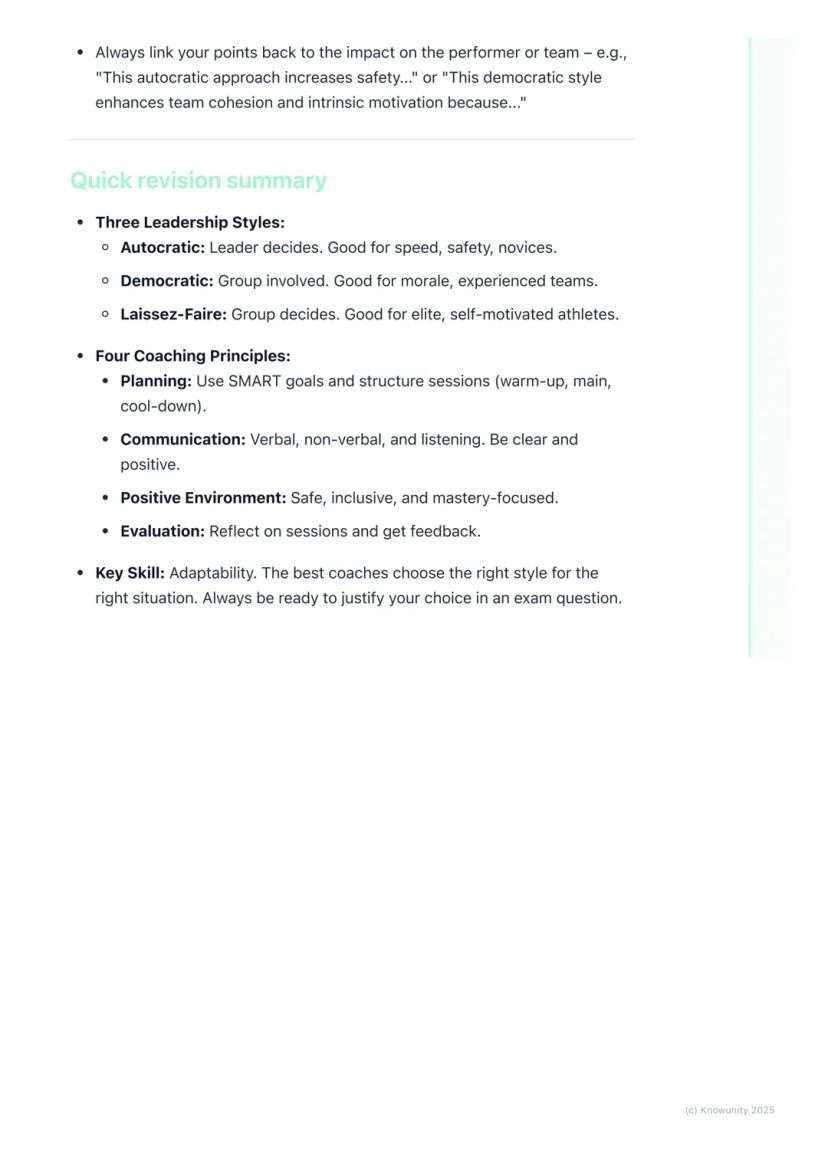
Three Leadership Styles: Autocratic , Democratic , Laissez-faire .
Four Coaching Principles: Planning with SMART goals and structured sessions; Communication through verbal, non-verbal, and listening skills; Positive Environment that's safe, inclusive, and mastery-focused; Evaluation through reflection and athlete feedback.
Key Exam Skill: Adaptability is everything. The best coaches match their leadership style to the situation, and you need to justify these choices clearly. Always explain how your approach will benefit the performers specifically.
Remember, there's no perfect leadership style - only the right style for the right situation. Master this concept and you'll excel in both your exams and any real coaching situations you encounter.
Final Tip: Practice applying these concepts to different scenarios - youth coaching, elite performance, team sports, individual activities. The more examples you can work through, the better prepared you'll be.
Pensavamo che non l'avreste mai chiesto....
Che cos'è l'assistente AI di Knowunity?
Il nostro assistente AI è costruito specificamente per le esigenze degli studenti. Sulla base dei milioni di contenuti presenti sulla piattaforma, possiamo fornire agli studenti risposte davvero significative e pertinenti. Ma non si tratta solo di risposte, l'assistente è in grado di guidare gli studenti attraverso le loro sfide quotidiane di studio, con piani di studio personalizzati, quiz o contenuti nella chat e una personalizzazione al 100% basata sulle competenze e sugli sviluppi degli studenti.
Dove posso scaricare l'applicazione Knowunity?
È possibile scaricare l'applicazione dal Google Play Store e dall'Apple App Store.
Knowunity è davvero gratuita?
Sì, hai accesso completamente gratuito a tutti i contenuti nell'app e puoi chattare o seguire i Creatori in qualsiasi momento. Sbloccherai nuove funzioni crescendo il tuo numero di follower. Inoltre, offriamo Knowunity Premium, che consente di studiare senza alcun limite!!
Contenuti più popolari di LCPE
4LCPEHealthy Eating Guidelines
This section explores national healthy eating guidelines, such as the food pyramid or healthy eating plate, to promote balanced dietary choices.
5th Year50
LCPEBiomechanics of Movement
Applying fundamental biomechanical principles such as force, motion, levers, and stability to analyse and improve human movement efficiency and performance in sport.
6th Year200
LCPEFactors effecting sports psychology ( confidence and self efficacy)
Higher Level LCPE psychological preprration notes
5th Year230
LCPETechnology in Sport
Investigating how technology is used in areas such as performance analysis, equipment design, officiating, and athlete monitoring to enhance training and competition.
6th Year50
Contenuti più popolari
9 Irish
IrishIrish oral questions and answers
Questions and answers for the leaving cert oral
5th Year4264
 English
Key Quotes : Sive
Key Quotes and explanations: Sive
6th Year2842
IrishIrish oral questions
Outline of oral questions
5th Year2055
IrishIníon- le hÁine Durkin
Aine Durkin’s poem, Iníon: Themes & summary
5th Year890
IrishIrish poetry 2027
Iníon + Dínit an Bhróin
5th Year1153
IrishLC HL notes- Iníon (poem)
Includes poem in English and Irish, theme, key words & phrases
5th Year2304
EnglishCultural Context : Shawshank Redemption : Sive : Small Things Like These
Comparative Study : Cultural Context : Shawshank Redemption, Sive and Small Things Like These
6th Year1430
IrishMo Ghrá-sa (Idir Lúibíní)
Notes on mo ghrá-sa
5th Year380
IrishAn Gaeilge Aiste
Irish Language essay
6th Year1320
Non c'è niente di adatto? Esplorare altre aree tematiche.
Recensioni dei nostri utenti. Ci adorano - e anche tu, vedrai .
4.6/5App Store
4.7/5Google Play
L'applicazione è molto facile da usare e ben progettata. Finora ho trovato tutto quello che cercavo e ho potuto imparare molto dalle presentazioni! Utilizzerò sicuramente l'app per i compiti in classe! È molto utile anche come fonte di ispirazione.
Stefano Sutente iOS
Questa applicazione è davvero grande! Ci sono tantissimi appunti e aiuti con lo studio [...]. La mia materia problematica, per esempio, è il francese e l'app ha così tante opzioni per aiutarmi. Grazie a questa app ho migliorato il mio francese. La consiglio a tutti.
Samantha Klichutente Android
Wow, sono davvero stupita. Ho appena provato l'app perché l'ho vista pubblicizzata molte volte e sono rimasta assolutamente sbalordita. Questa app è L'AIUTO che cercate per la scuola e soprattutto offre tantissime cose, come allenamenti e schede, che a me personalmente sono state MOLTO utili.
Annautente iOS
LCPE3 visualizzazioni·Aggiornato Jun 17, 2026·7 pagineMastering Leadership and Coaching in Physical Activity
Leadership and coaching are game-changers in sport and physical activity. Whether you're captaining your school team or coaching younger students, understanding different leadership styles and coaching principles can make the difference between a group that just shows up and one...
1
of 7
Iscriviti per mostrare il contenuto. È gratis!
- Accesso a tutti i documenti
- Migliora i tuoi voti
- Unisciti a milioni di studenti
Introduction to Leadership and Coaching
Think about the best coach or team leader you've ever had - what made them so effective? Leadership is all about influencing others to achieve common goals, whilst coaching is a specific type of leadership focused on training and developing athletes.
These skills aren't just about winning matches. Great leaders and coaches create environments where everyone feels valued, develops their abilities, and actually enjoys what they're doing. That's what builds lifelong participation in sport.
The key is understanding that there's no one-size-fits-all approach. Different situations call for different leadership styles, and the best leaders know how to adapt their approach based on who they're working with and what they're trying to achieve.
Remember: A leader can be formal (like a captain) or informal (like an experienced player who naturally guides others).
2
of 7Iscriviti per mostrare il contenuto. È gratis!
- Accesso a tutti i documenti
- Migliora i tuoi voti
- Unisciti a milioni di studenti
Understanding Leadership Styles
There are three main leadership styles you need to know, and each has its place depending on the situation. Autocratic leadership is task-oriented - the leader makes all decisions with little input from the group. It's brilliant for quick decisions and maintaining control.
Democratic leadership is person-oriented and involves the group in decision-making. This builds stronger relationships and keeps everyone engaged, though it can slow things down when quick decisions are needed.
Laissez-faire leadership gives the group almost complete freedom, with the leader acting more as a facilitator. This works brilliantly with highly skilled, self-motivated athletes but can lead to chaos with less experienced groups.
The secret is knowing when to use each style. You might be autocratic during safety briefings but democratic when planning team tactics.
Key Point: Effective leaders switch between styles based on the situation, not personal preference.
3
of 7Iscriviti per mostrare il contenuto. È gratis!
- Accesso a tutti i documenti
- Migliora i tuoi voti
- Unisciti a milioni di studenti
When to Use Each Leadership Style
Autocratic leadership shines in dangerous situations (think rock climbing), with young or inexperienced athletes, or when complex tasks need crystal-clear instruction. Decisions happen quickly and everyone knows exactly what's expected, though it can sometimes stifle creativity.
Democratic leadership works best with experienced, knowledgeable athletes who can contribute meaningfully to decisions. It's perfect when you have time to discuss options and want to build team cohesion for the long term.
Laissez-faire leadership suits elite, highly skilled athletes who are self-motivated and know what they're doing. It promotes creativity and problem-solving skills but can leave less motivated players feeling lost without direction.
The trick is reading your group and the situation. A successful coach might use autocratic instruction for safety, democratic discussion for tactics, and laissez-faire observation during practice games.
Smart Tip: In your exams, always justify why you'd choose a particular style - link it to the athletes' skill level, the situation, and the desired outcome.
4
of 7Iscriviti per mostrare il contenuto. È gratis!
- Accesso a tutti i documenti
- Migliora i tuoi voti
- Unisciti a milioni di studenti
Key Coaching Principles: Planning and Communication
Brilliant coaching starts with smart planning and organisation. Every session needs structure: a proper warm-up, focused main activity, and cool-down. SMART goals are your best friend here - Specific, Measurable, Achievable, Relevant, and Timed objectives that give everyone clear targets.
Effective communication involves much more than just talking. Your verbal communication needs to be clear and appropriate for your audience - avoid jargon with beginners but you can use more technical language with experienced players.
Non-verbal communication is equally powerful. Your body language, facial expressions, and demonstrations often say more than words. An encouraging smile or open posture can boost confidence, whilst crossed arms might make athletes feel defensive.
Don't forget active listening - truly hearing what your athletes are telling you about their needs, concerns, and feedback. This builds trust and helps you adapt your approach to get the best from everyone.
Communication Hack: Match your communication style to your audience - what works for county-level players might overwhelm complete beginners.
5
of 7Iscriviti per mostrare il contenuto. È gratis!
- Accesso a tutti i documenti
- Migliora i tuoi voti
- Unisciti a milioni di studenti
Creating Positive Environments and Evaluation
Creating a positive sporting environment is absolutely crucial for long-term success. Safety comes first - both physical and emotional. Everyone needs to feel welcome regardless of their ability level, background, or experience.
The motivational climate you create makes a huge difference. A mastery climate focuses on individual improvement, effort, and learning - this builds intrinsic motivation that lasts. A performance climate emphasises winning and comparison with others, which can create anxiety and lead to dropout.
Evaluation and reflection separate good coaches from great ones. Constantly ask yourself: what went well, what could improve, and how did the athletes respond? Getting feedback from your athletes is essential - they'll tell you what's working and what isn't.
Think about practical scenarios: coaching a senior team before a county final requires different approaches than leading a 'come and try' day for 10-year-olds. The principles stay the same, but how you apply them changes completely.
Golden Rule: Always create a mastery-focused environment where effort and improvement are celebrated more than just results.
6
of 7Iscriviti per mostrare il contenuto. È gratis!
- Accesso a tutti i documenti
- Migliora i tuoi voti
- Unisciti a milioni di studenti
Applying Leadership in Real Scenarios
Let's put this into practice with real examples. Coaching a senior camogie team before a county final means working with skilled, motivated but nervous players. You'd use democratic leadership early in the week for tactical discussions, then become more autocratic closer to the final for focused execution of game plans.
Leading a 'come and try' rugby day for beginners requires a completely different approach. Safety instructions need autocratic leadership, but you can offer democratic choices between fun activities. The focus shifts entirely to creating a safe, inclusive, fun environment where participation matters more than performance.
Your communication style changes dramatically too. Senior players can handle technical feedback and tactical complexity, whilst beginners need simple language, lots of demonstrations, and constant encouragement through smiles and positive body language.
The key skill for exam success is justification - don't just state which style you'd use, explain why it's appropriate for that specific situation, age group, and skill level.
Exam Strategy: Always link your leadership choices back to their impact on the performers - explain how your approach will improve safety, motivation, or skill development.
7
of 7Iscriviti per mostrare il contenuto. È gratis!
- Accesso a tutti i documenti
- Migliora i tuoi voti
- Unisciti a milioni di studenti
Quick Revision Summary
Three Leadership Styles: Autocratic , Democratic , Laissez-faire .
Four Coaching Principles: Planning with SMART goals and structured sessions; Communication through verbal, non-verbal, and listening skills; Positive Environment that's safe, inclusive, and mastery-focused; Evaluation through reflection and athlete feedback.
Key Exam Skill: Adaptability is everything. The best coaches match their leadership style to the situation, and you need to justify these choices clearly. Always explain how your approach will benefit the performers specifically.
Remember, there's no perfect leadership style - only the right style for the right situation. Master this concept and you'll excel in both your exams and any real coaching situations you encounter.
Final Tip: Practice applying these concepts to different scenarios - youth coaching, elite performance, team sports, individual activities. The more examples you can work through, the better prepared you'll be.
Pensavamo che non l'avreste mai chiesto....
Che cos'è l'assistente AI di Knowunity?
Il nostro assistente AI è costruito specificamente per le esigenze degli studenti. Sulla base dei milioni di contenuti presenti sulla piattaforma, possiamo fornire agli studenti risposte davvero significative e pertinenti. Ma non si tratta solo di risposte, l'assistente è in grado di guidare gli studenti attraverso le loro sfide quotidiane di studio, con piani di studio personalizzati, quiz o contenuti nella chat e una personalizzazione al 100% basata sulle competenze e sugli sviluppi degli studenti.
Dove posso scaricare l'applicazione Knowunity?
È possibile scaricare l'applicazione dal Google Play Store e dall'Apple App Store.
Knowunity è davvero gratuita?
Sì, hai accesso completamente gratuito a tutti i contenuti nell'app e puoi chattare o seguire i Creatori in qualsiasi momento. Sbloccherai nuove funzioni crescendo il tuo numero di follower. Inoltre, offriamo Knowunity Premium, che consente di studiare senza alcun limite!!
Contenuti più popolari di LCPE
4LCPEHealthy Eating Guidelines
This section explores national healthy eating guidelines, such as the food pyramid or healthy eating plate, to promote balanced dietary choices.
5th Year50
LCPEBiomechanics of Movement
Applying fundamental biomechanical principles such as force, motion, levers, and stability to analyse and improve human movement efficiency and performance in sport.
6th Year200
LCPEFactors effecting sports psychology ( confidence and self efficacy)
Higher Level LCPE psychological preprration notes
5th Year230
LCPETechnology in Sport
Investigating how technology is used in areas such as performance analysis, equipment design, officiating, and athlete monitoring to enhance training and competition.
6th Year50
Contenuti più popolari
9IrishIrish oral questions and answers
Questions and answers for the leaving cert oral
5th Year4264
EnglishKey Quotes : Sive
Key Quotes and explanations: Sive
6th Year2842
IrishIrish oral questions
Outline of oral questions
5th Year2055
IrishIníon- le hÁine Durkin
Aine Durkin’s poem, Iníon: Themes & summary
5th Year890
IrishIrish poetry 2027
Iníon + Dínit an Bhróin
5th Year1153
IrishLC HL notes- Iníon (poem)
Includes poem in English and Irish, theme, key words & phrases
5th Year2304
EnglishCultural Context : Shawshank Redemption : Sive : Small Things Like These
Comparative Study : Cultural Context : Shawshank Redemption, Sive and Small Things Like These
6th Year1430
IrishMo Ghrá-sa (Idir Lúibíní)
Notes on mo ghrá-sa
5th Year380
IrishAn Gaeilge Aiste
Irish Language essay
6th Year1320
Non c'è niente di adatto? Esplorare altre aree tematiche.
Recensioni dei nostri utenti. Ci adorano - e anche tu, vedrai .
4.6/5App Store
4.7/5Google Play
L'applicazione è molto facile da usare e ben progettata. Finora ho trovato tutto quello che cercavo e ho potuto imparare molto dalle presentazioni! Utilizzerò sicuramente l'app per i compiti in classe! È molto utile anche come fonte di ispirazione.
Stefano Sutente iOS
Questa applicazione è davvero grande! Ci sono tantissimi appunti e aiuti con lo studio [...]. La mia materia problematica, per esempio, è il francese e l'app ha così tante opzioni per aiutarmi. Grazie a questa app ho migliorato il mio francese. La consiglio a tutti.
Samantha Klichutente Android
Wow, sono davvero stupita. Ho appena provato l'app perché l'ho vista pubblicizzata molte volte e sono rimasta assolutamente sbalordita. Questa app è L'AIUTO che cercate per la scuola e soprattutto offre tantissime cose, come allenamenti e schede, che a me personalmente sono state MOLTO utili.
Annautente iOS