
History isn't just about memorising dates and kings - it's...
 History5 visualizzazioni·Aggiornato Jun 13, 2026·6 pagine
Understanding History: The Importance of Studying the Past

1 / 6
1
of 6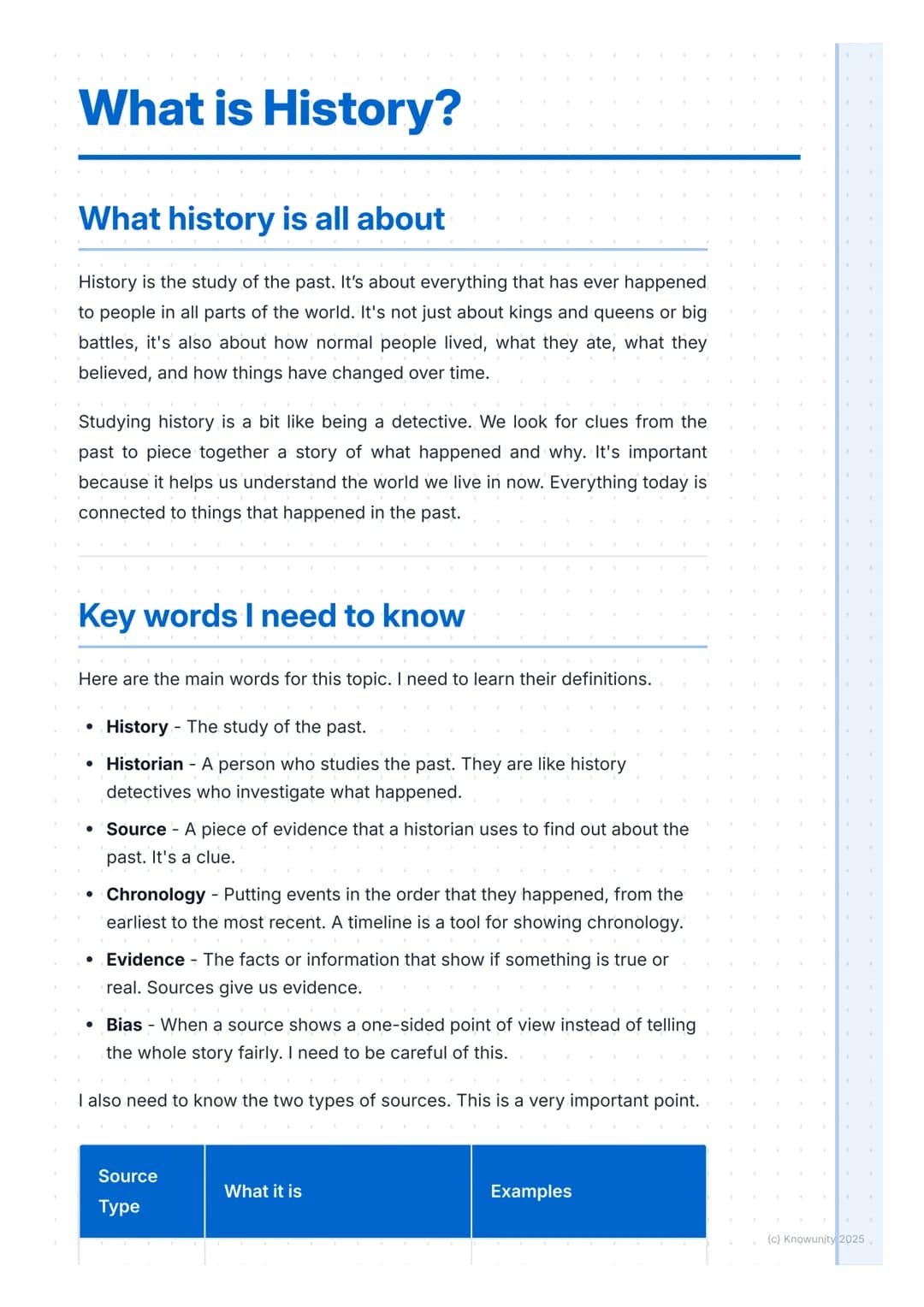
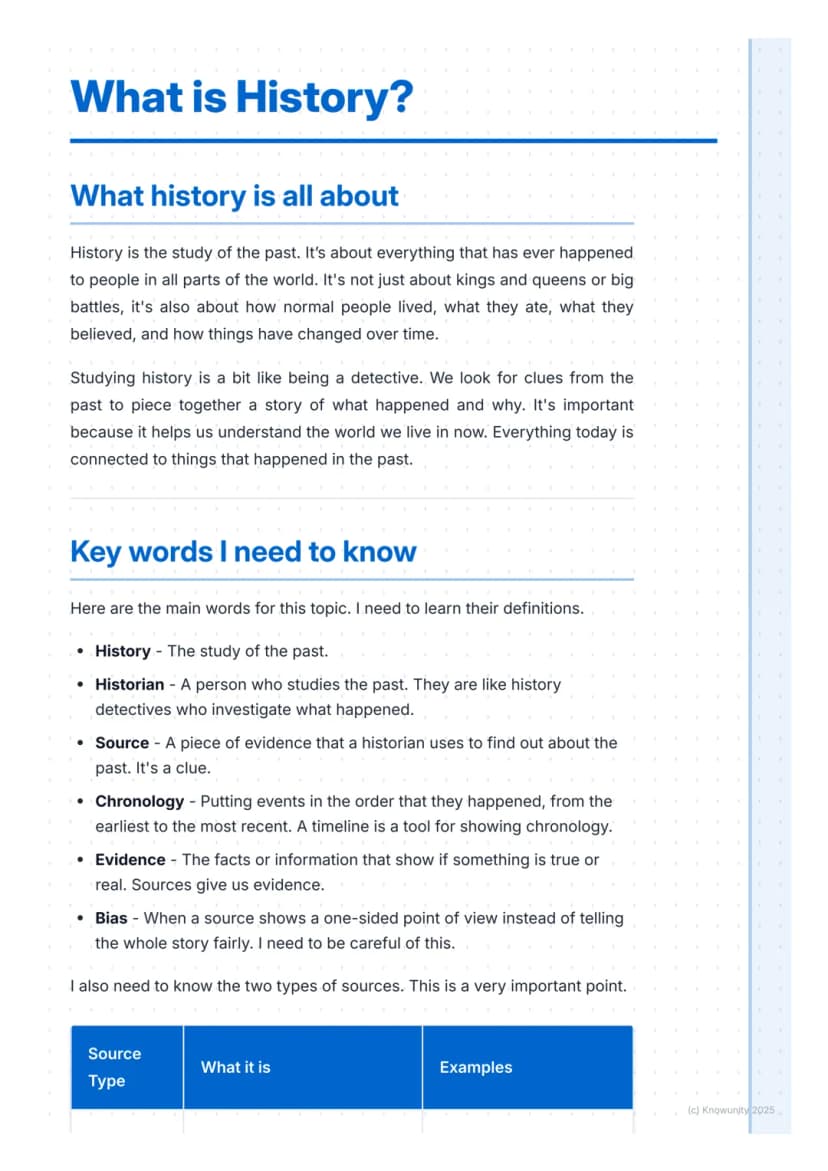
What History Is All About
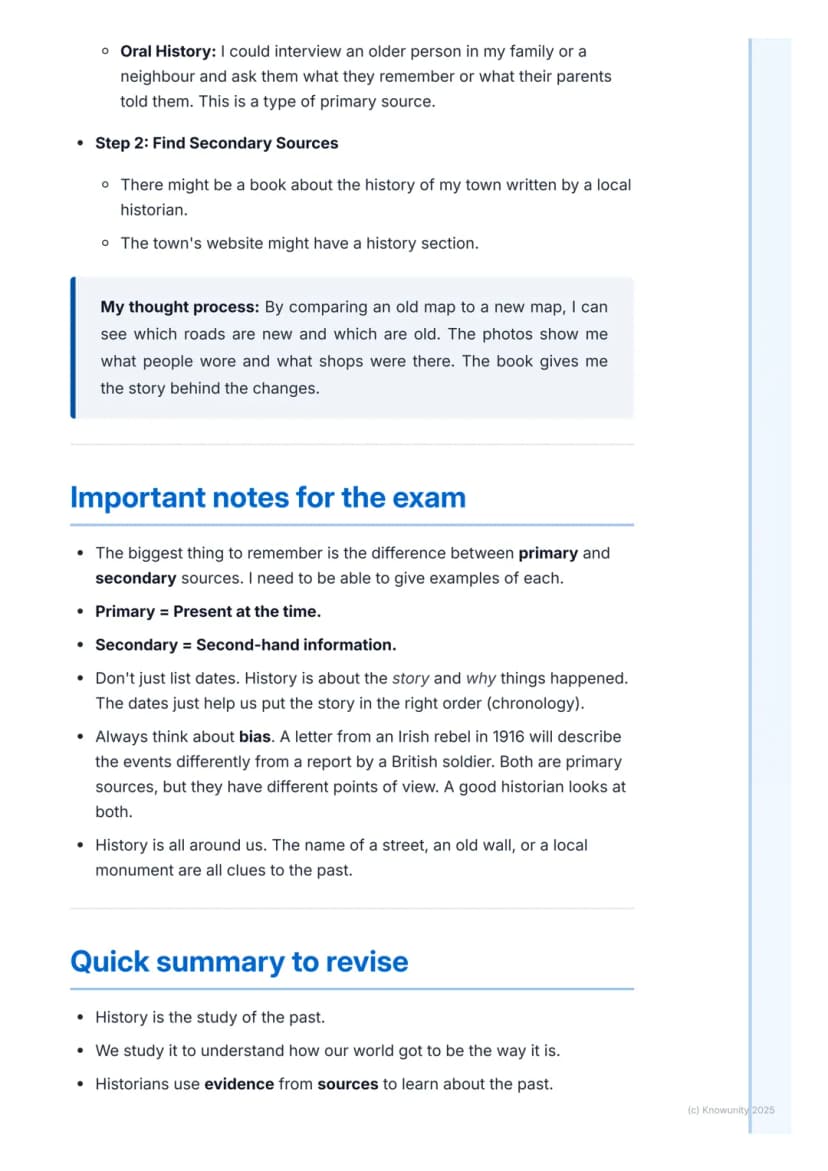
Ever wondered why your town looks the way it does, or how people lived before smartphones existed? History is the study of the past, covering everything from ordinary people's daily lives to major events that changed the world.
Think of yourself as a history detective! Historians search for clues to understand what happened and why. They don't just guess - they follow evidence to solve puzzles from long ago.
Here are the key terms you'll need to master: sources (pieces of evidence), chronology (putting events in order), and bias (when someone tells only one side of the story). The most important thing to remember is that there are two types of sources you'll work with.
💡 Remember: Everything around you today - from your school to your street name - connects to something that happened in the past!
2
of 6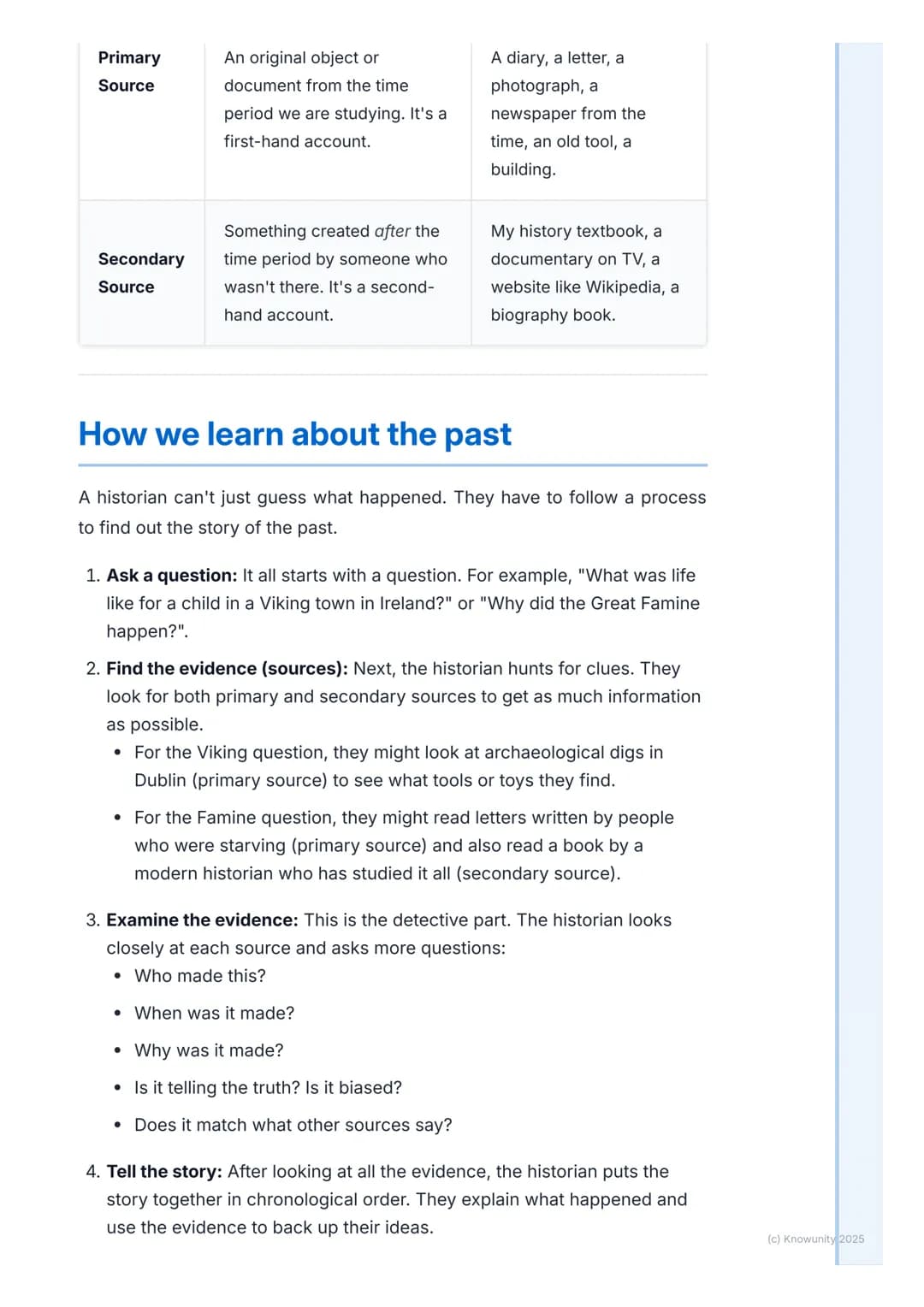
Understanding Primary and Secondary Sources
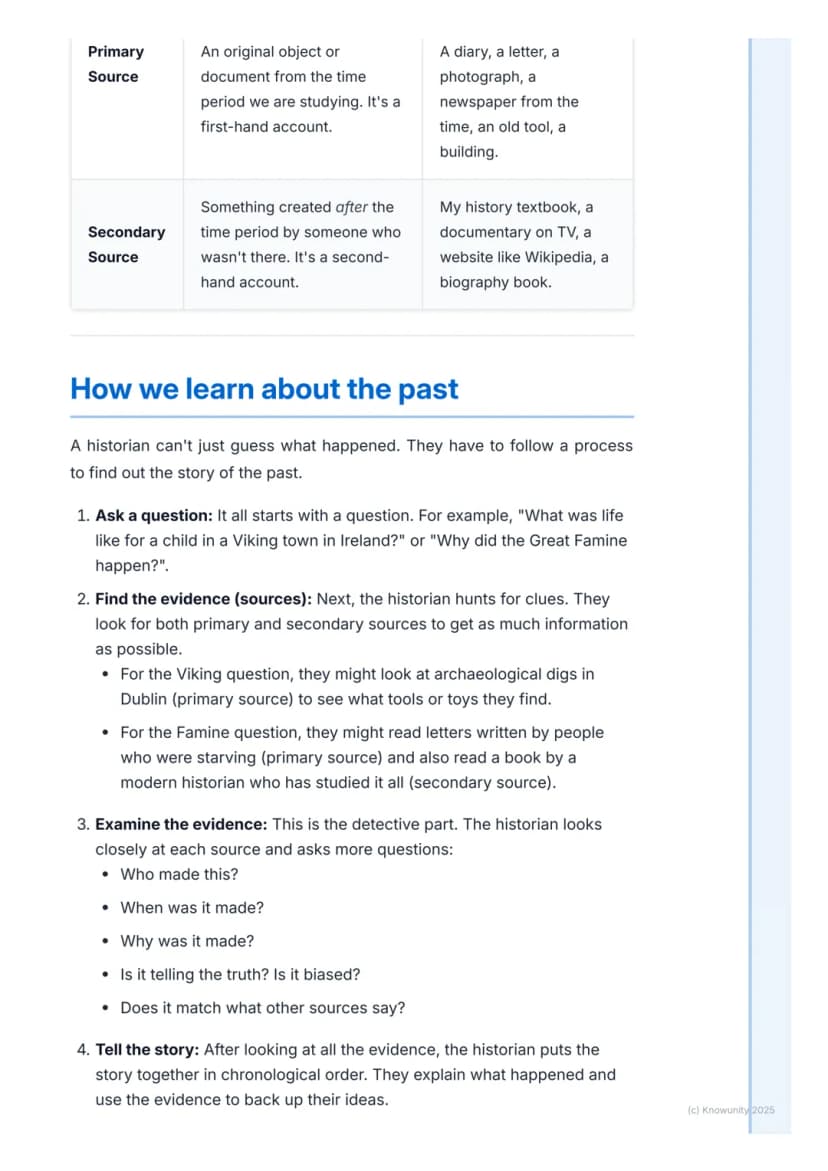
Primary sources are like getting information straight from the horse's mouth - they're original items from the actual time period you're studying. Think diaries, old photographs, letters, or even buildings that are still standing.
Secondary sources are created later by people who weren't actually there. Your history textbook, documentaries, and Wikipedia articles are all secondary sources - they're written by modern people who studied the evidence.
Here's how historians work their magic: First, they ask a question (like "What was life like for children during the Great Famine?"). Then they hunt for both types of sources, examine them carefully for truth and bias, and finally piece together the story in the right order.
💡 Top Tip: Primary = Present at the time. Secondary = Second-hand information. This difference is crucial for your exams!
3
of 6
Putting Events in Order
Chronology means arranging events in the order they happened - from earliest to most recent. It's like creating a timeline of the past to help make sense of how one thing led to another.
Think of chronology as the backbone of any historical story. Without it, you'd have a jumbled mess of events that don't connect properly.
Historians use timelines as tools to show chronology clearly. This helps them (and you!) see patterns and understand how events influenced each other over time.
💡 Remember: Dates aren't just for memorising - they help you understand the 'why' behind historical events!
4
of 6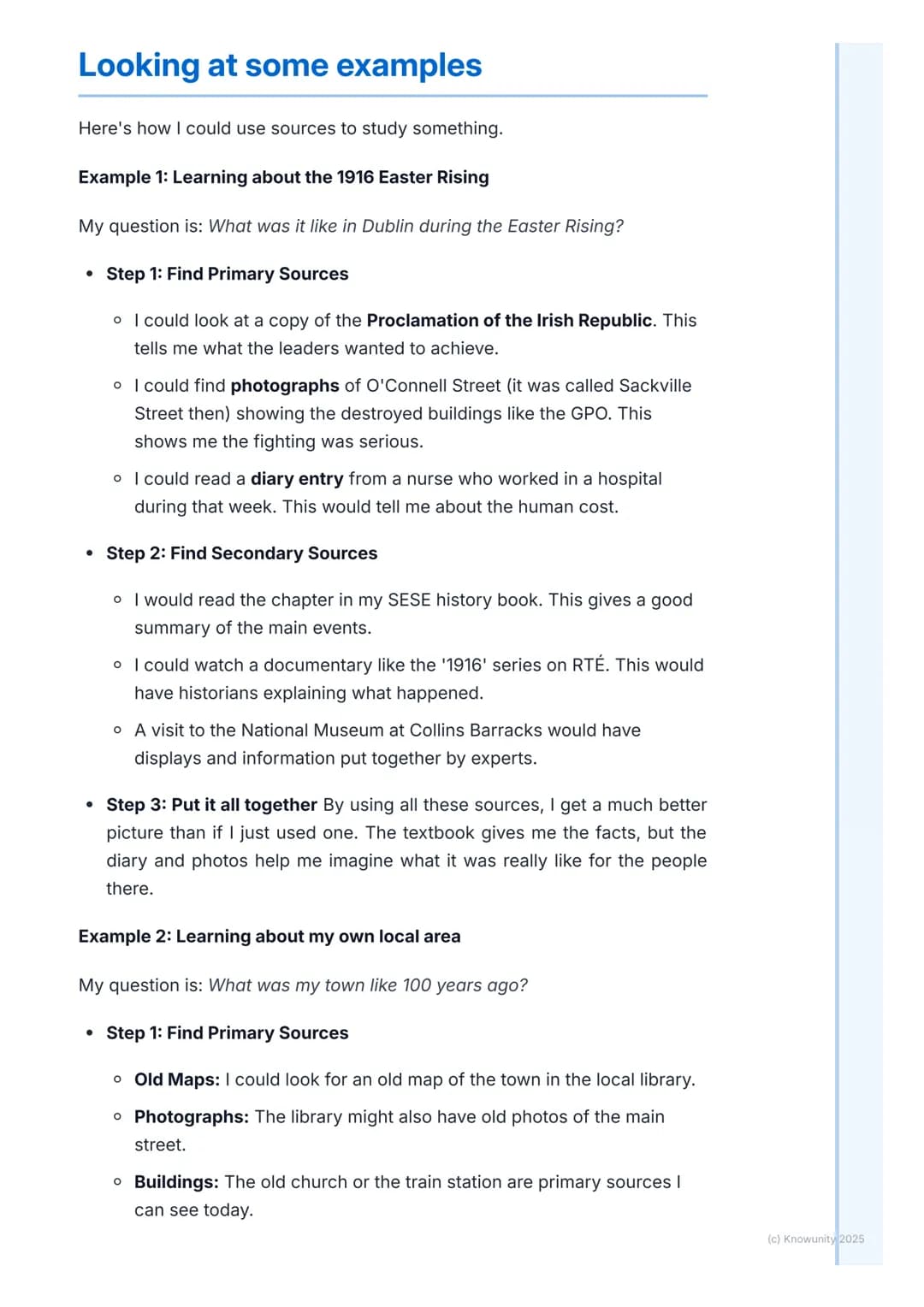
Real Examples: The 1916 Easter Rising
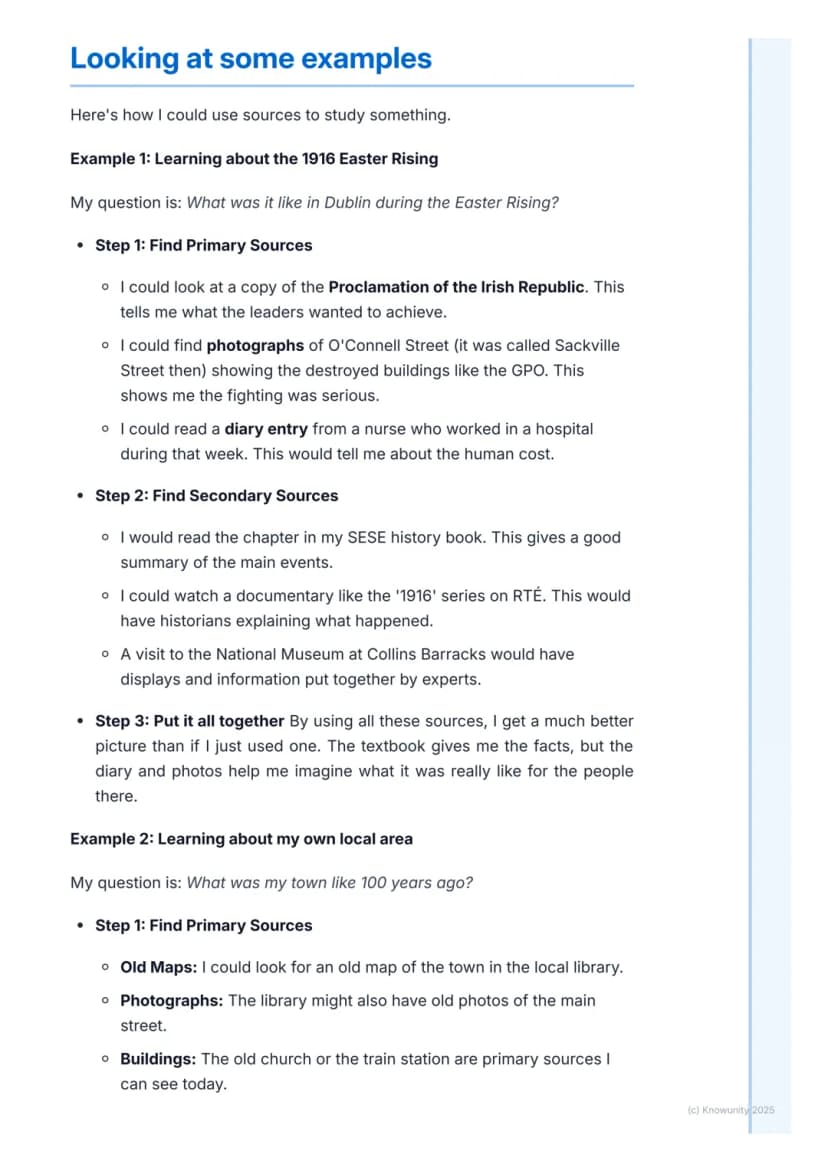
Let's see how you'd investigate what Dublin was like during the Easter Rising. You'd start by hunting for primary sources like the original Proclamation of the Irish Republic, photographs of the destroyed GPO, or diary entries from people who lived through it.
Then you'd find secondary sources such as your SESE history book, RTÉ documentaries, or museum displays created by modern experts. Each type gives you different pieces of the puzzle.
By combining both source types, you get the full picture. The textbook gives you facts and dates, whilst the diary entries help you imagine what it actually felt like to be there during those dramatic six days.
Evidence from multiple sources is always stronger than relying on just one account, especially since every source might have some bias based on who created it.
💡 Smart Move: Always compare different sources - an Irish rebel's letter will tell a very different story from a British soldier's report!
5
of 6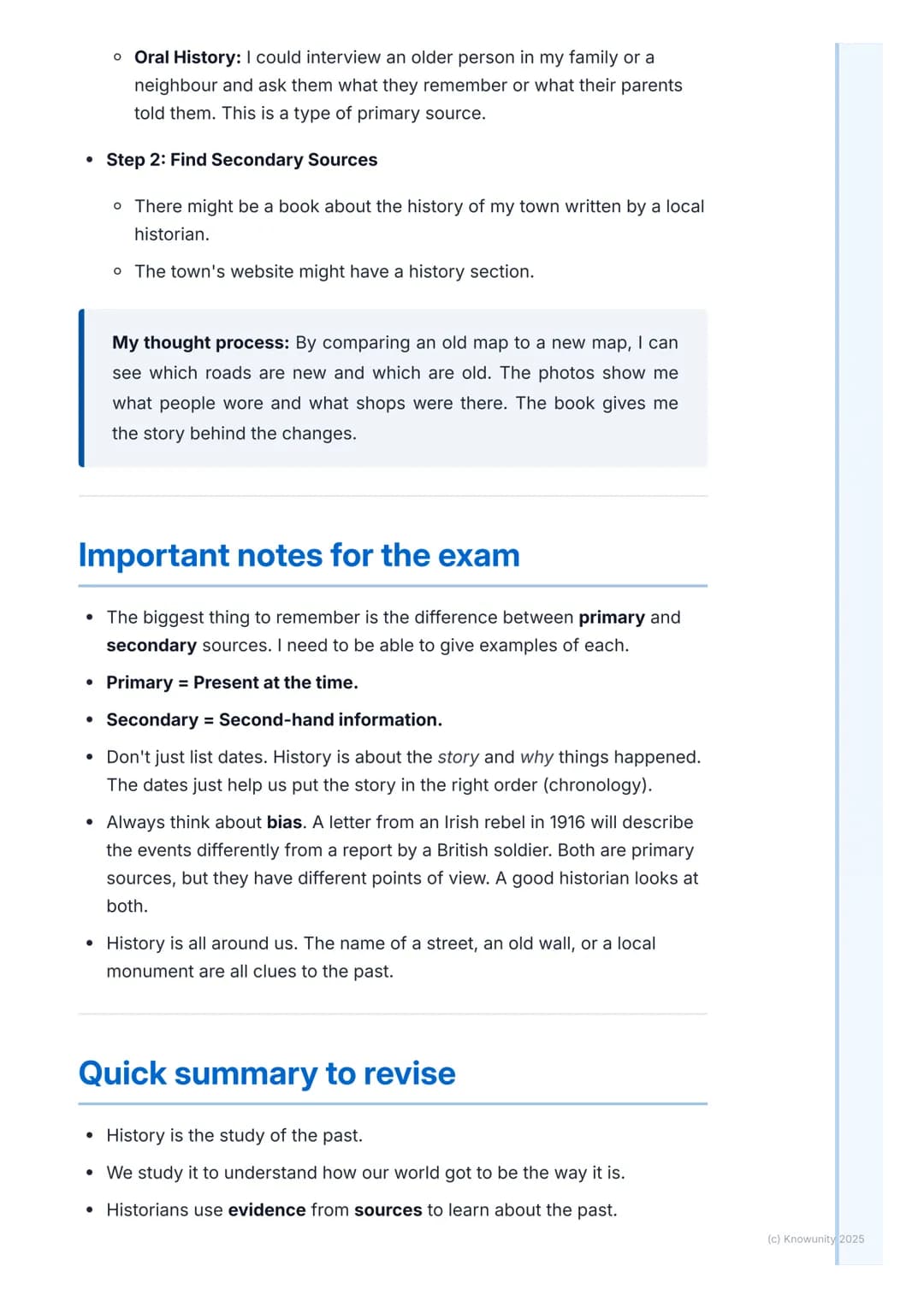
Investigating Your Local Area
Your own town is packed with historical evidence waiting to be discovered! Start with primary sources you can actually see and touch - old buildings, churches, railway stations, or even street names that hint at the past.
Oral history is brilliant for local research. Chat with older family members or neighbours about what they remember or what their parents told them. These personal stories are primary sources that bring the past to life.
Don't forget secondary sources like local history books or your town's website. Compare old maps with modern ones to spot which roads are new and which have been there for centuries.
The key is combining different types of evidence to build up a complete picture of how your area has changed over time.
💡 History Hack: Your local library often has treasure troves of old photographs and maps - they're goldmines for student historians!
6
of 6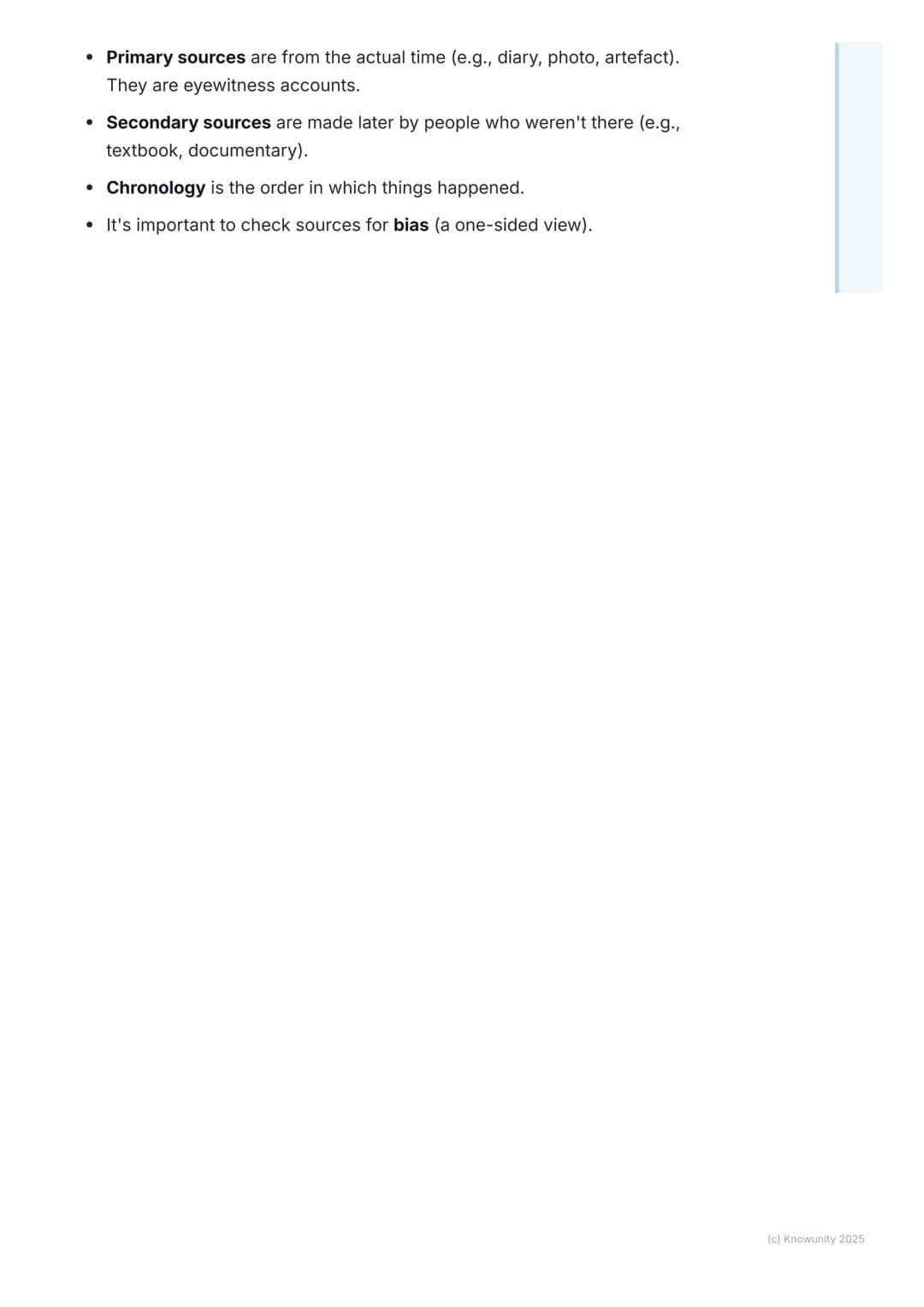
Exam Success Tips
Here's what really matters for your exams: nail the difference between primary and secondary sources with solid examples. Remember that primary sources were created at the time, whilst secondary sources are second-hand accounts made later.
Always watch out for bias - every source has a point of view, and smart historians consider multiple perspectives. A diary from 1916 will tell a different story depending on whether it was written by an Irish nationalist or a British official.
Chronology isn't about memorising endless dates - it's about understanding the order of events and how they connect. Focus on the story and the 'why' behind what happened.
💡 Final Reminder: History surrounds you everywhere - from old walls to street names, every clue helps solve the mystery of the past!
Pensavamo che non l'avreste mai chiesto....
Che cos'è l'assistente AI di Knowunity?
Il nostro assistente AI è costruito specificamente per le esigenze degli studenti. Sulla base dei milioni di contenuti presenti sulla piattaforma, possiamo fornire agli studenti risposte davvero significative e pertinenti. Ma non si tratta solo di risposte, l'assistente è in grado di guidare gli studenti attraverso le loro sfide quotidiane di studio, con piani di studio personalizzati, quiz o contenuti nella chat e una personalizzazione al 100% basata sulle competenze e sugli sviluppi degli studenti.
Dove posso scaricare l'applicazione Knowunity?
È possibile scaricare l'applicazione dal Google Play Store e dall'Apple App Store.
Knowunity è davvero gratuita?
Sì, hai accesso completamente gratuito a tutti i contenuti nell'app e puoi chattare o seguire i Creatori in qualsiasi momento. Sbloccherai nuove funzioni crescendo il tuo numero di follower. Inoltre, offriamo Knowunity Premium, che consente di studiare senza alcun limite!!
Contenuti più popolari di History
9HistoryThe Great Famine (An Gorta Mór)
Students will learn about the causes, devastating impact, and long-term consequences of the potato famine on Irish population and society.
2nd Year282
HistoryThe renaissance
junior cert renaissance summary
1st Year361
HistoryCauses and Consequences of World War II
This subtopic covers the origins of the Second World War, its global scale, and its devastating human and political consequences, including the atomic bomb.
3rd Year152
HistoryThe 1798 Rebellion in Ireland
Learning about the causes, events, and aftermath of the United Irishmen's rebellion against British rule, inspired by revolutionary ideals.
3rd Year211
HistoryAmerican revolution
junior cert american revolution summary
1st Year442
HistoryThe Great Famine (An Gorta Mór)
This critical subtopic examines the causes, devastating impact, and long-term consequences of the potato famine on Irish society, population, and emigration.
3rd Year140
HistoryThe Renaissance
Students will learn about a time of 'rebirth' in Europe, where new ideas in art, science, and literature flourished.
1st Year140
History1916 Rising Revison Sheet
revision sheet
3rd Year211
HistoryThe Reformation in Europe
Students will learn about the causes and key figures of the Protestant Reformation and its impact on European society and politics.
3rd Year110
Contenuti più popolari
9 Irish
IrishIrish oral questions and answers
Questions and answers for the leaving cert oral
5th Year4264
 English
Key Quotes : Sive
Key Quotes and explanations: Sive
6th Year2842
IrishIrish oral questions
Outline of oral questions
5th Year2055
IrishIníon- le hÁine Durkin
Aine Durkin’s poem, Iníon: Themes & summary
5th Year850
IrishIrish poetry 2027
Iníon + Dínit an Bhróin
5th Year1133
IrishLC HL notes- Iníon (poem)
Includes poem in English and Irish, theme, key words & phrases
5th Year2284
EnglishCultural Context : Shawshank Redemption : Sive : Small Things Like These
Comparative Study : Cultural Context : Shawshank Redemption, Sive and Small Things Like These
6th Year1430
IrishMo Ghrá-sa (Idir Lúibíní)
Notes on mo ghrá-sa
5th Year380
IrishAn Gaeilge Aiste
Irish Language essay
6th Year1320
Non c'è niente di adatto? Esplorare altre aree tematiche.
Recensioni dei nostri utenti. Ci adorano - e anche tu, vedrai .
4.6/5App Store
4.7/5Google Play
L'applicazione è molto facile da usare e ben progettata. Finora ho trovato tutto quello che cercavo e ho potuto imparare molto dalle presentazioni! Utilizzerò sicuramente l'app per i compiti in classe! È molto utile anche come fonte di ispirazione.
Stefano Sutente iOS
Questa applicazione è davvero grande! Ci sono tantissimi appunti e aiuti con lo studio [...]. La mia materia problematica, per esempio, è il francese e l'app ha così tante opzioni per aiutarmi. Grazie a questa app ho migliorato il mio francese. La consiglio a tutti.
Samantha Klichutente Android
Wow, sono davvero stupita. Ho appena provato l'app perché l'ho vista pubblicizzata molte volte e sono rimasta assolutamente sbalordita. Questa app è L'AIUTO che cercate per la scuola e soprattutto offre tantissime cose, come allenamenti e schede, che a me personalmente sono state MOLTO utili.
Annautente iOS
History5 visualizzazioni·Aggiornato Jun 13, 2026·6 pagineUnderstanding History: The Importance of Studying the Past
History isn't just about memorising dates and kings - it's like being a detective who solves mysteries from the past! You'll discover how historians use clues (called sources) to piece together stories about how people lived, what they believed, and...
1
of 6
Iscriviti per mostrare il contenuto. È gratis!
- Accesso a tutti i documenti
- Migliora i tuoi voti
- Unisciti a milioni di studenti
What History Is All About
Ever wondered why your town looks the way it does, or how people lived before smartphones existed? History is the study of the past, covering everything from ordinary people's daily lives to major events that changed the world.
Think of yourself as a history detective! Historians search for clues to understand what happened and why. They don't just guess - they follow evidence to solve puzzles from long ago.
Here are the key terms you'll need to master: sources (pieces of evidence), chronology (putting events in order), and bias (when someone tells only one side of the story). The most important thing to remember is that there are two types of sources you'll work with.
💡 Remember: Everything around you today - from your school to your street name - connects to something that happened in the past!
2
of 6Iscriviti per mostrare il contenuto. È gratis!
- Accesso a tutti i documenti
- Migliora i tuoi voti
- Unisciti a milioni di studenti
Understanding Primary and Secondary Sources
Primary sources are like getting information straight from the horse's mouth - they're original items from the actual time period you're studying. Think diaries, old photographs, letters, or even buildings that are still standing.
Secondary sources are created later by people who weren't actually there. Your history textbook, documentaries, and Wikipedia articles are all secondary sources - they're written by modern people who studied the evidence.
Here's how historians work their magic: First, they ask a question (like "What was life like for children during the Great Famine?"). Then they hunt for both types of sources, examine them carefully for truth and bias, and finally piece together the story in the right order.
💡 Top Tip: Primary = Present at the time. Secondary = Second-hand information. This difference is crucial for your exams!
3
of 6Iscriviti per mostrare il contenuto. È gratis!
- Accesso a tutti i documenti
- Migliora i tuoi voti
- Unisciti a milioni di studenti
Putting Events in Order
Chronology means arranging events in the order they happened - from earliest to most recent. It's like creating a timeline of the past to help make sense of how one thing led to another.
Think of chronology as the backbone of any historical story. Without it, you'd have a jumbled mess of events that don't connect properly.
Historians use timelines as tools to show chronology clearly. This helps them (and you!) see patterns and understand how events influenced each other over time.
💡 Remember: Dates aren't just for memorising - they help you understand the 'why' behind historical events!
4
of 6Iscriviti per mostrare il contenuto. È gratis!
- Accesso a tutti i documenti
- Migliora i tuoi voti
- Unisciti a milioni di studenti
Real Examples: The 1916 Easter Rising
Let's see how you'd investigate what Dublin was like during the Easter Rising. You'd start by hunting for primary sources like the original Proclamation of the Irish Republic, photographs of the destroyed GPO, or diary entries from people who lived through it.
Then you'd find secondary sources such as your SESE history book, RTÉ documentaries, or museum displays created by modern experts. Each type gives you different pieces of the puzzle.
By combining both source types, you get the full picture. The textbook gives you facts and dates, whilst the diary entries help you imagine what it actually felt like to be there during those dramatic six days.
Evidence from multiple sources is always stronger than relying on just one account, especially since every source might have some bias based on who created it.
💡 Smart Move: Always compare different sources - an Irish rebel's letter will tell a very different story from a British soldier's report!
5
of 6Iscriviti per mostrare il contenuto. È gratis!
- Accesso a tutti i documenti
- Migliora i tuoi voti
- Unisciti a milioni di studenti
Investigating Your Local Area
Your own town is packed with historical evidence waiting to be discovered! Start with primary sources you can actually see and touch - old buildings, churches, railway stations, or even street names that hint at the past.
Oral history is brilliant for local research. Chat with older family members or neighbours about what they remember or what their parents told them. These personal stories are primary sources that bring the past to life.
Don't forget secondary sources like local history books or your town's website. Compare old maps with modern ones to spot which roads are new and which have been there for centuries.
The key is combining different types of evidence to build up a complete picture of how your area has changed over time.
💡 History Hack: Your local library often has treasure troves of old photographs and maps - they're goldmines for student historians!
6
of 6Iscriviti per mostrare il contenuto. È gratis!
- Accesso a tutti i documenti
- Migliora i tuoi voti
- Unisciti a milioni di studenti
Exam Success Tips
Here's what really matters for your exams: nail the difference between primary and secondary sources with solid examples. Remember that primary sources were created at the time, whilst secondary sources are second-hand accounts made later.
Always watch out for bias - every source has a point of view, and smart historians consider multiple perspectives. A diary from 1916 will tell a different story depending on whether it was written by an Irish nationalist or a British official.
Chronology isn't about memorising endless dates - it's about understanding the order of events and how they connect. Focus on the story and the 'why' behind what happened.
💡 Final Reminder: History surrounds you everywhere - from old walls to street names, every clue helps solve the mystery of the past!
Pensavamo che non l'avreste mai chiesto....
Che cos'è l'assistente AI di Knowunity?
Il nostro assistente AI è costruito specificamente per le esigenze degli studenti. Sulla base dei milioni di contenuti presenti sulla piattaforma, possiamo fornire agli studenti risposte davvero significative e pertinenti. Ma non si tratta solo di risposte, l'assistente è in grado di guidare gli studenti attraverso le loro sfide quotidiane di studio, con piani di studio personalizzati, quiz o contenuti nella chat e una personalizzazione al 100% basata sulle competenze e sugli sviluppi degli studenti.
Dove posso scaricare l'applicazione Knowunity?
È possibile scaricare l'applicazione dal Google Play Store e dall'Apple App Store.
Knowunity è davvero gratuita?
Sì, hai accesso completamente gratuito a tutti i contenuti nell'app e puoi chattare o seguire i Creatori in qualsiasi momento. Sbloccherai nuove funzioni crescendo il tuo numero di follower. Inoltre, offriamo Knowunity Premium, che consente di studiare senza alcun limite!!
Contenuti più popolari di History
9HistoryThe Great Famine (An Gorta Mór)
Students will learn about the causes, devastating impact, and long-term consequences of the potato famine on Irish population and society.
2nd Year282
HistoryThe renaissance
junior cert renaissance summary
1st Year361
HistoryCauses and Consequences of World War II
This subtopic covers the origins of the Second World War, its global scale, and its devastating human and political consequences, including the atomic bomb.
3rd Year152
HistoryThe 1798 Rebellion in Ireland
Learning about the causes, events, and aftermath of the United Irishmen's rebellion against British rule, inspired by revolutionary ideals.
3rd Year211
HistoryAmerican revolution
junior cert american revolution summary
1st Year442
HistoryThe Great Famine (An Gorta Mór)
This critical subtopic examines the causes, devastating impact, and long-term consequences of the potato famine on Irish society, population, and emigration.
3rd Year140
HistoryThe Renaissance
Students will learn about a time of 'rebirth' in Europe, where new ideas in art, science, and literature flourished.
1st Year140
History1916 Rising Revison Sheet
revision sheet
3rd Year211
HistoryThe Reformation in Europe
Students will learn about the causes and key figures of the Protestant Reformation and its impact on European society and politics.
3rd Year110
Contenuti più popolari
9IrishIrish oral questions and answers
Questions and answers for the leaving cert oral
5th Year4264
EnglishKey Quotes : Sive
Key Quotes and explanations: Sive
6th Year2842
IrishIrish oral questions
Outline of oral questions
5th Year2055
IrishIníon- le hÁine Durkin
Aine Durkin’s poem, Iníon: Themes & summary
5th Year850
IrishIrish poetry 2027
Iníon + Dínit an Bhróin
5th Year1133
IrishLC HL notes- Iníon (poem)
Includes poem in English and Irish, theme, key words & phrases
5th Year2284
EnglishCultural Context : Shawshank Redemption : Sive : Small Things Like These
Comparative Study : Cultural Context : Shawshank Redemption, Sive and Small Things Like These
6th Year1430
IrishMo Ghrá-sa (Idir Lúibíní)
Notes on mo ghrá-sa
5th Year380
IrishAn Gaeilge Aiste
Irish Language essay
6th Year1320
Non c'è niente di adatto? Esplorare altre aree tematiche.
Recensioni dei nostri utenti. Ci adorano - e anche tu, vedrai .
4.6/5App Store
4.7/5Google Play
L'applicazione è molto facile da usare e ben progettata. Finora ho trovato tutto quello che cercavo e ho potuto imparare molto dalle presentazioni! Utilizzerò sicuramente l'app per i compiti in classe! È molto utile anche come fonte di ispirazione.
Stefano Sutente iOS
Questa applicazione è davvero grande! Ci sono tantissimi appunti e aiuti con lo studio [...]. La mia materia problematica, per esempio, è il francese e l'app ha così tante opzioni per aiutarmi. Grazie a questa app ho migliorato il mio francese. La consiglio a tutti.
Samantha Klichutente Android
Wow, sono davvero stupita. Ho appena provato l'app perché l'ho vista pubblicizzata molte volte e sono rimasta assolutamente sbalordita. Questa app è L'AIUTO che cercate per la scuola e soprattutto offre tantissime cose, come allenamenti e schede, che a me personalmente sono state MOLTO utili.
Annautente iOS