
The Great Famine (An Gorta Mór) devastated Ireland from 1845... Mostra di più
 History3 visualizzazioni·Aggiornato Jun 5, 2026·5 pagine
The Irish Potato Famine: Causes and Impact
1 / 5
1
of 5
Understanding the Famine's Beginning
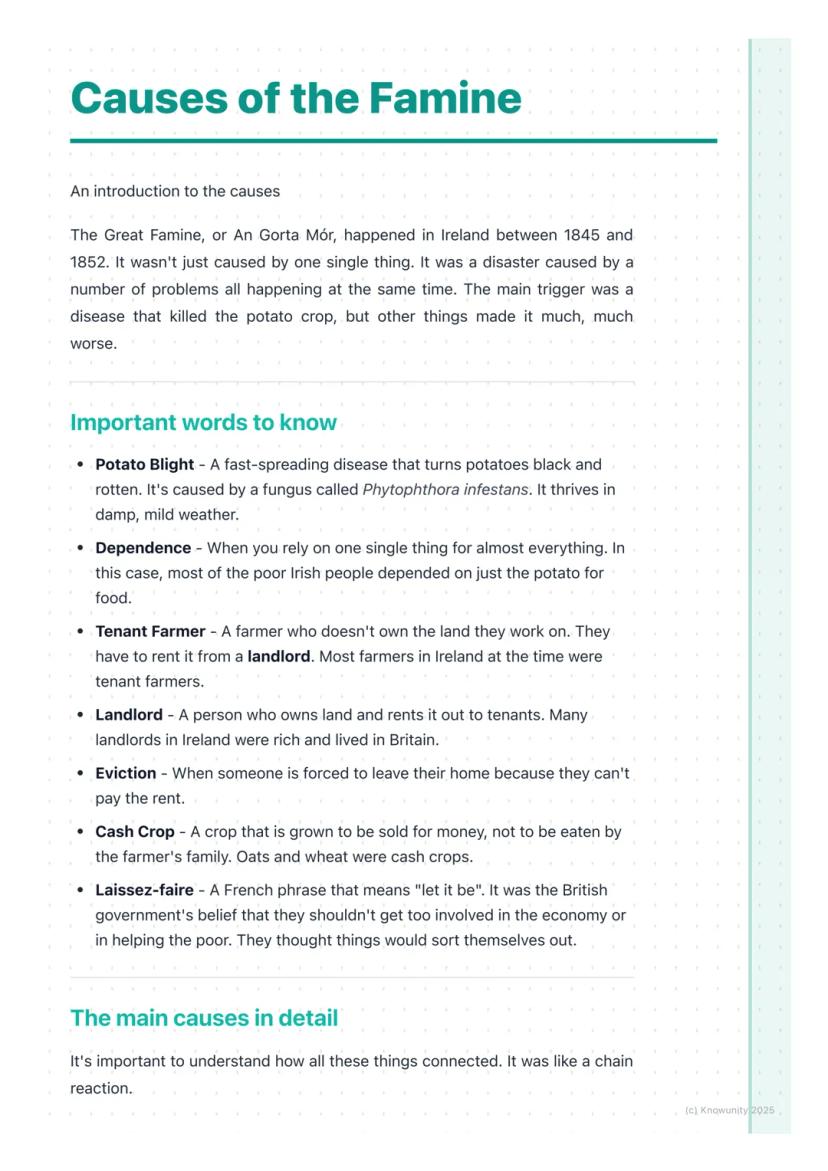
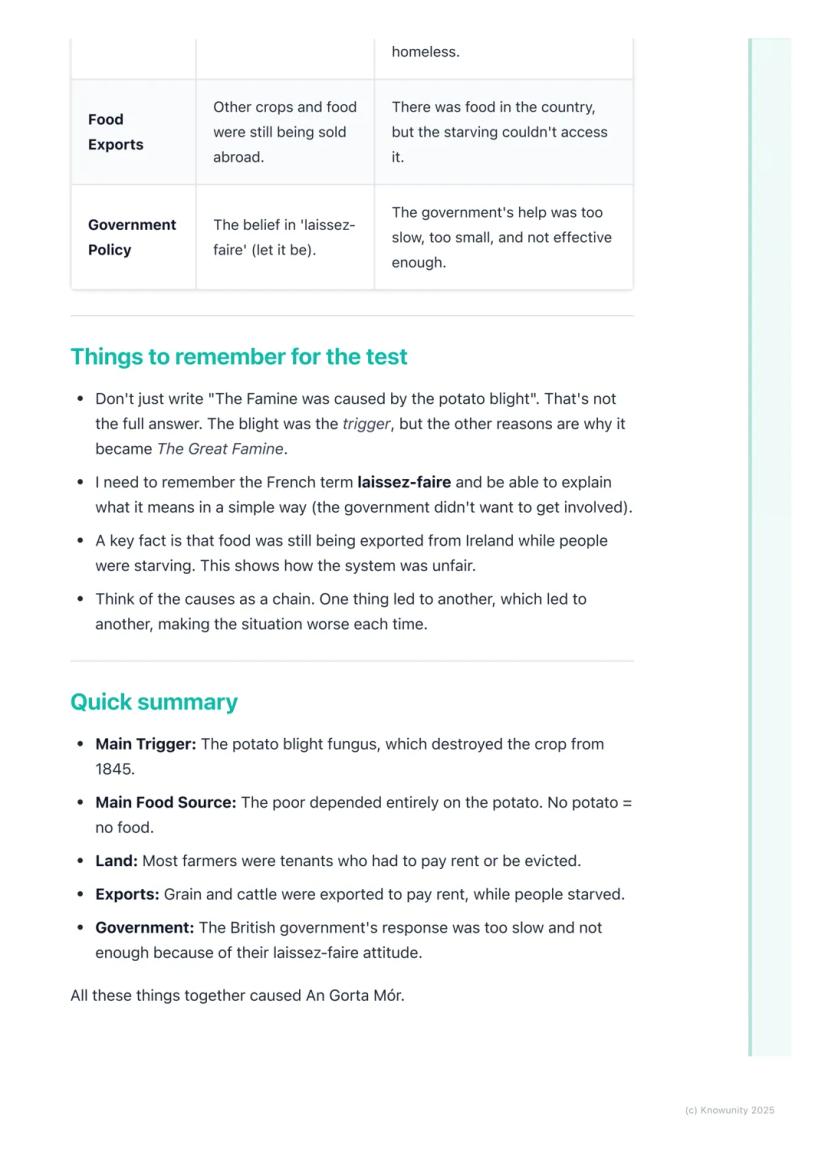
Ever wondered how a plant disease could kill a million people? The Great Famine started when a nasty fungus called potato blight arrived from America in 1845. This disease turned Ireland's main food source into black, smelly mush while it was still in the ground.
The blight spread like wildfire because Ireland's weather was perfect for it - mild and damp. What made this particularly devastating was that it kept coming back year after year, giving families no chance to recover or find alternatives.
Before the famine, about one-third of Ireland's population lived almost entirely on potatoes. This might sound mental, but potatoes were actually brilliant for poor families - you could grow enough on just one acre to feed everyone for a whole year, and they're packed with vitamins.
Did you know? A family of six could survive healthily on just potatoes and a bit of milk. But when that single food source disappeared, they had absolutely nothing left to eat.
2
of 5
The Unfair Land System
Picture this: you're a farmer, but you don't own your land. That was reality for most Irish people - they were tenant farmers who had to rent tiny plots from wealthy landlords. Most of these landlords lived comfortably in Britain and cared more about their rent money than their tenants' lives.
When the potato crop failed, tenant farmers faced an impossible choice. They had no food to eat and no crop to sell to pay their rent. The punishment for not paying? Eviction - being thrown out of your home with nowhere to go.
The land was divided into smaller and smaller plots because Ireland's population had grown massively. Families were squeezed onto tiny pieces of poor-quality land, making them completely dependent on the high-yield potato crop.
Think about it: If you couldn't pay rent today, imagine being kicked out onto the street with your entire family and having your house knocked down behind you.
3
of 5
Food Leaving While People Starved
Here's the maddest part - whilst millions of Irish people were literally starving to death, ships loaded with food were sailing out of Irish ports every single day. These ships carried oats, wheat, butter, and livestock to Britain and other countries.
This wasn't an accident or oversight. Landlords demanded their rent money, so tenant farmers had to keep growing and selling cash crops (crops grown for money, not food) to pay what they owed. The British government could have stopped these exports but chose not to.
The harsh truth is that there was actually plenty of food in Ireland during the famine. The problem wasn't shortage - it was that starving people had no money to buy the food that was there.
Remember this key fact: The famine wasn't really about lack of food in Ireland - it was about poor people having no access to the food that existed.
4
of 5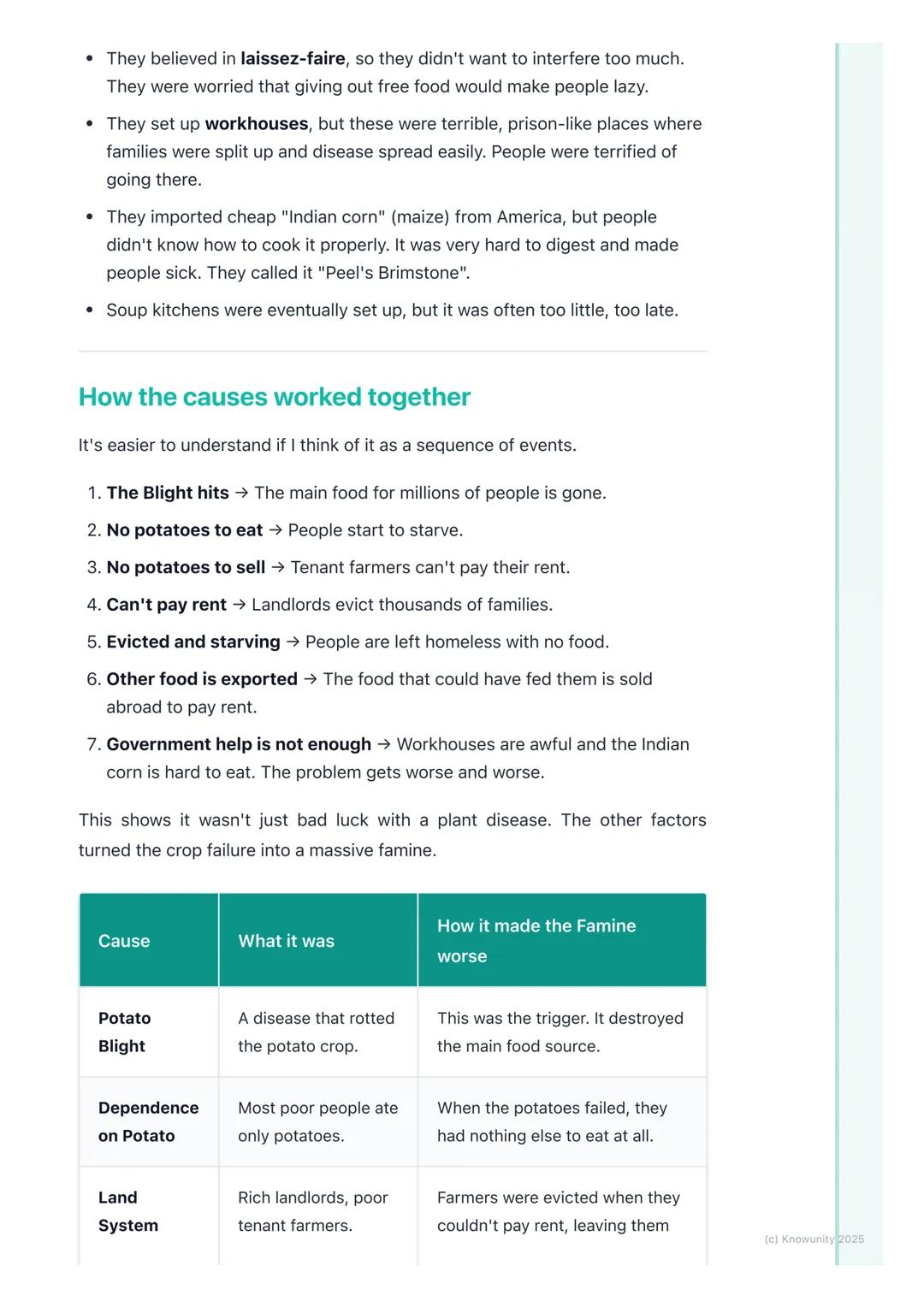
Government Failure
The British government's response was shockingly inadequate, and their attitudes made things much worse. They believed in laissez-faire (a French phrase meaning "let it be") - basically, they thought the government shouldn't interfere too much in people's lives or the economy.
Politicians worried that giving out free food would make Irish people "lazy" and dependent. Instead, they set up workhouses - horrible, prison-like places where families were split up and disease spread rapidly. People were terrified of going there.
The government did import cheap "Indian corn" (maize) from America, but it was a disaster. Irish people didn't know how to cook it properly, it was incredibly hard to digest, and it made people sick. They nicknamed it "Peel's Brimstone" after the Prime Minister.
Eventually, soup kitchens were established, but by then it was often too little, too late. Hundreds of thousands had already died or been forced to emigrate.
Government attitude: They genuinely believed that interfering too much would somehow make the situation worse, even as people died in the streets.
5
of 5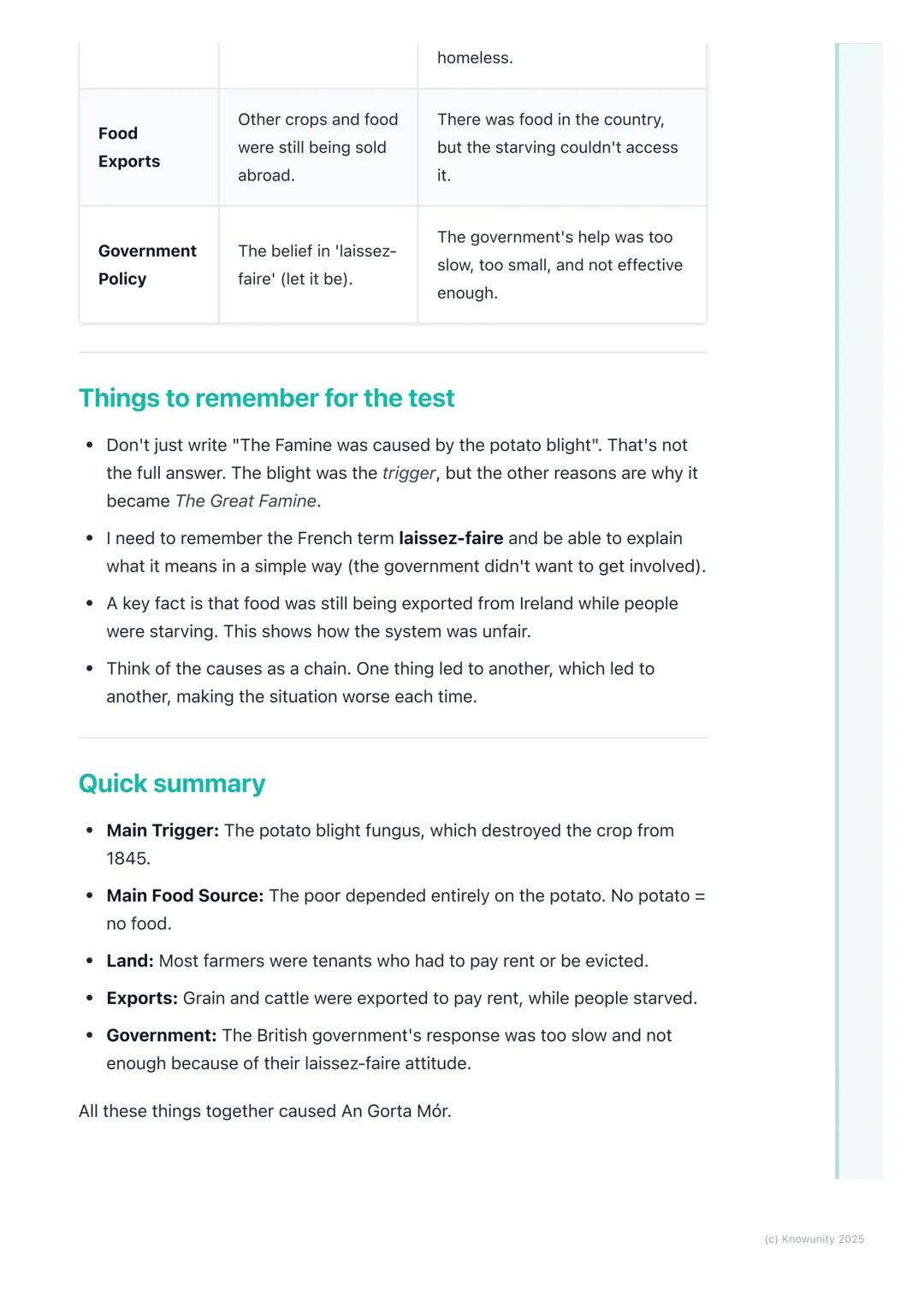
How Everything Connected
Understanding the famine means seeing how these causes created a chain reaction that turned a crop disease into a massive human catastrophe. It started with blight destroying the potatoes, which left millions without food.
When people couldn't sell potatoes, they couldn't pay rent to their landlords. This led to mass evictions, leaving families homeless and starving. Meanwhile, other food that could have saved lives was being shipped abroad to pay those same rents.
The government's laissez-faire approach meant help was too slow and too small. Their workhouses were so awful that many people preferred to starve rather than enter them. The imported corn was poorly prepared and often made people sicker.
This shows why the Great Famine was about much more than just a plant disease. It was about a social and economic system that failed to protect its most vulnerable people when they needed help most.
Key lesson: Natural disasters become human catastrophes when unfair systems prevent people from accessing help and resources.
Pensavamo che non l'avreste mai chiesto....
Che cos'è l'assistente AI di Knowunity?
Il nostro assistente AI è costruito specificamente per le esigenze degli studenti. Sulla base dei milioni di contenuti presenti sulla piattaforma, possiamo fornire agli studenti risposte davvero significative e pertinenti. Ma non si tratta solo di risposte, l'assistente è in grado di guidare gli studenti attraverso le loro sfide quotidiane di studio, con piani di studio personalizzati, quiz o contenuti nella chat e una personalizzazione al 100% basata sulle competenze e sugli sviluppi degli studenti.
Dove posso scaricare l'applicazione Knowunity?
È possibile scaricare l'applicazione dal Google Play Store e dall'Apple App Store.
Knowunity è davvero gratuita?
Sì, hai accesso completamente gratuito a tutti i contenuti nell'app e puoi chattare o seguire i Creatori in qualsiasi momento. Sbloccherai nuove funzioni crescendo il tuo numero di follower. Inoltre, offriamo Knowunity Premium, che consente di studiare senza alcun limite!!
Contenuti più popolari di History
9Contenuti più popolari
9Non c'è niente di adatto? Esplorare altre aree tematiche.
Recensioni dei nostri utenti. Ci adorano - e anche tu, vedrai .
4.6/5App Store
4.7/5Google Play
L'applicazione è molto facile da usare e ben progettata. Finora ho trovato tutto quello che cercavo e ho potuto imparare molto dalle presentazioni! Utilizzerò sicuramente l'app per i compiti in classe! È molto utile anche come fonte di ispirazione.
Stefano Sutente iOS
Questa applicazione è davvero grande! Ci sono tantissimi appunti e aiuti con lo studio [...]. La mia materia problematica, per esempio, è il francese e l'app ha così tante opzioni per aiutarmi. Grazie a questa app ho migliorato il mio francese. La consiglio a tutti.
Samantha Klichutente Android
Wow, sono davvero stupita. Ho appena provato l'app perché l'ho vista pubblicizzata molte volte e sono rimasta assolutamente sbalordita. Questa app è L'AIUTO che cercate per la scuola e soprattutto offre tantissime cose, come allenamenti e schede, che a me personalmente sono state MOLTO utili.
Annautente iOS
History3 visualizzazioni·Aggiornato Jun 5, 2026·5 pagineThe Irish Potato Famine: Causes and Impact
The Great Famine (An Gorta Mór) devastated Ireland from 1845 to 1852, killing over one million people. It wasn't just bad luck with crops - it was a disaster created by multiple problems happening all at once. Understanding these causes... Mostra di più
1
of 5Iscriviti per mostrare il contenuto. È gratis!
- Accesso a tutti i documenti
- Migliora i tuoi voti
- Unisciti a milioni di studenti
Understanding the Famine's Beginning
Ever wondered how a plant disease could kill a million people? The Great Famine started when a nasty fungus called potato blight arrived from America in 1845. This disease turned Ireland's main food source into black, smelly mush while it was still in the ground.
The blight spread like wildfire because Ireland's weather was perfect for it - mild and damp. What made this particularly devastating was that it kept coming back year after year, giving families no chance to recover or find alternatives.
Before the famine, about one-third of Ireland's population lived almost entirely on potatoes. This might sound mental, but potatoes were actually brilliant for poor families - you could grow enough on just one acre to feed everyone for a whole year, and they're packed with vitamins.
Did you know? A family of six could survive healthily on just potatoes and a bit of milk. But when that single food source disappeared, they had absolutely nothing left to eat.
2
of 5Iscriviti per mostrare il contenuto. È gratis!
- Accesso a tutti i documenti
- Migliora i tuoi voti
- Unisciti a milioni di studenti
The Unfair Land System
Picture this: you're a farmer, but you don't own your land. That was reality for most Irish people - they were tenant farmers who had to rent tiny plots from wealthy landlords. Most of these landlords lived comfortably in Britain and cared more about their rent money than their tenants' lives.
When the potato crop failed, tenant farmers faced an impossible choice. They had no food to eat and no crop to sell to pay their rent. The punishment for not paying? Eviction - being thrown out of your home with nowhere to go.
The land was divided into smaller and smaller plots because Ireland's population had grown massively. Families were squeezed onto tiny pieces of poor-quality land, making them completely dependent on the high-yield potato crop.
Think about it: If you couldn't pay rent today, imagine being kicked out onto the street with your entire family and having your house knocked down behind you.
3
of 5Iscriviti per mostrare il contenuto. È gratis!
- Accesso a tutti i documenti
- Migliora i tuoi voti
- Unisciti a milioni di studenti
Food Leaving While People Starved
Here's the maddest part - whilst millions of Irish people were literally starving to death, ships loaded with food were sailing out of Irish ports every single day. These ships carried oats, wheat, butter, and livestock to Britain and other countries.
This wasn't an accident or oversight. Landlords demanded their rent money, so tenant farmers had to keep growing and selling cash crops (crops grown for money, not food) to pay what they owed. The British government could have stopped these exports but chose not to.
The harsh truth is that there was actually plenty of food in Ireland during the famine. The problem wasn't shortage - it was that starving people had no money to buy the food that was there.
Remember this key fact: The famine wasn't really about lack of food in Ireland - it was about poor people having no access to the food that existed.
4
of 5Iscriviti per mostrare il contenuto. È gratis!
- Accesso a tutti i documenti
- Migliora i tuoi voti
- Unisciti a milioni di studenti
Government Failure
The British government's response was shockingly inadequate, and their attitudes made things much worse. They believed in laissez-faire (a French phrase meaning "let it be") - basically, they thought the government shouldn't interfere too much in people's lives or the economy.
Politicians worried that giving out free food would make Irish people "lazy" and dependent. Instead, they set up workhouses - horrible, prison-like places where families were split up and disease spread rapidly. People were terrified of going there.
The government did import cheap "Indian corn" (maize) from America, but it was a disaster. Irish people didn't know how to cook it properly, it was incredibly hard to digest, and it made people sick. They nicknamed it "Peel's Brimstone" after the Prime Minister.
Eventually, soup kitchens were established, but by then it was often too little, too late. Hundreds of thousands had already died or been forced to emigrate.
Government attitude: They genuinely believed that interfering too much would somehow make the situation worse, even as people died in the streets.
5
of 5Iscriviti per mostrare il contenuto. È gratis!
- Accesso a tutti i documenti
- Migliora i tuoi voti
- Unisciti a milioni di studenti
How Everything Connected
Understanding the famine means seeing how these causes created a chain reaction that turned a crop disease into a massive human catastrophe. It started with blight destroying the potatoes, which left millions without food.
When people couldn't sell potatoes, they couldn't pay rent to their landlords. This led to mass evictions, leaving families homeless and starving. Meanwhile, other food that could have saved lives was being shipped abroad to pay those same rents.
The government's laissez-faire approach meant help was too slow and too small. Their workhouses were so awful that many people preferred to starve rather than enter them. The imported corn was poorly prepared and often made people sicker.
This shows why the Great Famine was about much more than just a plant disease. It was about a social and economic system that failed to protect its most vulnerable people when they needed help most.
Key lesson: Natural disasters become human catastrophes when unfair systems prevent people from accessing help and resources.
Pensavamo che non l'avreste mai chiesto....
Che cos'è l'assistente AI di Knowunity?
Il nostro assistente AI è costruito specificamente per le esigenze degli studenti. Sulla base dei milioni di contenuti presenti sulla piattaforma, possiamo fornire agli studenti risposte davvero significative e pertinenti. Ma non si tratta solo di risposte, l'assistente è in grado di guidare gli studenti attraverso le loro sfide quotidiane di studio, con piani di studio personalizzati, quiz o contenuti nella chat e una personalizzazione al 100% basata sulle competenze e sugli sviluppi degli studenti.
Dove posso scaricare l'applicazione Knowunity?
È possibile scaricare l'applicazione dal Google Play Store e dall'Apple App Store.
Knowunity è davvero gratuita?
Sì, hai accesso completamente gratuito a tutti i contenuti nell'app e puoi chattare o seguire i Creatori in qualsiasi momento. Sbloccherai nuove funzioni crescendo il tuo numero di follower. Inoltre, offriamo Knowunity Premium, che consente di studiare senza alcun limite!!
Contenuti più popolari di History
9Contenuti più popolari
9Non c'è niente di adatto? Esplorare altre aree tematiche.
Recensioni dei nostri utenti. Ci adorano - e anche tu, vedrai .
4.6/5App Store
4.7/5Google Play
L'applicazione è molto facile da usare e ben progettata. Finora ho trovato tutto quello che cercavo e ho potuto imparare molto dalle presentazioni! Utilizzerò sicuramente l'app per i compiti in classe! È molto utile anche come fonte di ispirazione.
Stefano Sutente iOS
Questa applicazione è davvero grande! Ci sono tantissimi appunti e aiuti con lo studio [...]. La mia materia problematica, per esempio, è il francese e l'app ha così tante opzioni per aiutarmi. Grazie a questa app ho migliorato il mio francese. La consiglio a tutti.
Samantha Klichutente Android
Wow, sono davvero stupita. Ho appena provato l'app perché l'ho vista pubblicizzata molte volte e sono rimasta assolutamente sbalordita. Questa app è L'AIUTO che cercate per la scuola e soprattutto offre tantissime cose, come allenamenti e schede, che a me personalmente sono state MOLTO utili.
Annautente iOS