
Ever wondered why it's always raining in Cork but sunny... Mostra di più
 Geography2 visualizzazioni·Aggiornato Jun 1, 2026·10 pagine
Understanding Earth's Atmosphere and Weather
1 / 10
1
of 10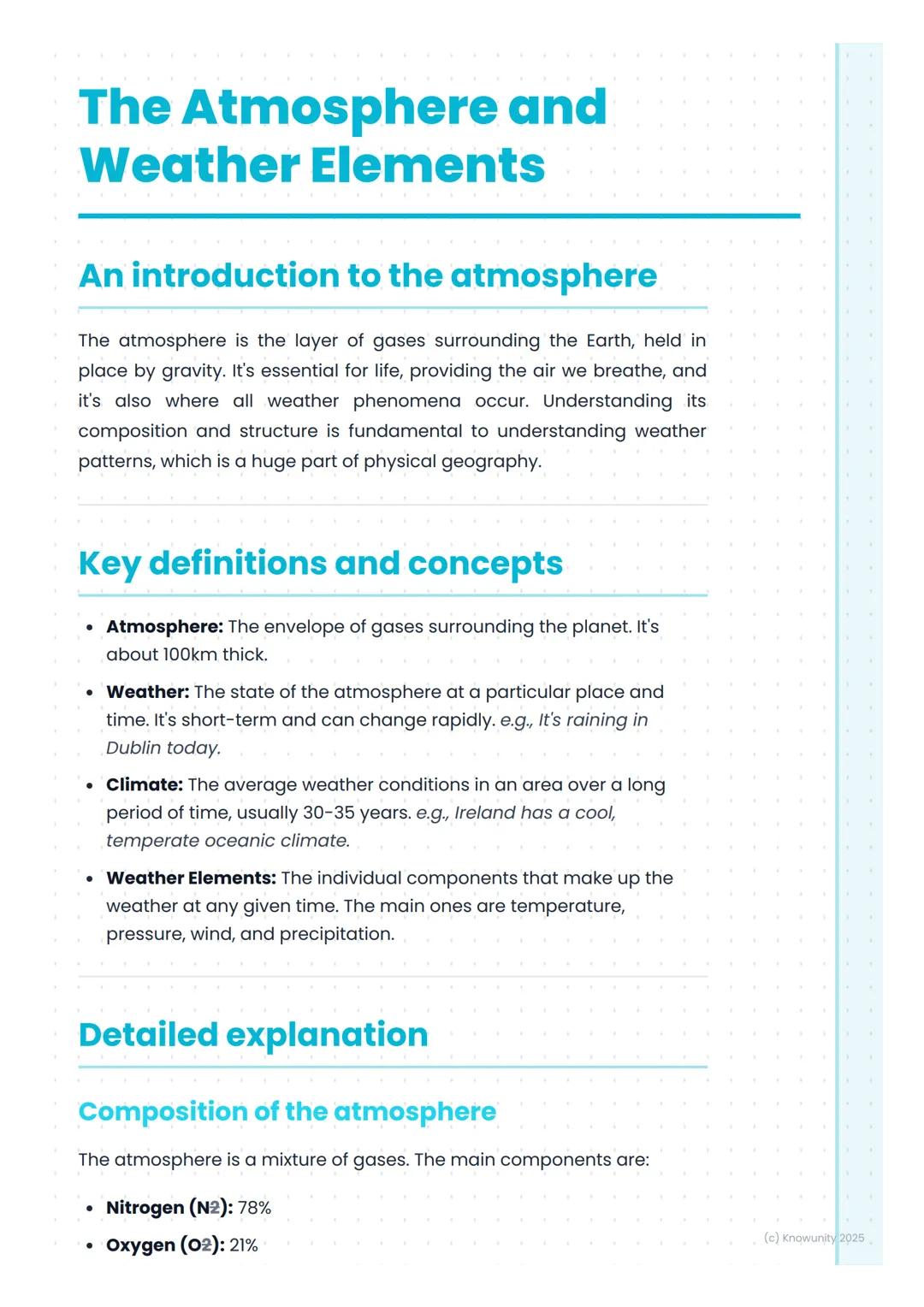
The Atmosphere Basics
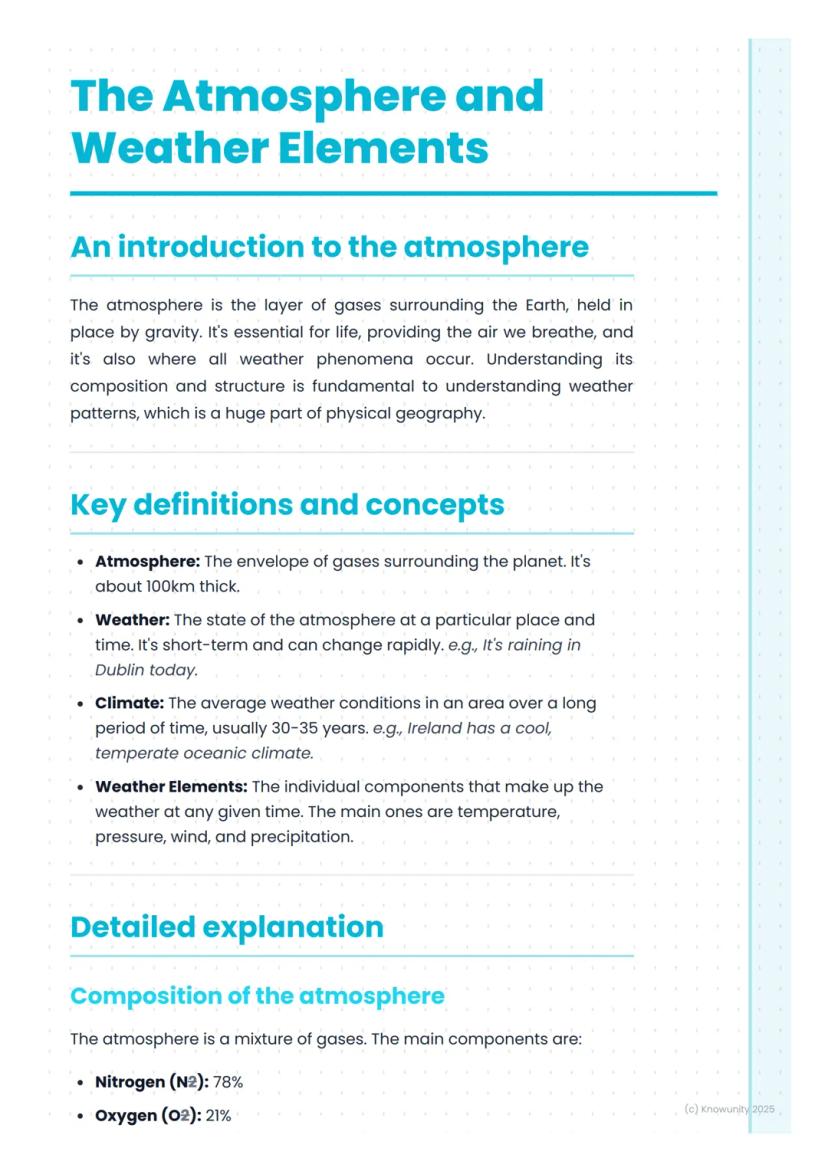
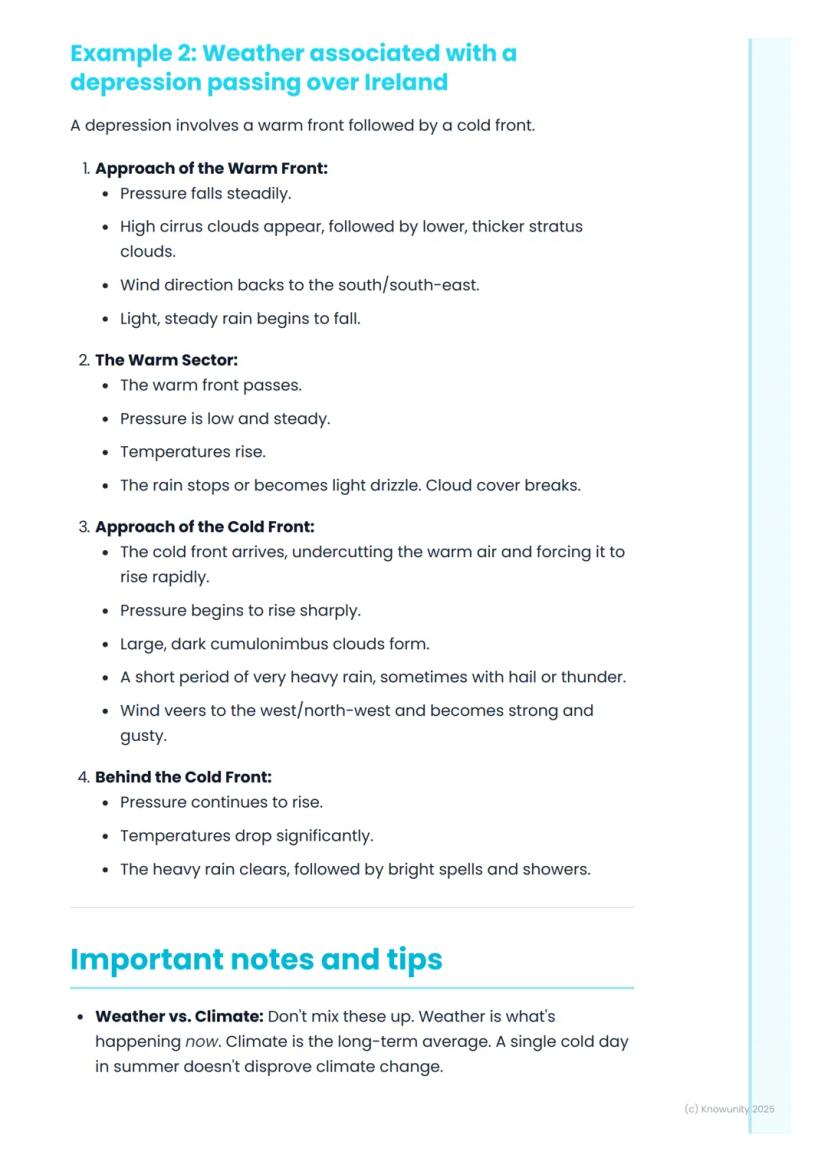
The atmosphere is essentially a 100km-thick layer of gases that keeps us alive and creates all our weather. Think of it as Earth's protective bubble that's constantly moving and changing.
Here's what you're breathing: 78% nitrogen, 21% oxygen, and just 1% of other gases including water vapour. That tiny bit of water vapour might seem insignificant, but it's responsible for every cloud, raindrop, and snowflake you've ever seen.
Weather is what's happening right now - like today's downpour in Dublin. Climate is the long-term average over 30+ years - like Ireland's famously wet reputation. Don't mix these up in your exams!
Quick Tip: Weather elements (temperature, pressure, wind, precipitation) are the building blocks of every weather forecast you check.
2
of 10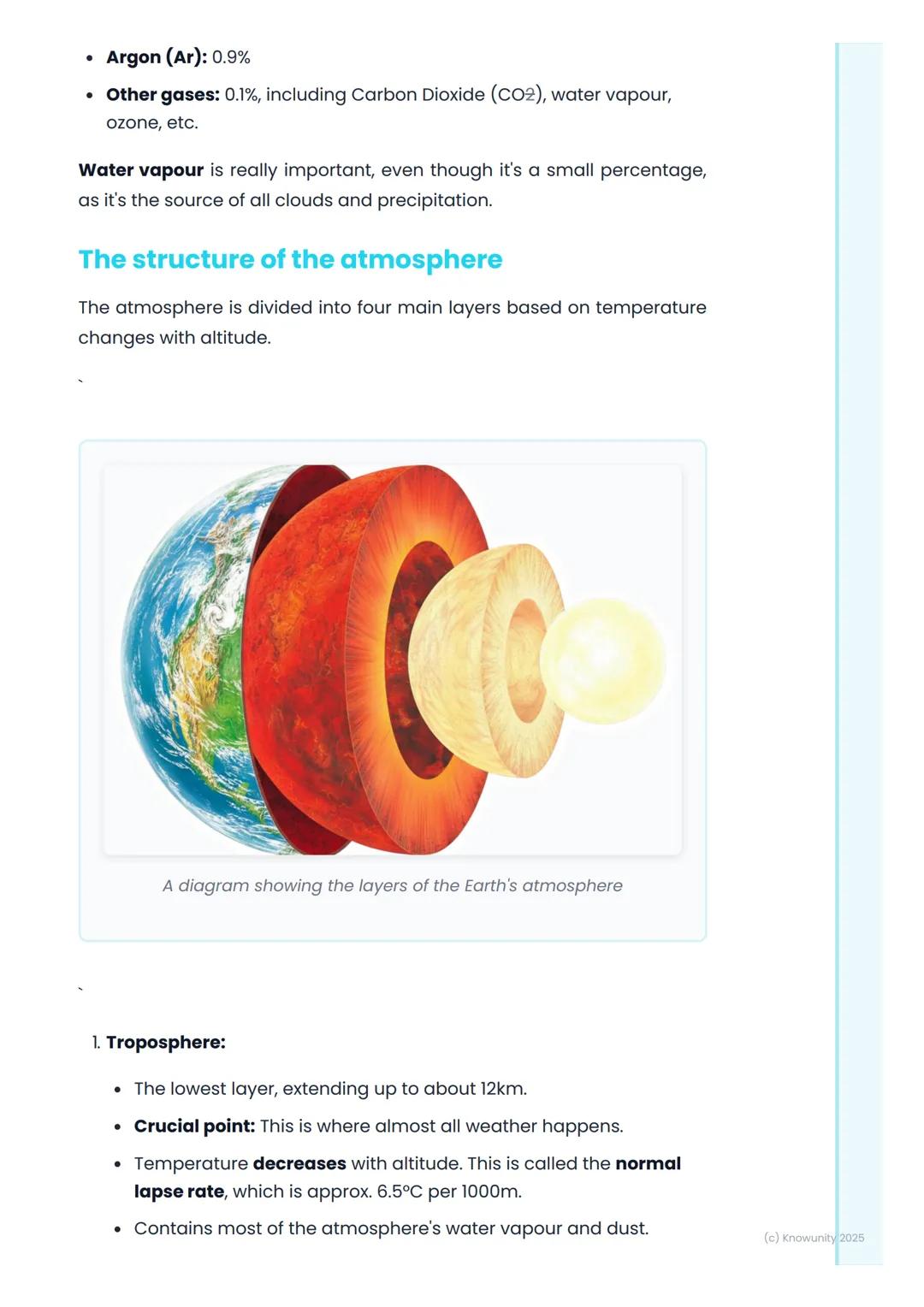
Atmospheric Layers
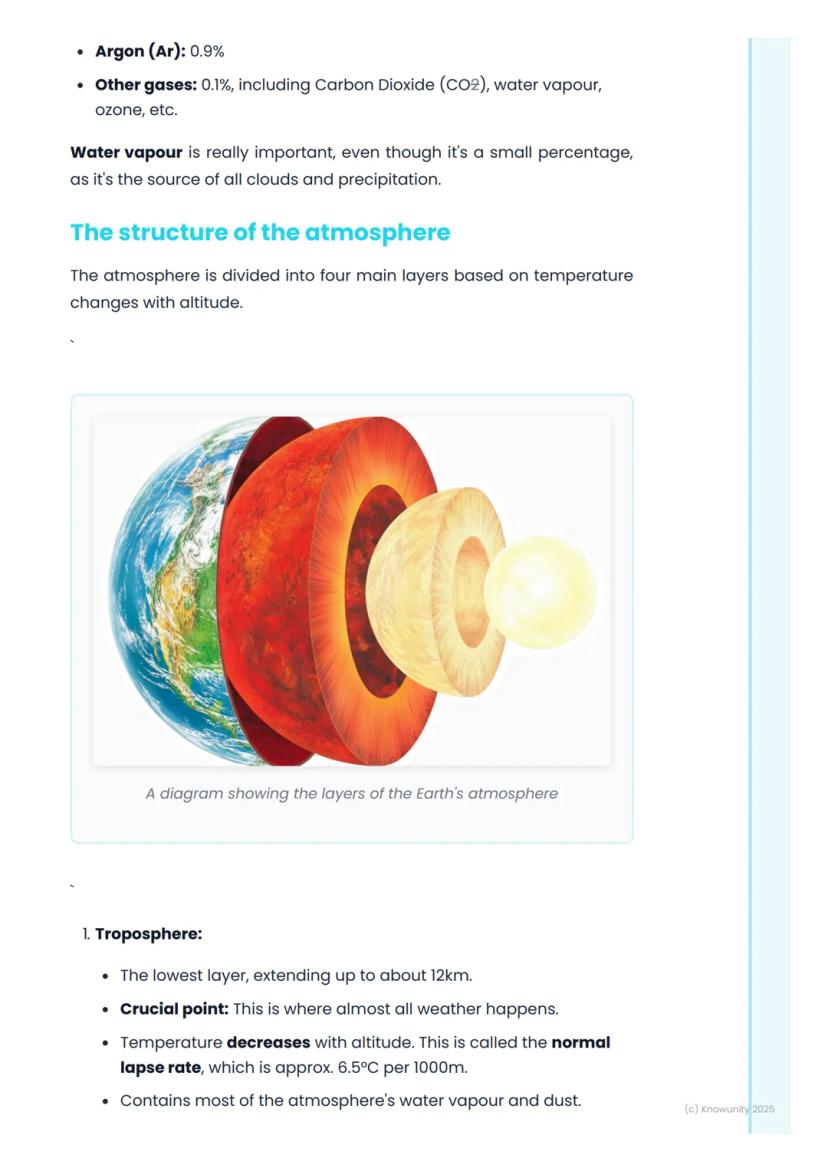
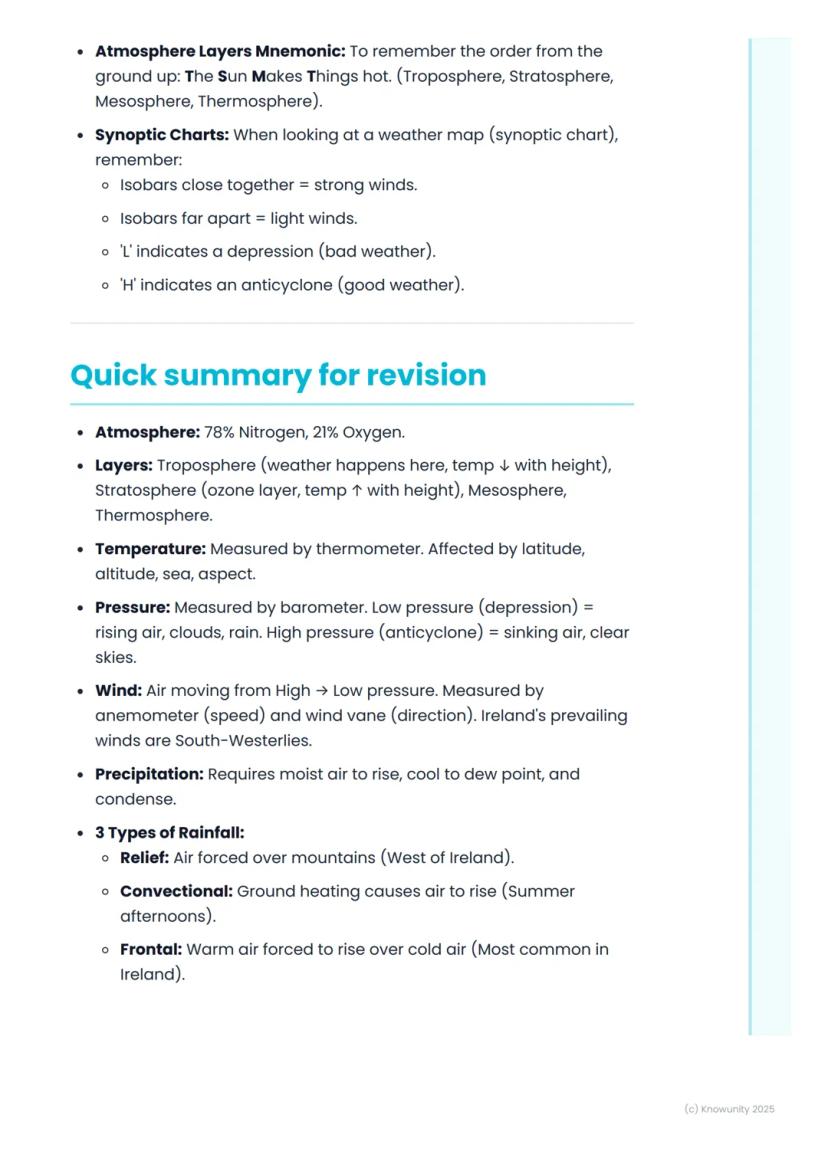
The atmosphere has four main layers, but you really need to know the first two. Here's a handy memory trick: The Sun Makes Things hot (Troposphere, Stratosphere, Mesosphere, Thermosphere).
The troposphere is where all the action happens - it's only 12km thick but contains virtually all our weather. Temperature drops as you go higher (about 6.5°C per 1000m), which explains why Carrauntoohil is always colder than sea level.
The stratosphere sits above it, containing the crucial ozone layer that blocks harmful UV rays. Unlike the troposphere, temperature actually increases with height here because ozone absorbs solar radiation.
Exam Focus: The troposphere is your priority - almost every weather question relates to this bottom layer.
3
of 10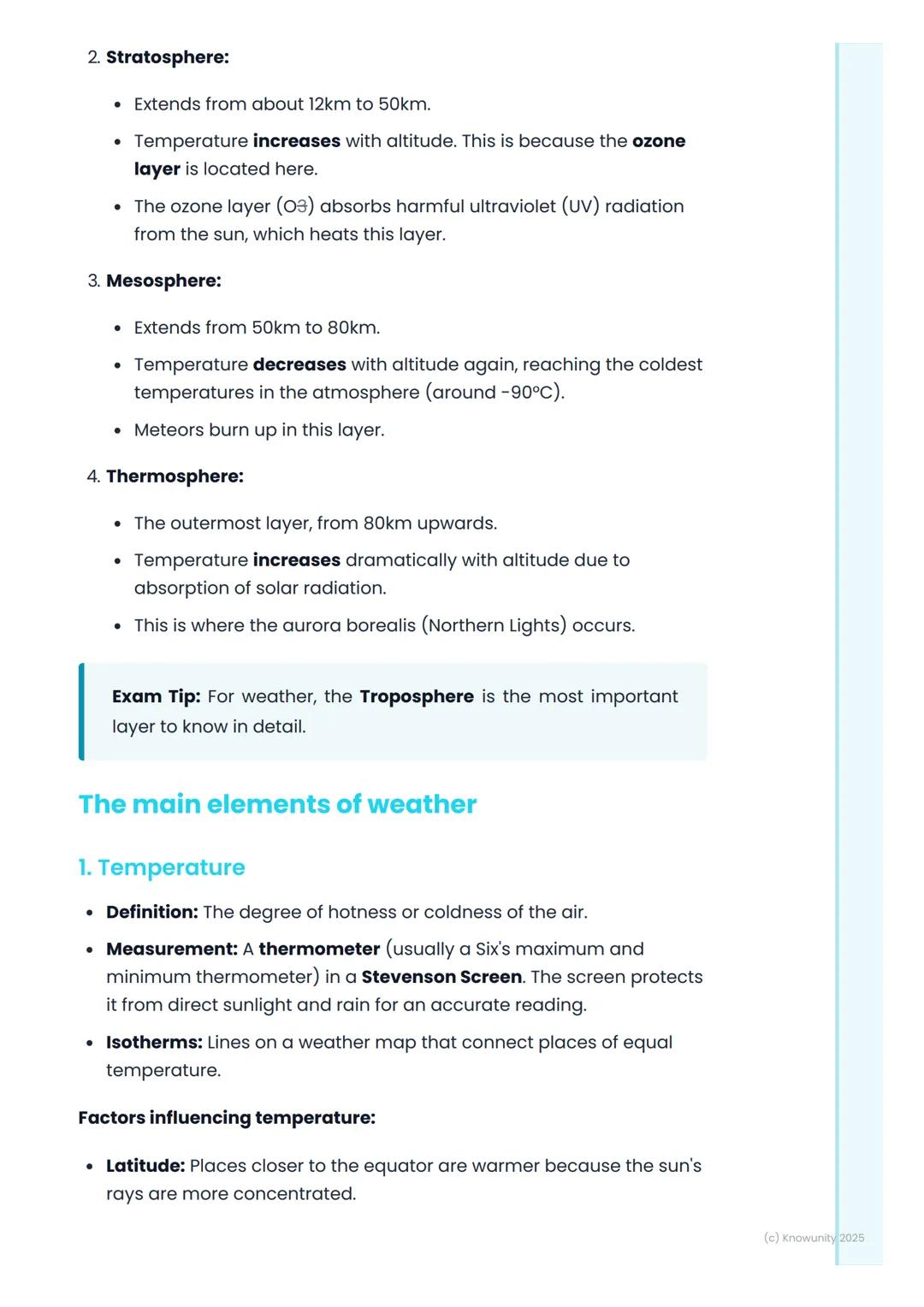
Temperature and Pressure
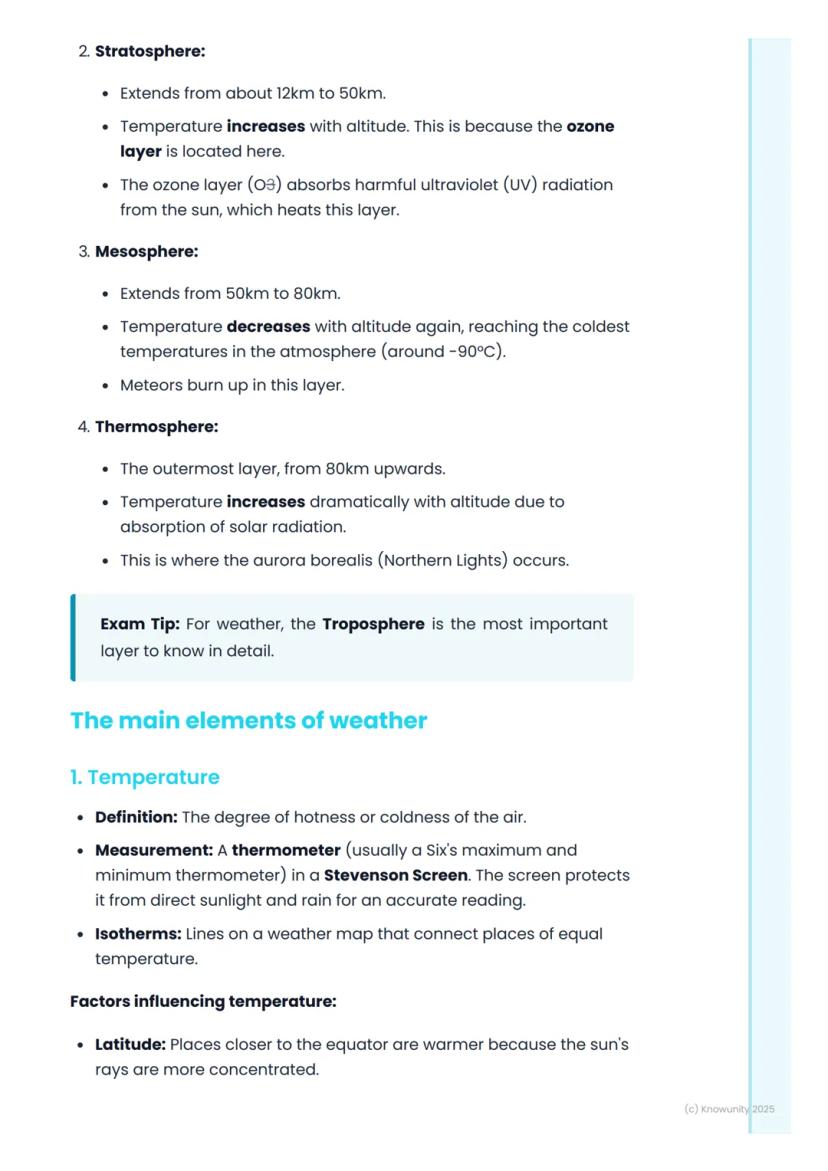
Temperature is measured using thermometers in Stevenson Screens (those white boxes you see at weather stations). Four main factors affect temperature: how close you are to the equator, your height above sea level, distance from the sea, and which way slopes face.
Ireland's coast stays milder year-round thanks to the sea's slow heating and cooling - that's why Galway has cooler summers but warmer winters than inland Athlone.
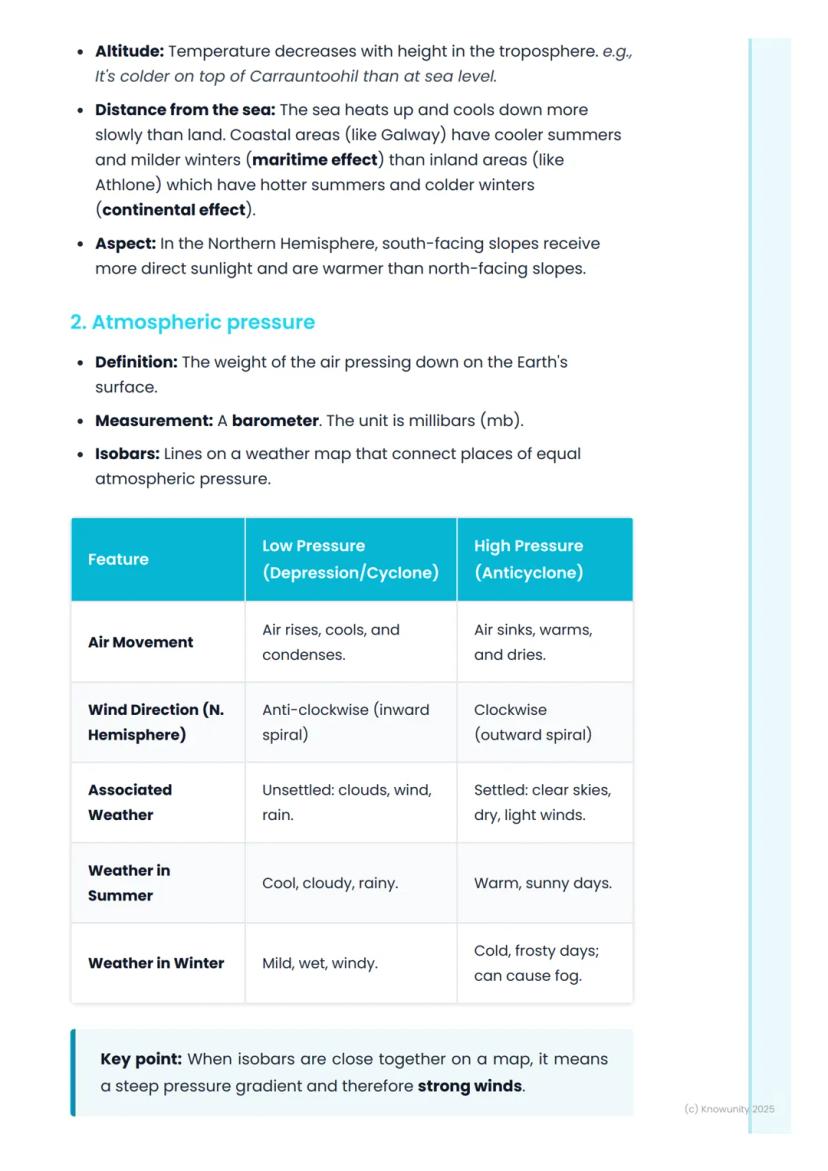
Atmospheric pressure is the weight of air pressing down on you, measured in millibars. Low pressure (depressions) means air is rising, cooling, and forming clouds - hello, rainy day! High pressure (anticyclones) means air is sinking and warming - cue the sunny weather.
Map Reading: When isobars (pressure lines) are squashed together, expect strong winds. Spread apart means light winds.
4
of 10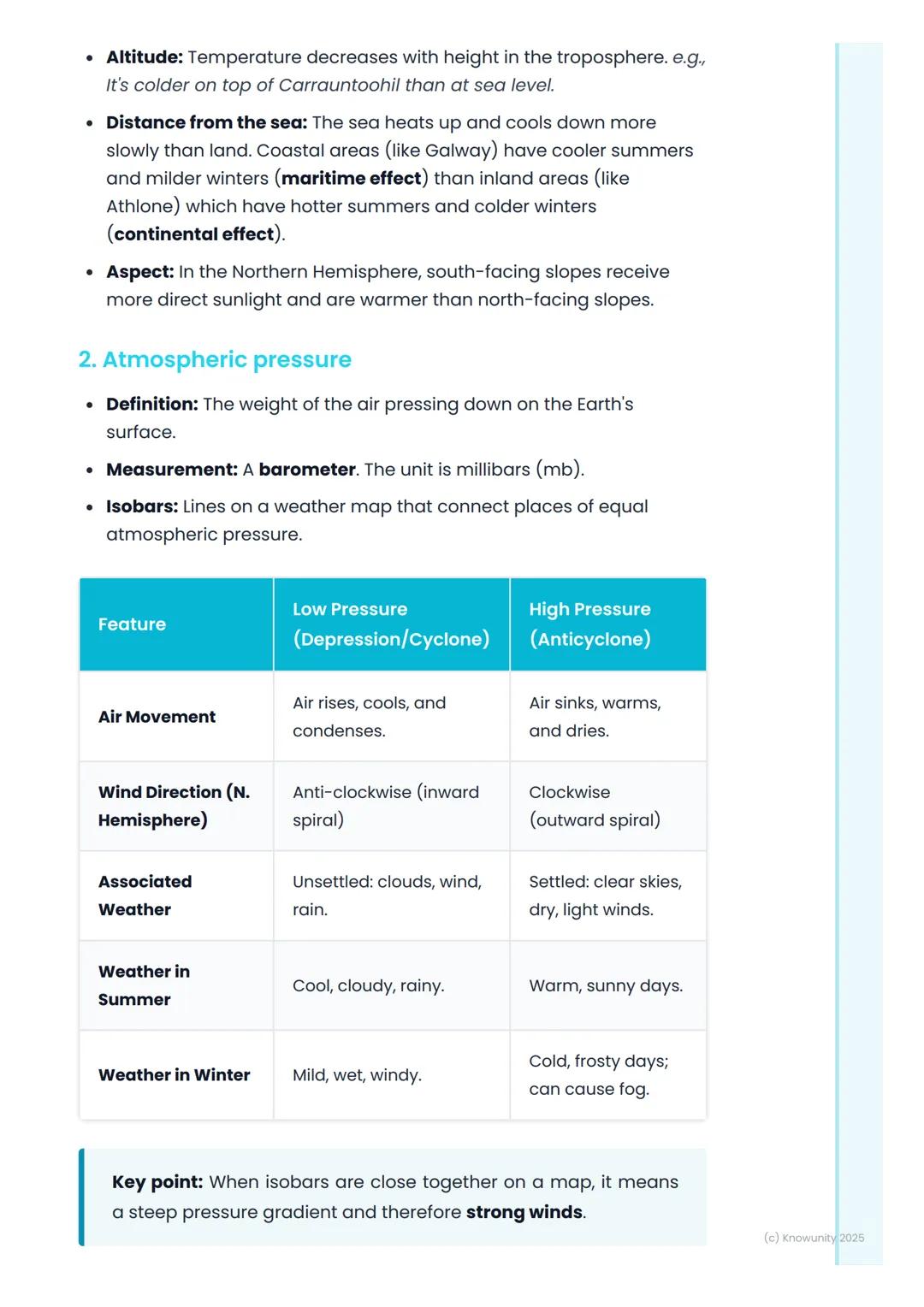
Wind and Weather Patterns
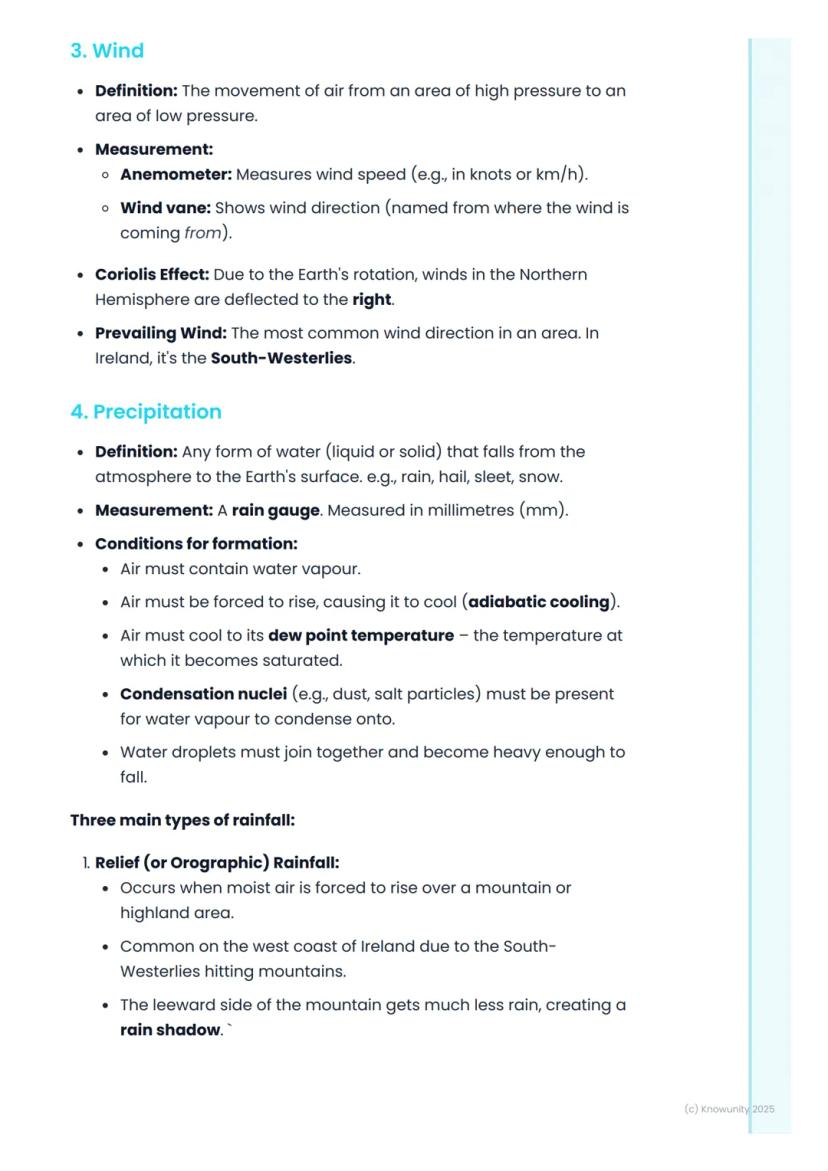
Wind is simply air rushing from high pressure to low pressure areas. In Ireland, our prevailing winds are South-Westerlies - they bring all that Atlantic moisture that keeps our grass so green!
Due to Earth's rotation, winds curve to the right in the Northern Hemisphere (called the Coriolis effect). This is why low-pressure systems spin anti-clockwise and high-pressure systems spin clockwise.
When you see a weather map, look for the 'L' and 'H' symbols. An 'L' means expect clouds, wind, and rain. An 'H' means settled, clear conditions - though in winter, this can bring frost and fog.
Wind Direction: Remember, winds are named from where they're coming from, not where they're going!
5
of 10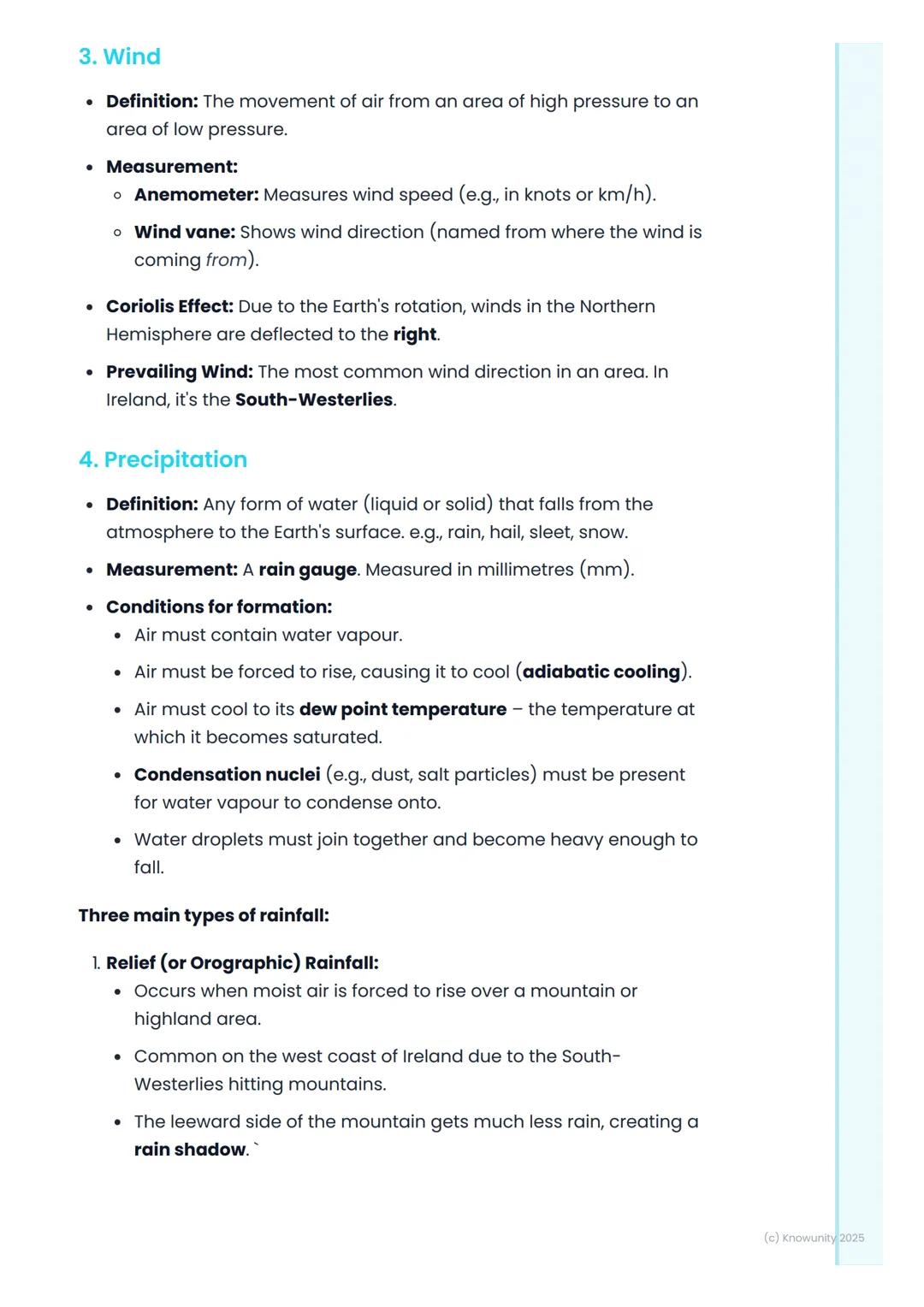
Rainfall Types
For precipitation to form, you need moist air that's forced to rise and cool to its dew point (saturation temperature). There are three main types you'll encounter in Ireland.
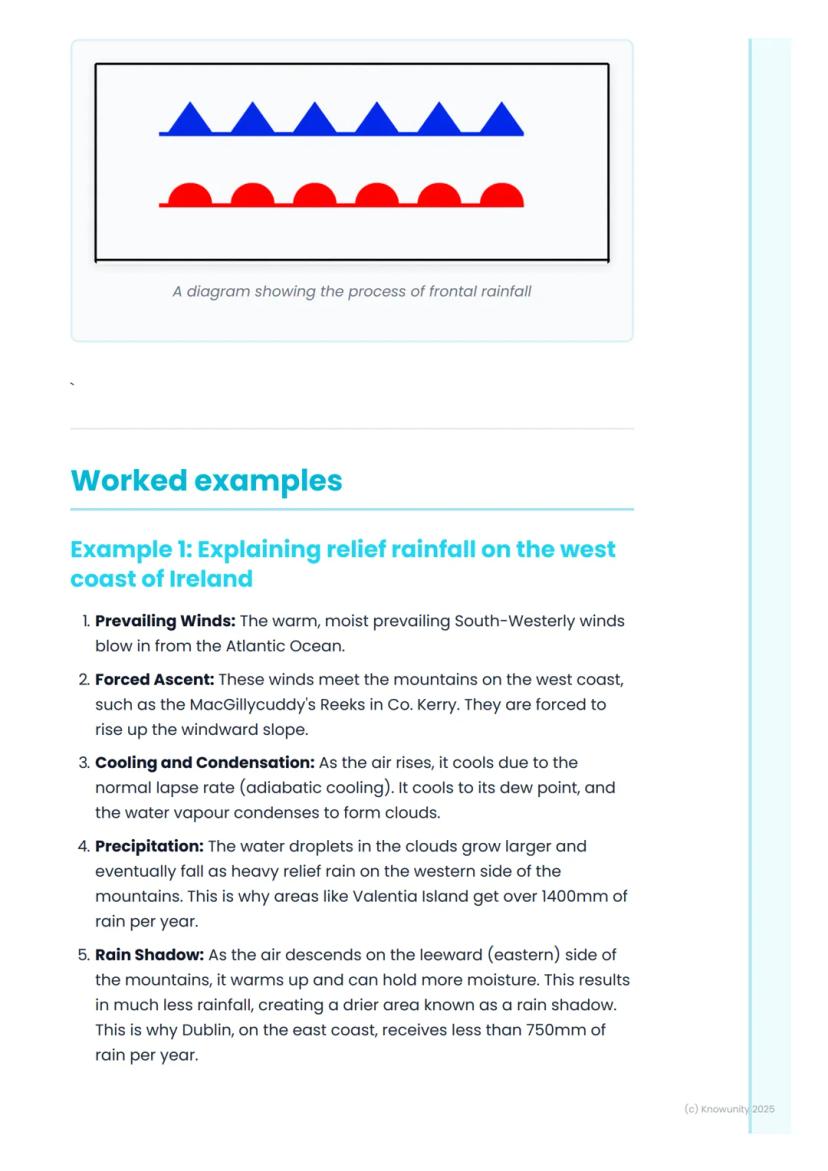
Relief rainfall happens when our South-Westerly winds hit western mountains like the MacGillycuddy's Reeks. The air is forced upwards, cools, and dumps heavy rain on the western slopes. This creates a rain shadow effect - which is why Dublin gets less than 750mm of rain yearly while Valentia Island gets over 1400mm.
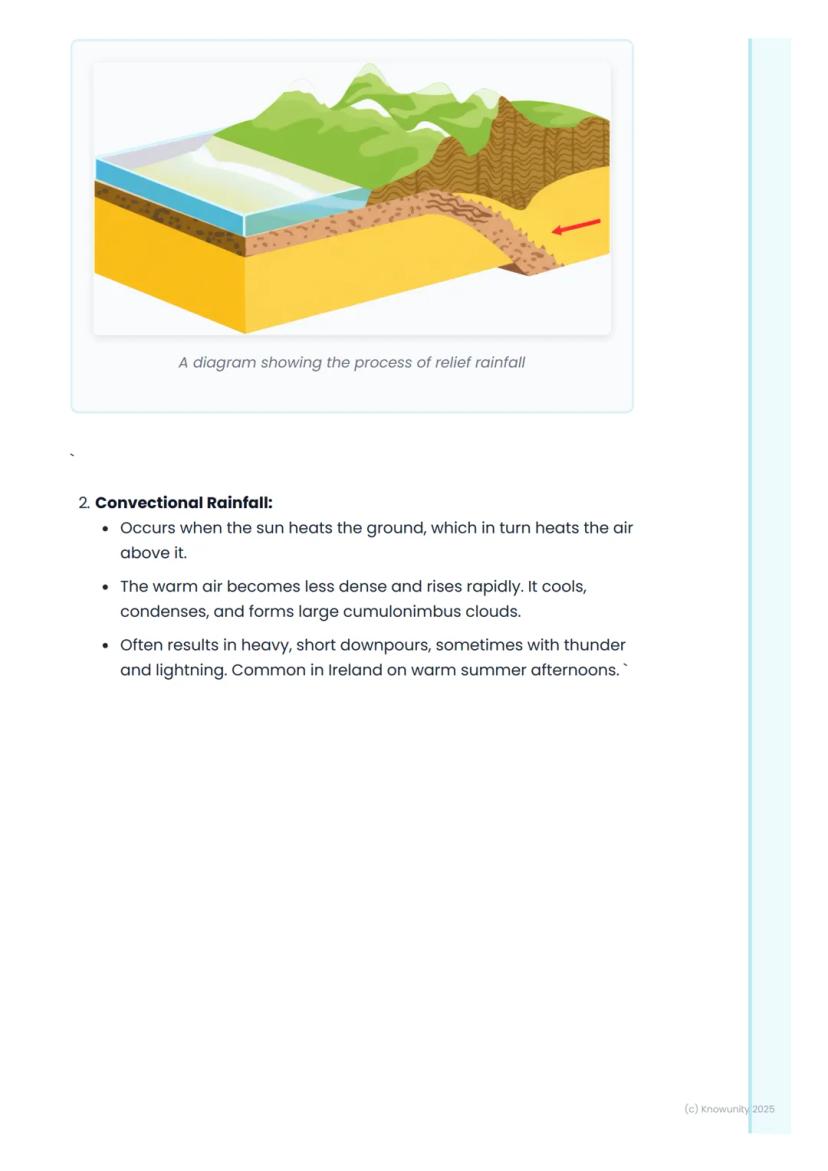
Convectional rainfall occurs on hot summer afternoons when heated ground causes air to rise rapidly, forming towering cumulonimbus clouds. These create those sudden heavy downpours with thunder and lightning.
Ireland's Reality: Most of our rain is frontal rainfall from Atlantic depressions - those weather systems that seem to queue up to soak us!
6
of 10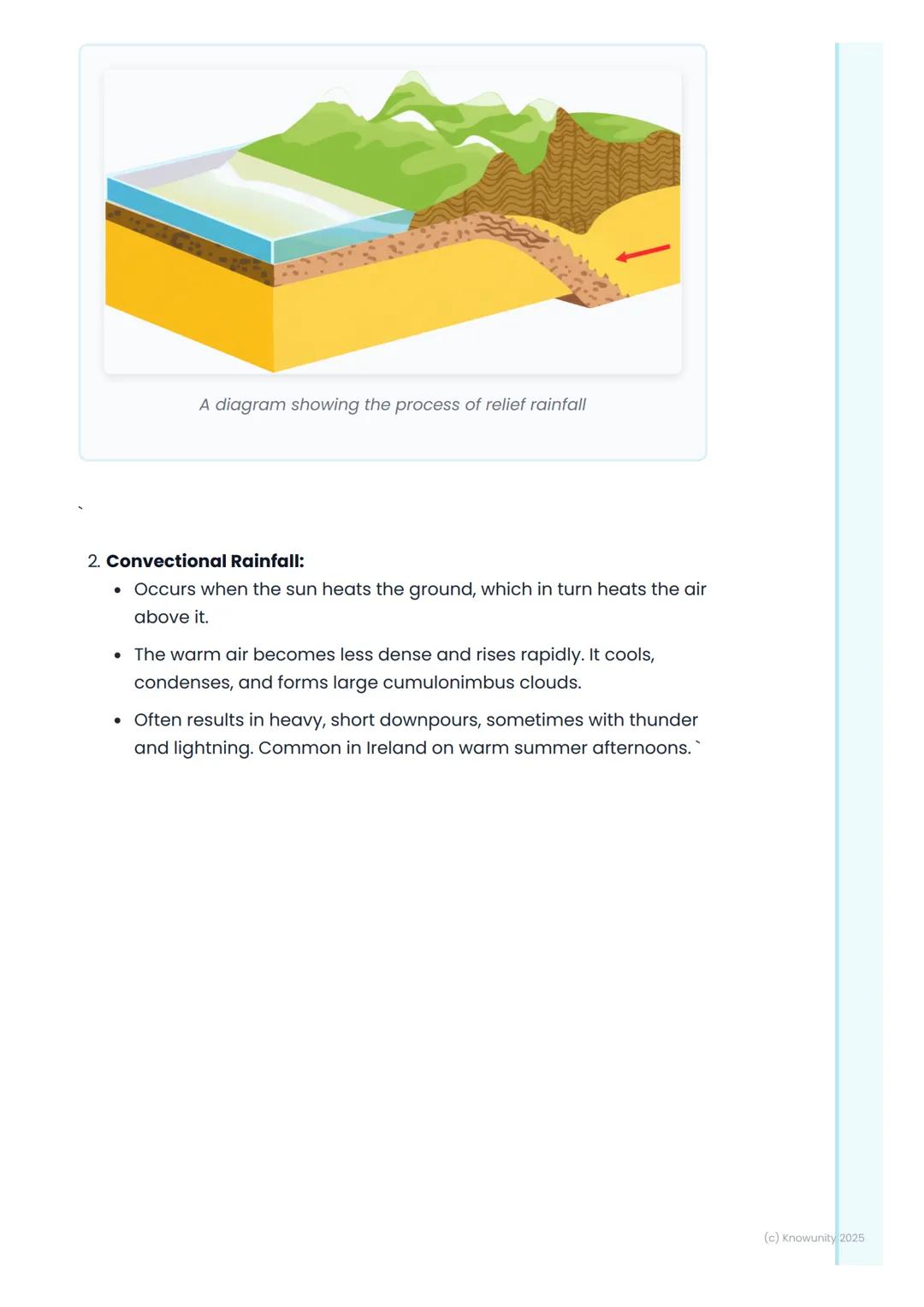
Frontal Systems and Depressions
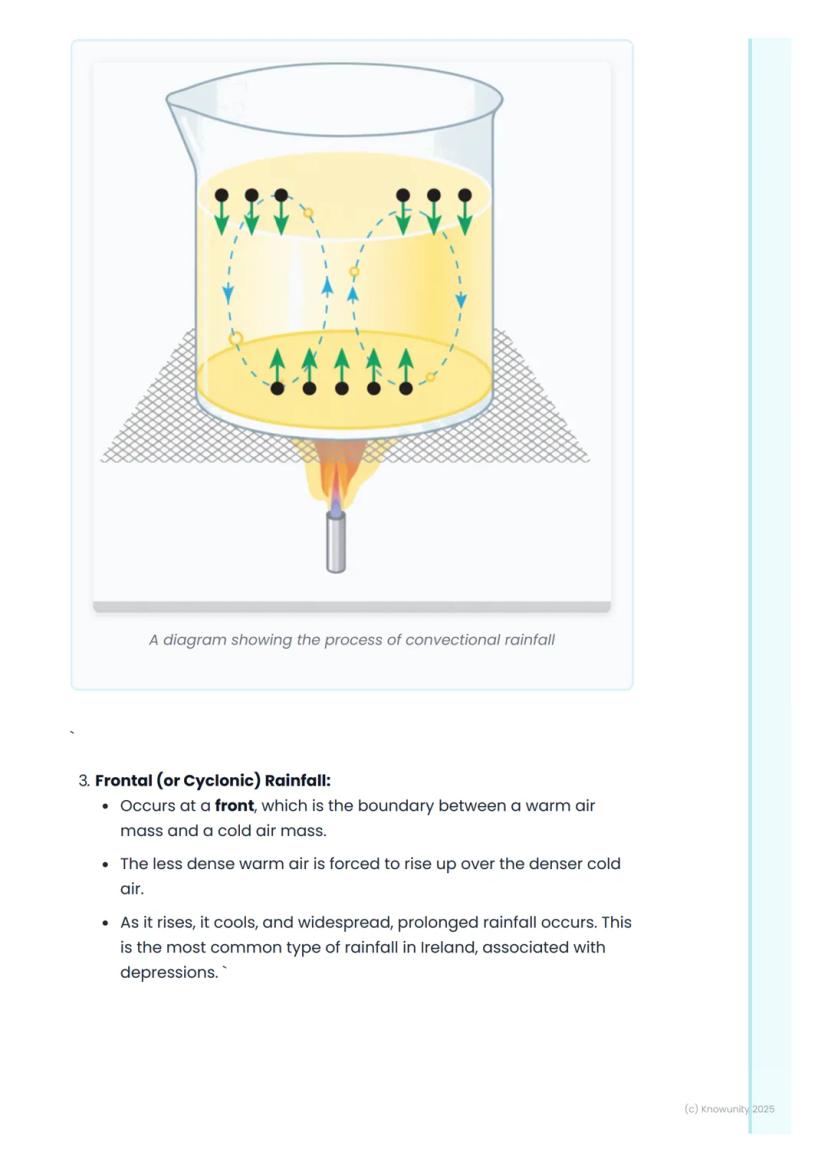
Frontal rainfall is Ireland's specialty - it happens when warm and cold air masses meet at weather fronts. The lighter warm air is forced upwards over the denser cold air, creating widespread, prolonged rainfall.
When a depression passes over Ireland, you'll experience a predictable sequence. First, the warm front approaches with falling pressure, high clouds, and steady light rain. Then comes the warm sector with higher temperatures and broken cloud.
Next, the cold front arrives like nature's drama queen - pressure rises sharply, massive dark clouds form, and you get a short burst of very heavy rain, possibly with hail and thunder. Finally, behind the cold front, temperatures drop, pressure continues rising, and you get those classic Irish "bright spells and showers."
Weather Watching: Cold fronts move faster than warm fronts, which is why they eventually catch up and create more complex weather systems.
7
of 10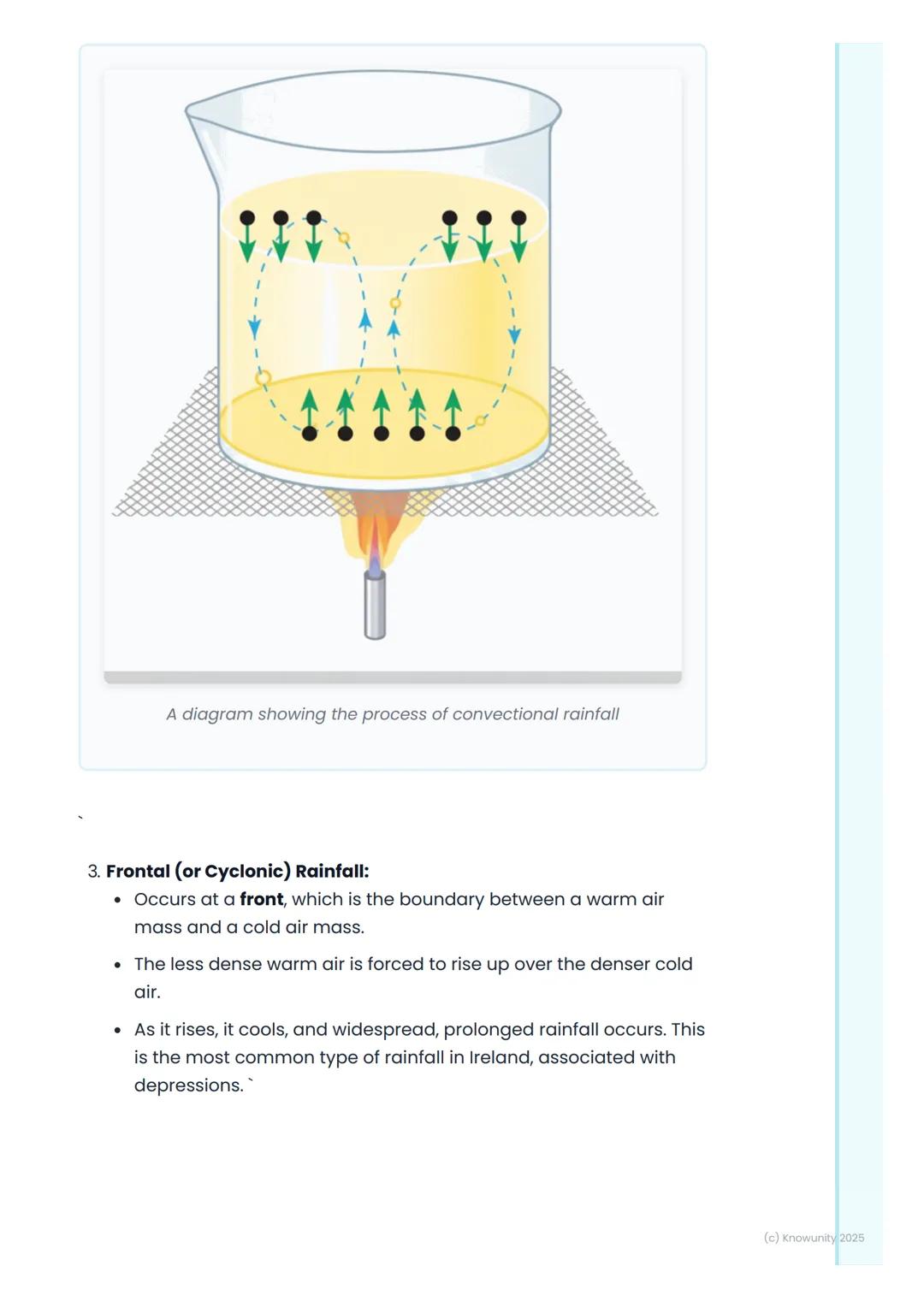
8
of 10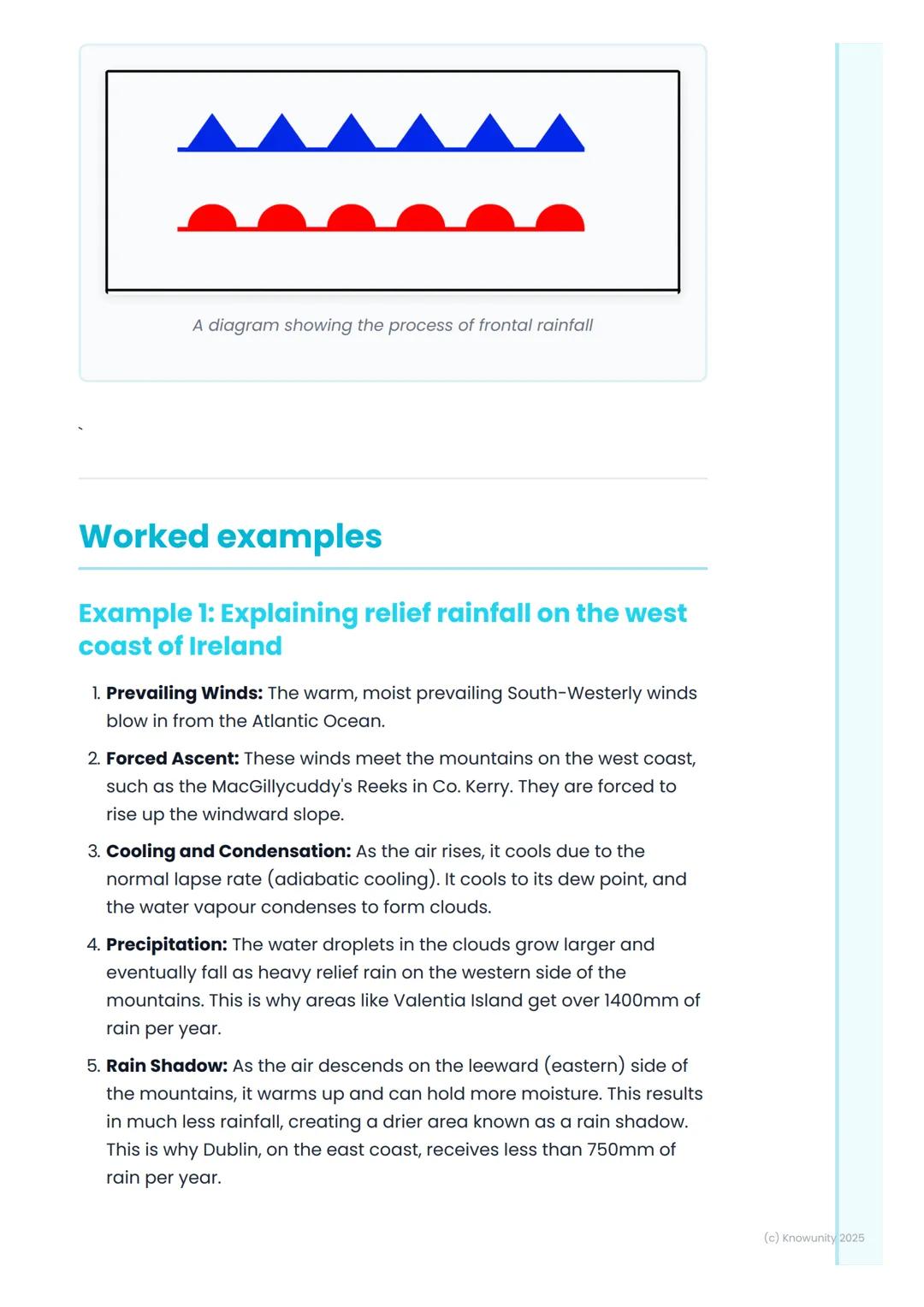
9
of 10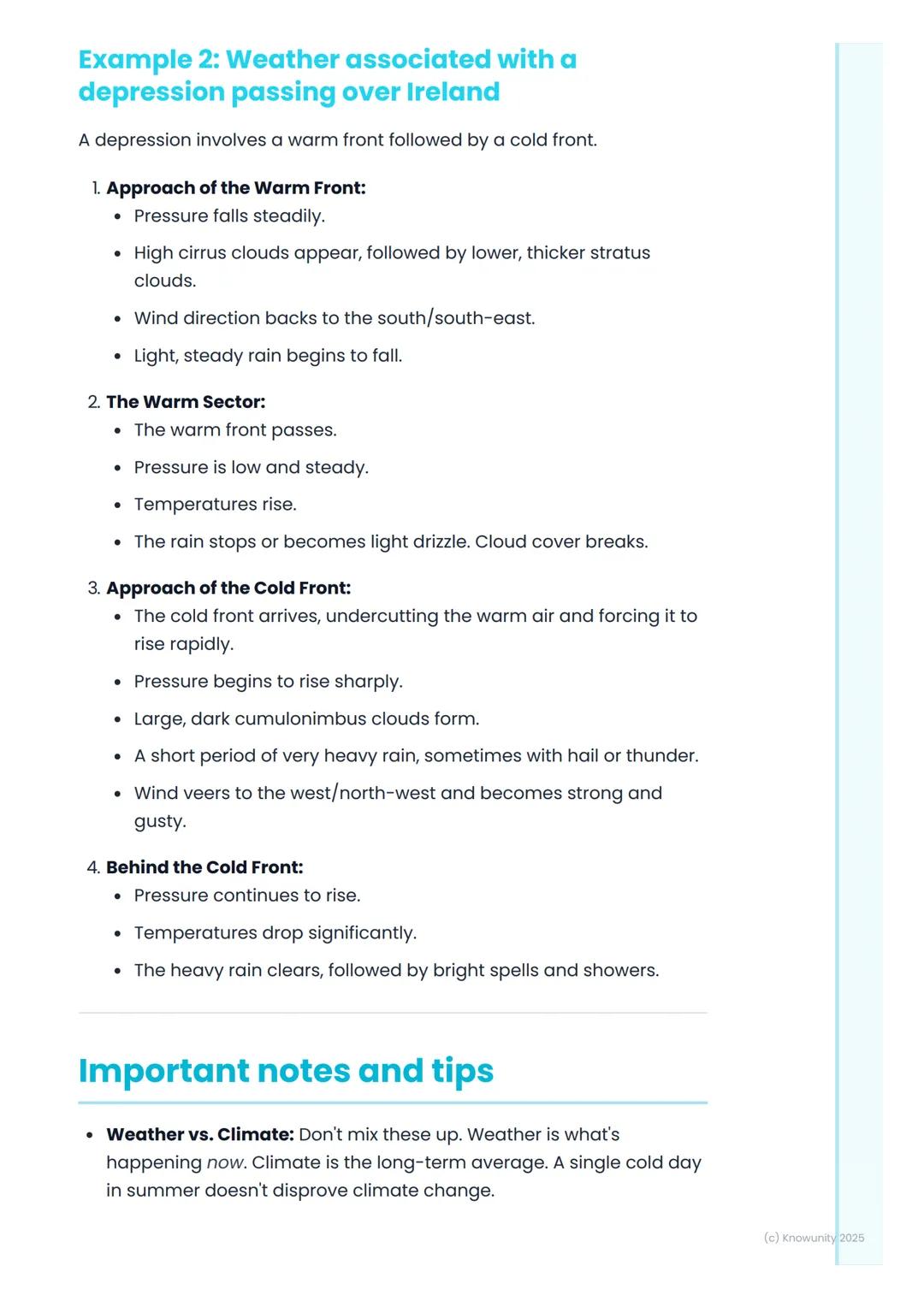
10
of 10
Pensavamo che non l'avreste mai chiesto....
Che cos'è l'assistente AI di Knowunity?
Il nostro assistente AI è costruito specificamente per le esigenze degli studenti. Sulla base dei milioni di contenuti presenti sulla piattaforma, possiamo fornire agli studenti risposte davvero significative e pertinenti. Ma non si tratta solo di risposte, l'assistente è in grado di guidare gli studenti attraverso le loro sfide quotidiane di studio, con piani di studio personalizzati, quiz o contenuti nella chat e una personalizzazione al 100% basata sulle competenze e sugli sviluppi degli studenti.
Dove posso scaricare l'applicazione Knowunity?
È possibile scaricare l'applicazione dal Google Play Store e dall'Apple App Store.
Knowunity è davvero gratuita?
Sì, hai accesso completamente gratuito a tutti i contenuti nell'app e puoi chattare o seguire i Creatori in qualsiasi momento. Sbloccherai nuove funzioni crescendo il tuo numero di follower. Inoltre, offriamo Knowunity Premium, che consente di studiare senza alcun limite!!
Contenuti più popolari di Geography
9Contenuti più popolari
9Non c'è niente di adatto? Esplorare altre aree tematiche.
Recensioni dei nostri utenti. Ci adorano - e anche tu, vedrai .
4.6/5App Store
4.7/5Google Play
L'applicazione è molto facile da usare e ben progettata. Finora ho trovato tutto quello che cercavo e ho potuto imparare molto dalle presentazioni! Utilizzerò sicuramente l'app per i compiti in classe! È molto utile anche come fonte di ispirazione.
Stefano Sutente iOS
Questa applicazione è davvero grande! Ci sono tantissimi appunti e aiuti con lo studio [...]. La mia materia problematica, per esempio, è il francese e l'app ha così tante opzioni per aiutarmi. Grazie a questa app ho migliorato il mio francese. La consiglio a tutti.
Samantha Klichutente Android
Wow, sono davvero stupita. Ho appena provato l'app perché l'ho vista pubblicizzata molte volte e sono rimasta assolutamente sbalordita. Questa app è L'AIUTO che cercate per la scuola e soprattutto offre tantissime cose, come allenamenti e schede, che a me personalmente sono state MOLTO utili.
Annautente iOS
Geography2 visualizzazioni·Aggiornato Jun 1, 2026·10 pagineUnderstanding Earth's Atmosphere and Weather
Ever wondered why it's always raining in Cork but sunny in Dublin, or why it's freezing on top of a mountain even in summer? The atmosphere is like Earth's protective blanket, and understanding how it works is the key to... Mostra di più
1
of 10Iscriviti per mostrare il contenuto. È gratis!
- Accesso a tutti i documenti
- Migliora i tuoi voti
- Unisciti a milioni di studenti
The Atmosphere Basics
The atmosphere is essentially a 100km-thick layer of gases that keeps us alive and creates all our weather. Think of it as Earth's protective bubble that's constantly moving and changing.
Here's what you're breathing: 78% nitrogen, 21% oxygen, and just 1% of other gases including water vapour. That tiny bit of water vapour might seem insignificant, but it's responsible for every cloud, raindrop, and snowflake you've ever seen.
Weather is what's happening right now - like today's downpour in Dublin. Climate is the long-term average over 30+ years - like Ireland's famously wet reputation. Don't mix these up in your exams!
Quick Tip: Weather elements (temperature, pressure, wind, precipitation) are the building blocks of every weather forecast you check.
2
of 10Iscriviti per mostrare il contenuto. È gratis!
- Accesso a tutti i documenti
- Migliora i tuoi voti
- Unisciti a milioni di studenti
Atmospheric Layers
The atmosphere has four main layers, but you really need to know the first two. Here's a handy memory trick: The Sun Makes Things hot (Troposphere, Stratosphere, Mesosphere, Thermosphere).
The troposphere is where all the action happens - it's only 12km thick but contains virtually all our weather. Temperature drops as you go higher (about 6.5°C per 1000m), which explains why Carrauntoohil is always colder than sea level.
The stratosphere sits above it, containing the crucial ozone layer that blocks harmful UV rays. Unlike the troposphere, temperature actually increases with height here because ozone absorbs solar radiation.
Exam Focus: The troposphere is your priority - almost every weather question relates to this bottom layer.
3
of 10Iscriviti per mostrare il contenuto. È gratis!
- Accesso a tutti i documenti
- Migliora i tuoi voti
- Unisciti a milioni di studenti
Temperature and Pressure
Temperature is measured using thermometers in Stevenson Screens (those white boxes you see at weather stations). Four main factors affect temperature: how close you are to the equator, your height above sea level, distance from the sea, and which way slopes face.
Ireland's coast stays milder year-round thanks to the sea's slow heating and cooling - that's why Galway has cooler summers but warmer winters than inland Athlone.
Atmospheric pressure is the weight of air pressing down on you, measured in millibars. Low pressure (depressions) means air is rising, cooling, and forming clouds - hello, rainy day! High pressure (anticyclones) means air is sinking and warming - cue the sunny weather.
Map Reading: When isobars (pressure lines) are squashed together, expect strong winds. Spread apart means light winds.
4
of 10Iscriviti per mostrare il contenuto. È gratis!
- Accesso a tutti i documenti
- Migliora i tuoi voti
- Unisciti a milioni di studenti
Wind and Weather Patterns
Wind is simply air rushing from high pressure to low pressure areas. In Ireland, our prevailing winds are South-Westerlies - they bring all that Atlantic moisture that keeps our grass so green!
Due to Earth's rotation, winds curve to the right in the Northern Hemisphere (called the Coriolis effect). This is why low-pressure systems spin anti-clockwise and high-pressure systems spin clockwise.
When you see a weather map, look for the 'L' and 'H' symbols. An 'L' means expect clouds, wind, and rain. An 'H' means settled, clear conditions - though in winter, this can bring frost and fog.
Wind Direction: Remember, winds are named from where they're coming from, not where they're going!
5
of 10Iscriviti per mostrare il contenuto. È gratis!
- Accesso a tutti i documenti
- Migliora i tuoi voti
- Unisciti a milioni di studenti
Rainfall Types
For precipitation to form, you need moist air that's forced to rise and cool to its dew point (saturation temperature). There are three main types you'll encounter in Ireland.
Relief rainfall happens when our South-Westerly winds hit western mountains like the MacGillycuddy's Reeks. The air is forced upwards, cools, and dumps heavy rain on the western slopes. This creates a rain shadow effect - which is why Dublin gets less than 750mm of rain yearly while Valentia Island gets over 1400mm.
Convectional rainfall occurs on hot summer afternoons when heated ground causes air to rise rapidly, forming towering cumulonimbus clouds. These create those sudden heavy downpours with thunder and lightning.
Ireland's Reality: Most of our rain is frontal rainfall from Atlantic depressions - those weather systems that seem to queue up to soak us!
6
of 10Iscriviti per mostrare il contenuto. È gratis!
- Accesso a tutti i documenti
- Migliora i tuoi voti
- Unisciti a milioni di studenti
Frontal Systems and Depressions
Frontal rainfall is Ireland's specialty - it happens when warm and cold air masses meet at weather fronts. The lighter warm air is forced upwards over the denser cold air, creating widespread, prolonged rainfall.
When a depression passes over Ireland, you'll experience a predictable sequence. First, the warm front approaches with falling pressure, high clouds, and steady light rain. Then comes the warm sector with higher temperatures and broken cloud.
Next, the cold front arrives like nature's drama queen - pressure rises sharply, massive dark clouds form, and you get a short burst of very heavy rain, possibly with hail and thunder. Finally, behind the cold front, temperatures drop, pressure continues rising, and you get those classic Irish "bright spells and showers."
Weather Watching: Cold fronts move faster than warm fronts, which is why they eventually catch up and create more complex weather systems.
7
of 10Iscriviti per mostrare il contenuto. È gratis!
- Accesso a tutti i documenti
- Migliora i tuoi voti
- Unisciti a milioni di studenti
8
of 10Iscriviti per mostrare il contenuto. È gratis!
- Accesso a tutti i documenti
- Migliora i tuoi voti
- Unisciti a milioni di studenti
9
of 10Iscriviti per mostrare il contenuto. È gratis!
- Accesso a tutti i documenti
- Migliora i tuoi voti
- Unisciti a milioni di studenti
10
of 10Iscriviti per mostrare il contenuto. È gratis!
- Accesso a tutti i documenti
- Migliora i tuoi voti
- Unisciti a milioni di studenti
Pensavamo che non l'avreste mai chiesto....
Che cos'è l'assistente AI di Knowunity?
Il nostro assistente AI è costruito specificamente per le esigenze degli studenti. Sulla base dei milioni di contenuti presenti sulla piattaforma, possiamo fornire agli studenti risposte davvero significative e pertinenti. Ma non si tratta solo di risposte, l'assistente è in grado di guidare gli studenti attraverso le loro sfide quotidiane di studio, con piani di studio personalizzati, quiz o contenuti nella chat e una personalizzazione al 100% basata sulle competenze e sugli sviluppi degli studenti.
Dove posso scaricare l'applicazione Knowunity?
È possibile scaricare l'applicazione dal Google Play Store e dall'Apple App Store.
Knowunity è davvero gratuita?
Sì, hai accesso completamente gratuito a tutti i contenuti nell'app e puoi chattare o seguire i Creatori in qualsiasi momento. Sbloccherai nuove funzioni crescendo il tuo numero di follower. Inoltre, offriamo Knowunity Premium, che consente di studiare senza alcun limite!!
Contenuti più popolari di Geography
9Contenuti più popolari
9Non c'è niente di adatto? Esplorare altre aree tematiche.
Recensioni dei nostri utenti. Ci adorano - e anche tu, vedrai .
4.6/5App Store
4.7/5Google Play
L'applicazione è molto facile da usare e ben progettata. Finora ho trovato tutto quello che cercavo e ho potuto imparare molto dalle presentazioni! Utilizzerò sicuramente l'app per i compiti in classe! È molto utile anche come fonte di ispirazione.
Stefano Sutente iOS
Questa applicazione è davvero grande! Ci sono tantissimi appunti e aiuti con lo studio [...]. La mia materia problematica, per esempio, è il francese e l'app ha così tante opzioni per aiutarmi. Grazie a questa app ho migliorato il mio francese. La consiglio a tutti.
Samantha Klichutente Android
Wow, sono davvero stupita. Ho appena provato l'app perché l'ho vista pubblicizzata molte volte e sono rimasta assolutamente sbalordita. Questa app è L'AIUTO che cercate per la scuola e soprattutto offre tantissime cose, come allenamenti e schede, che a me personalmente sono state MOLTO utili.
Annautente iOS